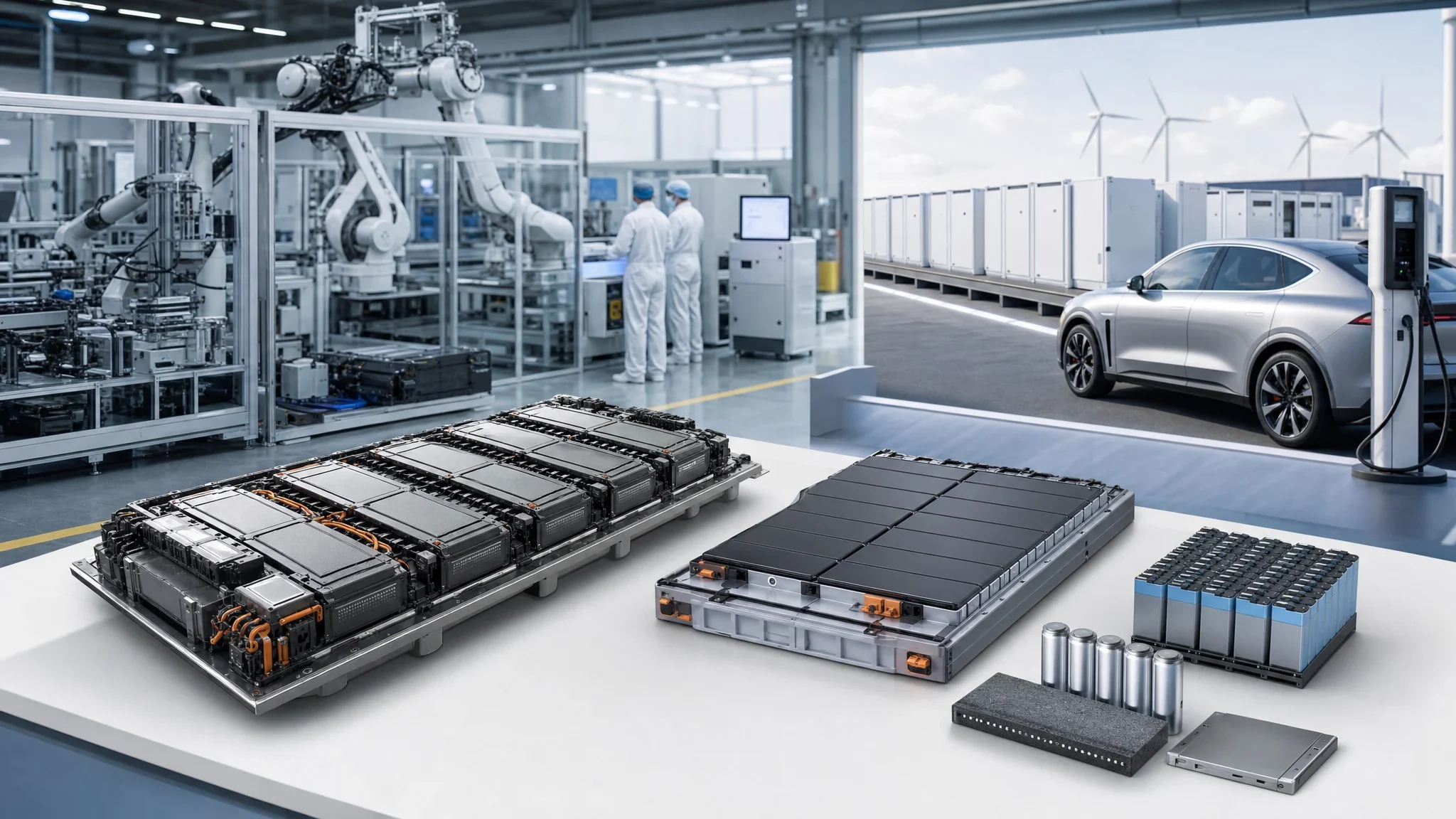
CATL makes money by designing, manufacturing and selling batteries and related systems for electric vehicles, stationary energy storage and adjacent new-energy applications. Its core products include lithium-ion EV power batteries, energy-storage batteries, battery management systems and integrated solutions such as fast charging, battery swapping, validation services and lifecycle management. In Q1 2026, the company reported operating revenue of RMB 129.131 billion, up 52.45% year over year, and net profit attributable to shareholders of RMB 20.738 billion, up 48.52%.
The business is volume-driven, but revenue quality depends on chemistry mix, raw-material pricing, manufacturing efficiency and customer contracts. CATL’s scale gives it purchasing leverage, high factory utilization potential and the ability to spread R&D and process investment across a large shipment base. Its total assets reached RMB 1.046 trillion at March 31, 2026, which reflects the capital intensity of global battery manufacturing.
- EV power batteries: This is CATL’s largest strategic business, supplying cells, packs and related technologies to automakers and commercial-vehicle platforms. The company reported a 39.2% global power-battery market share in 2025, ranking first globally for the ninth consecutive year.
- Energy-storage batteries: CATL sells batteries and systems for grid, commercial and infrastructure storage. In 2025, energy-storage battery sales reached 121 GWh, and the company cited a 30.4% global share, ranking first for five consecutive years.
- Battery systems and services: Battery management systems, validation platforms, fast-charging solutions, swapping networks and recycling-related capabilities deepen customer relationships and move CATL beyond standalone cell supply.
- New chemistries and platforms: CATL continues to commercialize and promote Shenxing, Qilin, condensed, hybrid and sodium-ion battery technologies. Recent sodium-ion storage partnerships in China and Europe point to a broader push into lower-cost, lithium-light storage applications.
CATL’s competitive advantages are scale, manufacturing process depth, broad chemistry coverage and relationships with major OEMs. Official company materials also highlight multiple World Economic Forum Lighthouse factories, supporting its positioning as a high-volume manufacturer with advanced production systems. The company’s customer and partnership base includes global and Chinese names such as Volkswagen, BMW, BAIC, SGMW and NIO-related cooperation themes across supply, battery passports, decarbonization, fast charging and swapping.
The company’s market position is strongest where battery volume, safety validation, cost control and chemistry optionality matter most. CATL is a leader in both EV batteries and stationary storage, while many competitors are stronger in one category than the other. Its dual listing in Shenzhen and Hong Kong also broadens public-market access for global investors.
Direct competitors include BYD Battery, LG Energy Solution, CALB, Samsung SDI, Panasonic Energy and SK On. BYD is CATL’s closest China-based strategic competitor because it combines battery production with a large EV business, creating vertical integration advantages and internal demand. CATL differs by acting primarily as an independent battery supplier to multiple automakers, which gives it broader OEM reach but exposes it to automaker bargaining power.
China remains central to CATL’s business model. The company benefits from China’s large EV and grid-storage markets, local supply-chain depth and domestic OEM relationships. The same exposure creates risks from Chinese EV price competition, industrial policy, local rivals and geopolitical restrictions on Chinese battery suppliers. International projects, partnerships and licensing-style models broaden CATL’s reach, but China continues to anchor its operations, supply chain and investor perception.