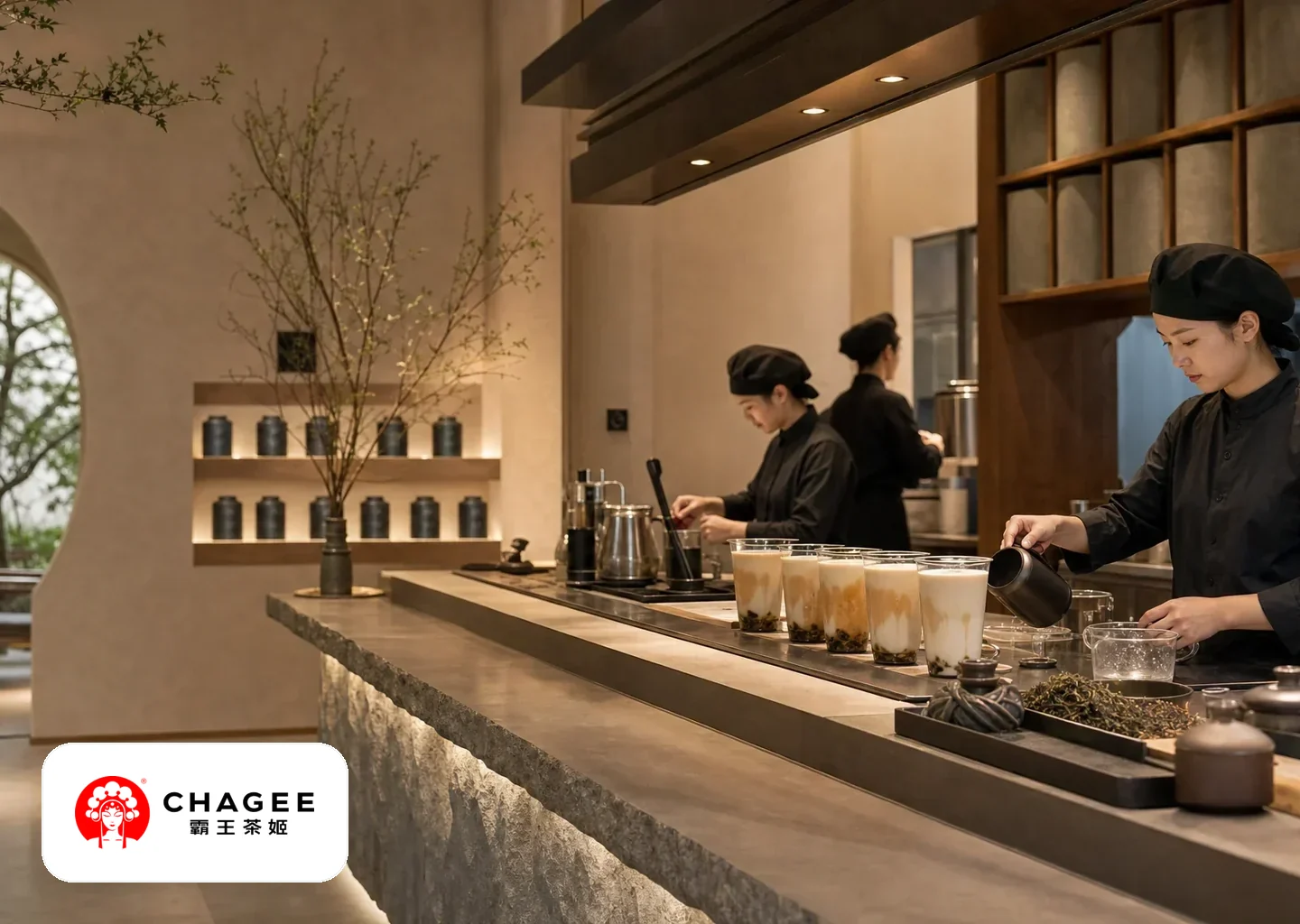
Chagee operates a premium freshly made tea-drinks chain built around modern teahouses, tea-latte products, and a large franchise network. The company was founded in China in 2017 and listed ADSs on Nasdaq in April 2025. Investors own ADSs in Chagee Holdings Limited, a Cayman Islands holding company, rather than direct equity in the PRC operating entities.
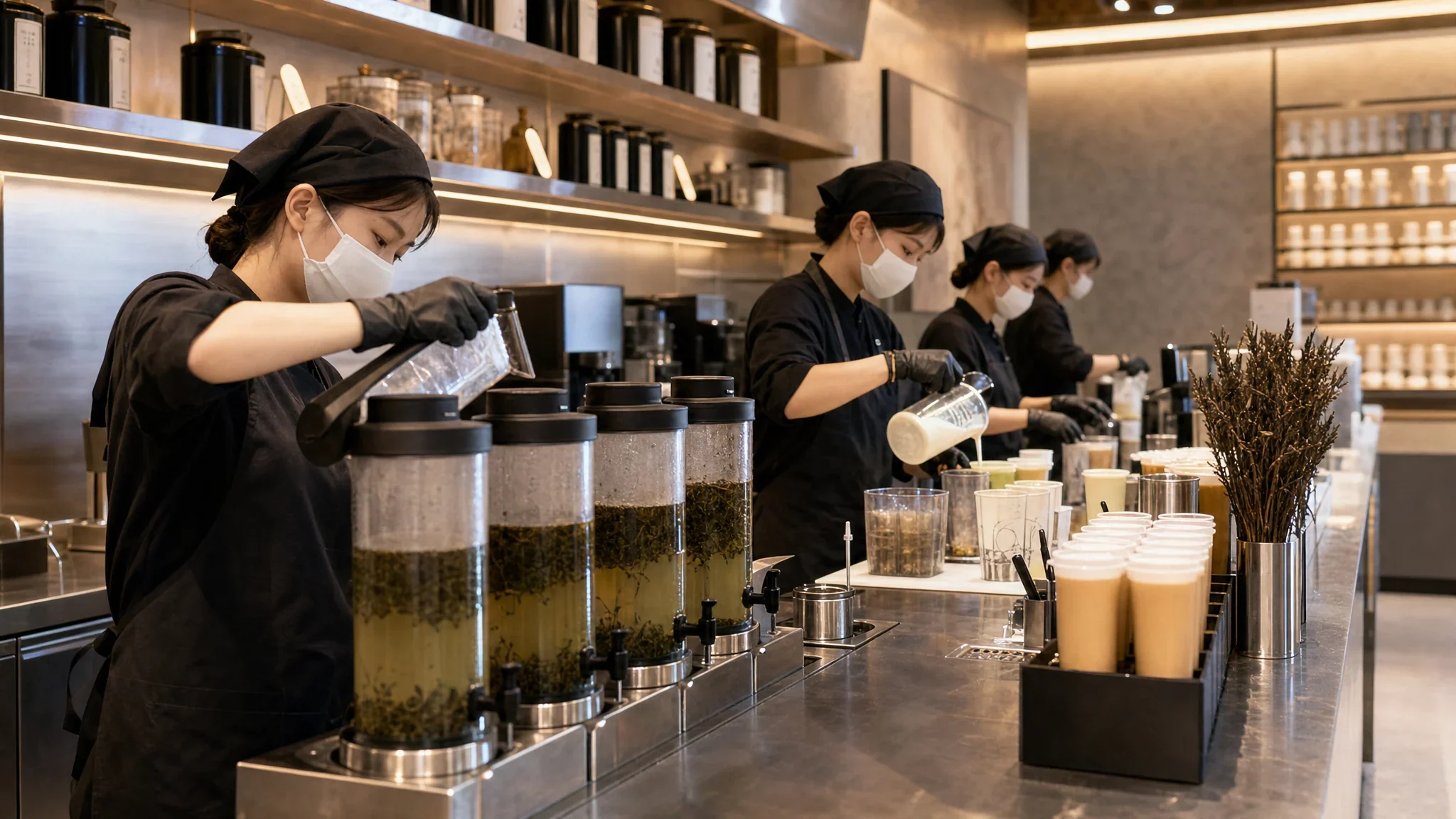
The business model combines franchising, company-owned stores, centralized supply-chain control, brand and product development, digital ordering, and a member system. Chagee’s core product is fresh tea made with tea leaves and fresh milk, with a narrower tea-latte focus than many fruit-tea or coffee-led rivals.
- Franchised teahouses: This is the main revenue engine. In Q1 2026, franchised teahouses generated RMB2.744 billion, or 77.4% of total net revenue. The model gives Chagee broad network scale while shifting much of store-level investment and operating responsibility to franchise partners.
- Company-owned teahouses: This segment is growing quickly as Chagee adds and converts stores, especially in flagship and overseas markets. Q1 2026 company-owned teahouse revenue was RMB802.1 million, or 22.6% of total revenue, up 230.4% year over year. The shift gives the company more direct control and revenue capture, but it raises exposure to rent, labor, utilities, and store operating costs.
- Product categories: Chagee sells premium freshly made tea drinks, led by tea-latte products. Its positioning centers on modern Chinese tea culture, standardized preparation, quality ingredients, convenience, and digital ordering rather than a broad coffee or fruit-tea menu.
- Digital membership and operations: The company reported 50.0 million active members in Q1 2026, up 11.7% from Q4 2025. This membership base supports repeat orders, targeted promotions, and product launches across a large teahouse network.
Chagee generated Q1 2026 net revenue of RMB3.546 billion, up from RMB3.393 billion a year earlier. Operating income fell to RMB547.2 million from RMB820.8 million, and GAAP net income declined to RMB447.7 million from RMB677.3 million. Net margin was 12.6%, down from 20.0% in Q1 2025, showing that revenue growth came with margin pressure as competition, store mix, and operating costs weighed on profitability.
The company had 7,531 teahouses at March 31, 2026, including 6,741 franchised stores and 790 company-owned stores. Greater China remains the core market, with 7,157 teahouses, about 95.0% of the network. Greater China also generated RMB7.491 billion of Q1 2026 GMV, about 94.6% of total GMV. Overseas GMV was smaller at RMB426.4 million, but it grew 139.0% year over year.
Chagee’s market position is strongest in China’s premium fresh tea segment. The company has described itself, based on IPO and annual-report disclosures citing iResearch, as China’s largest premium freshly made tea-drinks brand by store network as of 2024. Its Q1 2026 network size gives it meaningful scale, brand visibility, supply-chain leverage, and data reach.
The competitive set is intense. Direct competitors include Mixue, Heytea, Nayuki, and Luckin Coffee. Mixue is a major China-listed mass-market tea and ice-cream chain with a larger value-oriented network, while Chagee competes at a more premium price and product position. Heytea and Nayuki are closer premium tea peers, while Luckin Coffee competes for the same beverage occasions through a coffee-led model, dense store network, and aggressive pricing.
Chagee’s main competitive advantages are its focused tea-latte identity, large franchised network, recognizable Chinese tea branding, centralized product and supply-chain systems, and large digital member base. These strengths support scale and repeat consumption, but they do not insulate the company from store saturation or price competition.
The main market-position concern is store productivity. Q1 2026 total GMV was RMB7.918 billion, but same-store GMV growth was negative 16.0% overall, negative 16.1% in Greater China, and negative 12.0% overseas. Greater China average monthly GMV per teahouse improved sequentially to RMB356,080 from RMB337,358 in Q4 2025, but it remained below the Q1 2025 level. This shows a business with strong brand scale and international growth potential, but also a domestic base facing consumer softness, high prior-year comparisons, and heavy competition.