Last Updated -

January 28, 2026

CRRC

Company Profile and Market Insights

Explore the business model, global strategy, and market performance including insights into its position in China.

CRRC

About

Founded in 2015 through the merger of CSR Corporation and China CNR Corporation, CRRC Corporation Limited is headquartered in Beijing and is listed in Shanghai and Hong Kong. It is a state-owned, publicly traded group that ranks among the world’s largest suppliers of rail transit equipment by sales.

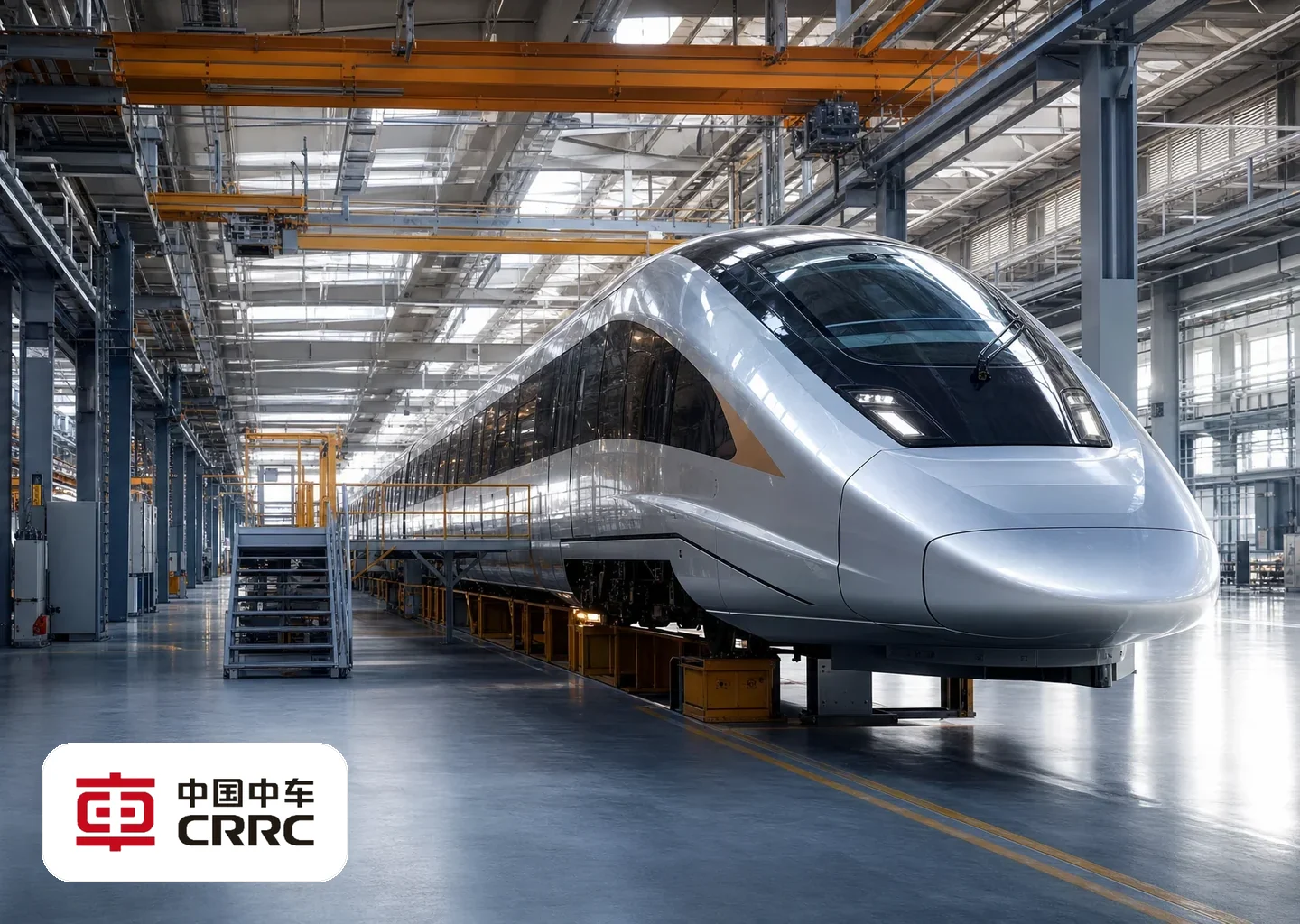
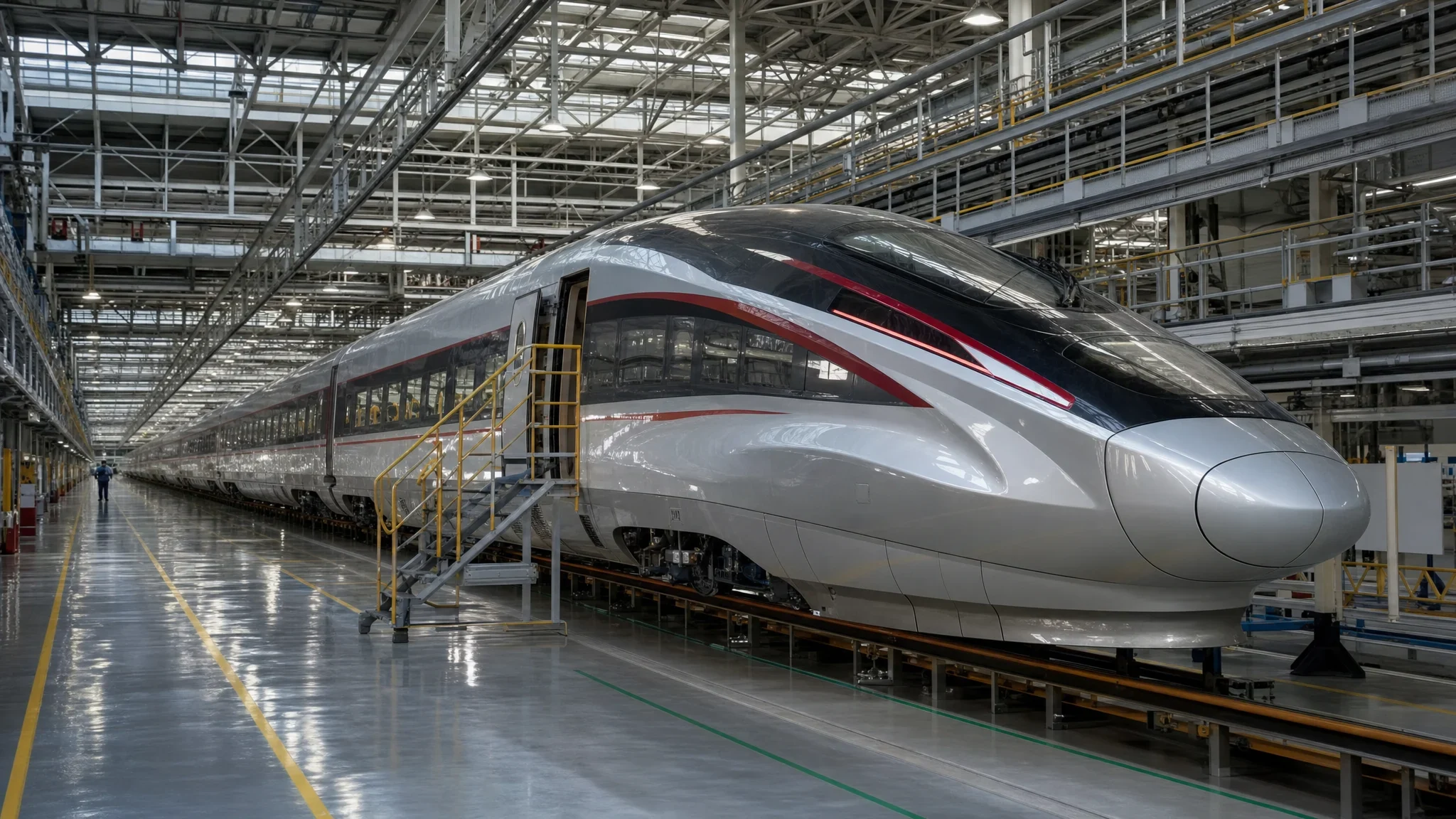
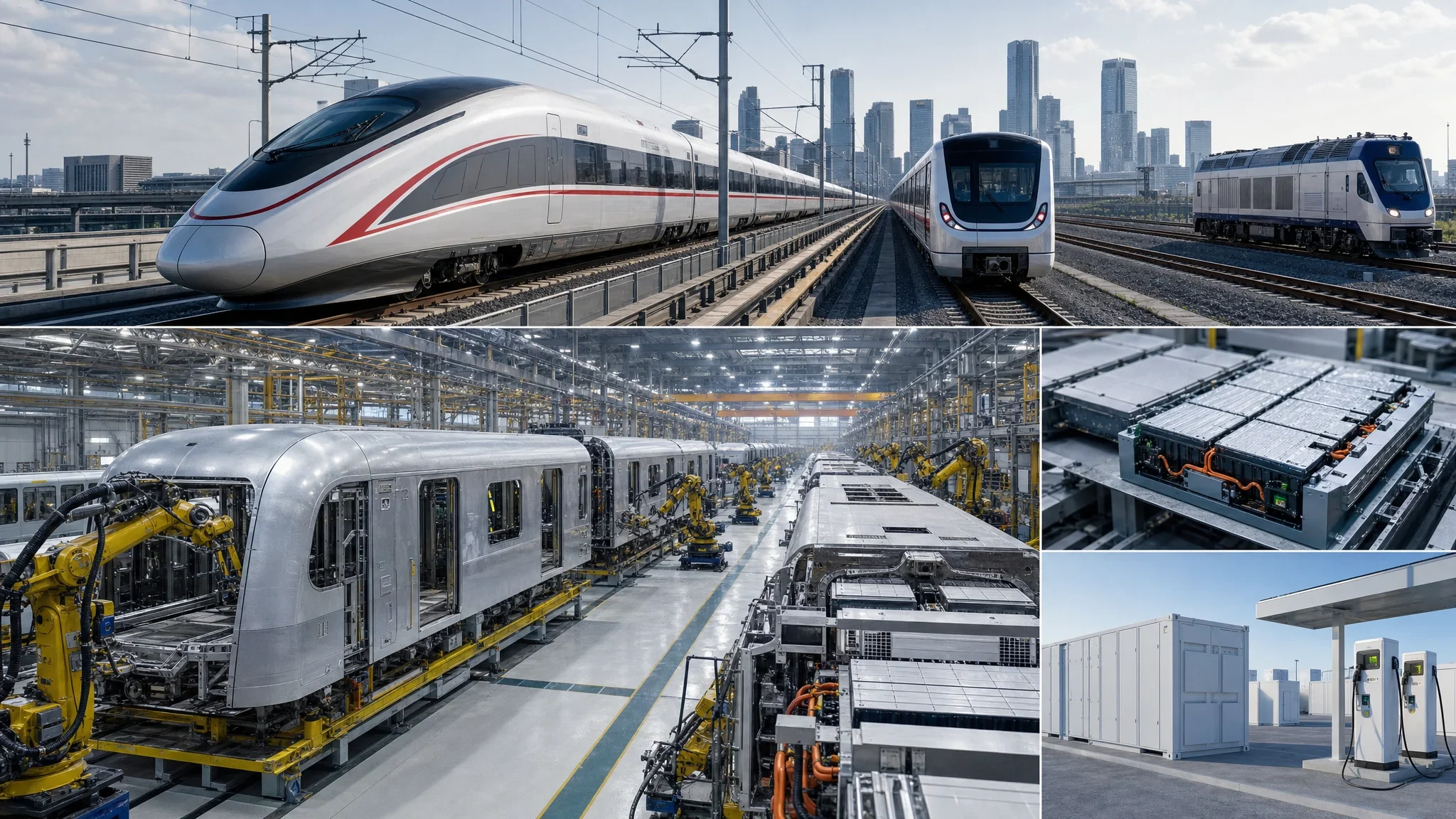
CRRC designs, manufactures, and services a broad range of rolling stock, including high-speed EMUs, metro vehicles, passenger carriages, freight wagons, and locomotives, alongside rail engineering and other rail-related equipment and components. Beyond rolling stock, it also operates adjacent “new industry” and “modern service” activities linked to industrial equipment and services.

Internationally, CRRC reports 86 overseas subsidiaries and 18 overseas R&D centers, with products and services delivered across 116 countries and regions. Its stated mission is “Connecting the World through Better Mobility,” and it frames innovation, efficiency, and lower-emission transport as core priorities. In 2024, CRRC reported operating revenue of RMB 246.457 billion.

CRRC

Business Model and Market Position

CRRC runs a scale-driven rail manufacturing and services model that combines product, technology, service, capital, and management. It sells rolling stock and key subsystems, then supports customers with maintenance, upgrades, and lifecycle services.

Core business areas

  1. Railway equipment
    CRRC designs and manufactures mainline rail products such as high-speed EMUs, passenger carriages, locomotives, and freight wagons. In 2024, rail equipment revenue was RMB 110.461 billion.
  2. Urban rail transit vehicles and urban infrastructure
    The group supplies metro and commuter rail vehicles and also undertakes urban rail related engineering and contracting work in selected projects.
  3. New industry
    CRRC develops adjacent industrial businesses beyond rolling stock, reported as “new industry” in its disclosures. In 2024, this segment generated RMB 86.375 billion of revenue.
  4. Modern services and international delivery model
    The company reports “modern service” activities that include finance, logistics, and trade. Internationally, CRRC emphasizes localized manufacturing, procurement, workforce, maintenance, and management in overseas projects.

Market position

  • China scale advantage: As a centrally owned SOE, CRRC benefits from alignment with national rail investment priorities, which reinforces its leadership in the domestic market for high-speed and urban rail fleets.
  • Global footprint with local execution: CRRC reports 86 overseas subsidiaries and 18 overseas R&D centers, serving 116 countries and regions. In 2024 it reported RMB 47.2 billion of international new orders, showing continued export demand and overseas project activity.
  • Competitive set: Outside China, CRRC competes with Alstom, Siemens Mobility, Hitachi Rail, Stadler, CAF, and others across passenger rolling stock and rail systems, with public tenders often focused on price, delivery risk, and local content.
  • Green traction as a differentiator in selected tenders: CRRC is expanding its “new energy” portfolio in hybrid, battery, and hydrogen locomotives, including export activity such as a hydrogen locomotive delivered for service in Chile and further new-energy locomotive offerings marketed for export.
CRRC

Performance in China

China remains CRRC’s core profit pool, supported by sustained national rail investment and a large installed base that requires ongoing replacement, refurbishment, and maintenance. In 2024, China’s railway fixed-asset investment reached RMB 850.6 billion, and the network reached 162,000 km, including 48,000 km of high-speed rail.

CRRC’s domestic scale shows up in its order flow. In 2024, CRRC reported RMB 322.2 billion of new orders, including RMB 47.2 billion international, meaning the majority came from China-linked demand. 2024 operating revenue totaled RMB 246.457 billion, with rail equipment revenue at RMB 110.461 billion.

Key China drivers include:

  1. High-speed and intercity expansion tied to national network targets through 2030.
  2. Urban rail fleet growth and mid-life overhauls, supported by rising metro utilization and modernization cycles. In Q1 2025, CRRC reported +29.86% revenue growth in urban rail transit vehicles and urban infrastructure.

Growth and Future Prospects

CRRC’s growth outlook is driven by China’s rail buildout and renewal cycle, plus export tenders where price, financing terms, and local content often decide awards. China’s railway fixed-asset investment reached 850.6 billion yuan in 2024, and the network reached 162,000 km, including over 48,000 km of high-speed rail.

Operational momentum remains tied to a strong order pipeline. CRRC reported about RMB 322.2 billion of new orders in 2024, including RMB 47.2 billion from international orders.  In Q1 2025, CRRC reported revenue of RMB 48.671 billion and new contracts of about RMB 54.6 billion, including about RMB 8.2 billion from international business.

Key growth drivers include:

  1. China fleet replacement and capacity expansion as high-speed and urban rail networks expand and older fleets move into overhaul cycles.
  2. Export wins supported by supplier financing and localization, which helps compete in emerging markets. Recent examples include CRRC’s preferred bid to supply 29 metro trains for Buenos Aires Line B with supplier financing covering 80% of the package.
  3. Latin America ramp-up tied to metro modernization programs, including orders in Brazil where initial train arrivals are expected in early 2026 for Belo Horizonte’s metro fleet renewal.
  4. New-energy traction and decarbonization offerings, including a hydrogen fuel cell plus battery locomotive exported to Chile, and a broader portfolio of “new energy” locomotive configurations highlighted in CRRC’s sustainability reporting.
  5. Diversification through “new industry”, which supported Q1 2025 growth as CRRC cited higher revenue from clean energy equipment in that segment.

Challenges ahead include:

  • Restricted market access in the US and rising scrutiny in Europe. US federal transit procurement rules under NDAA Section 7613 limit FTA-funded rolling stock purchases from covered manufacturers. The EU has opened foreign-subsidy investigations involving CRRC bids, including a 2025 probe tied to a Lisbon light rail procurement.
  • Contract execution and aftermarket support expectations in overseas markets. A 2025 South African court ruling involving CRRC E-Loco and Transnet highlights how disputes over spares and support can damage customer relationships and project economics.
  • Tender economics and local-content demands, which pressure margins and raise delivery risk when projects require localized supply chains and long lead-time components.

This Company Profile was written by Dominik Diemer

Dominik Diemer blends an investor mindset with execution discipline.

He is a SAFe Program Consultant (SPC) and Lean Portfolio Management (LPM) practitioner at DMG MORI Digital, working as a SAFe Release Train Engineer and internal consultant in the Lean-Agile Center of Excellence (LACE).

His focus is prioritization, flow, and dependency management that turns strategy into outcomes. With experience across Bertelsmann and the Founders Foundation, he bridges corporate and startup thinking.

He also invests privately in private equity deals, sharpening his view on business models, value drivers, and go-to-market.

StockCounterParts reflects that lens.