Enflame Technology is a Shanghai-based fabless AI semiconductor company focused on cloud and data-center accelerators. It designs AI chips, accelerator cards, modules, intelligent-computing systems, clusters, and related AI computing software under its DTU and CloudBlazer platform, while relying on external partners for manufacturing, packaging, and other parts of the semiconductor supply chain.
The company makes money mainly by selling hardware products for Chinese AI infrastructure deployments. FY2025 revenue was RMB 990.16 million, up from RMB 722.39 million in FY2024 and RMB 301.19 million in FY2023. Q1 2026 revenue reached RMB 286.99 million, up 1,474.85% year over year, but Enflame remained deeply loss-making with a Q1 2026 net loss of RMB 444.34 million.
- Accelerator cards and modules: This is the core revenue stream. It generated RMB 856.42 million in FY2025, or 86.83% of main-business revenue.
- Intelligent-computing systems and clusters: This business extends Enflame from chips and cards into broader computing infrastructure. It generated RMB 128.24 million in FY2025, or 13.00% of main-business revenue.
- IP licensing and other revenue: This remains negligible at current scale. It generated RMB 1.64 million in FY2025, or 0.17% of main-business revenue.
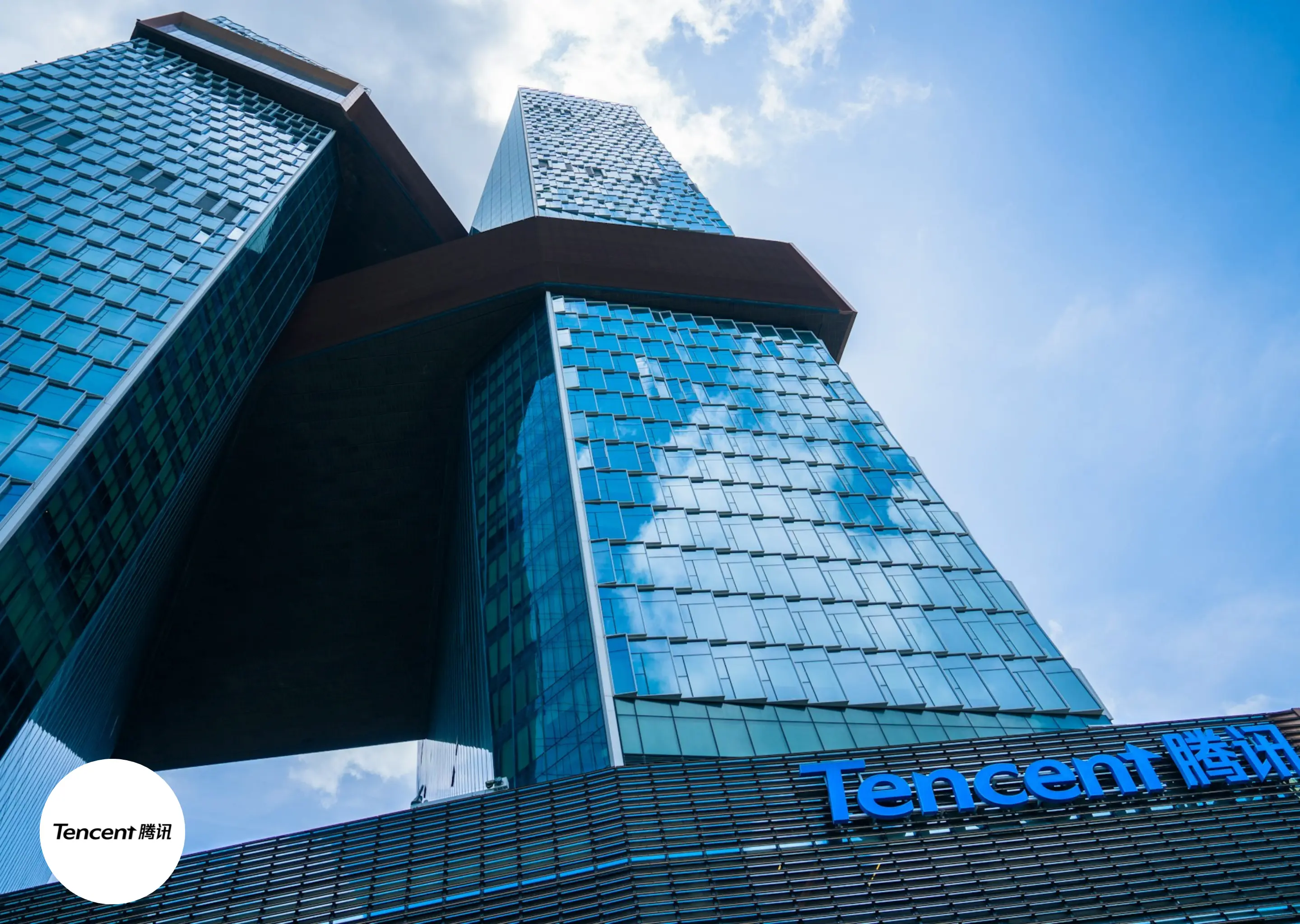
Enflame’s business model is product-led rather than licensing-led. Its commercial strategy depends on close workload co-development, software-stack optimization, and deployment relationships with large Chinese cloud and internet customers. Tencent is central to this model. Tencent-related direct sales and AVAP-mode sales were RMB 829.65 million in FY2025, equal to 83.79% of total revenue, up from 37.77% in FY2024 and 33.34% in FY2023.
The company’s main operating focus is cloud AI acceleration for data centers, especially domestic Chinese alternatives for inference and selected AI workloads. Enflame has iterated four chip architectures and five commercial cloud AI-chip products, according to IPO-related disclosures. Its product stack spans chips, boards, modules, systems, clusters, and software, which gives it a wider platform than a chip-only vendor if customers adopt the full stack.
Enflame’s competitive advantages are its early position among China’s private AI accelerator vendors, its deep Tencent deployment relationship, and its focus on China’s domestic AI-computing substitution market. Tencent is also a major shareholder-linked party, with Tencent Technology and affiliates reported to hold about 20% around the IPO process. This gives Enflame a major reference customer and practical deployment feedback, although it also creates high customer-concentration and related-party scrutiny risk.
The company remains small compared with global AI-chip leaders. FY2025 revenue was still below RMB 1.0 billion, while the FY2025 net loss attributable to shareholders was about RMB 1.164 billion and R&D expense was about RMB 1.135 billion, equal to 114.63% of revenue. This profile is closer to an early commercialization semiconductor platform than a mature chip supplier.
Direct competitors include Cambricon Technologies, Biren Technology, Moore Threads, MetaX, Iluvatar CoreX, and Huawei Ascend ecosystem participants in China. Nvidia remains the global benchmark for AI accelerators, but Enflame’s relevant position is not as a broad global rival to Nvidia. Its clearer role is as a China-focused domestic supplier for cloud inference and selected data-center AI workloads, especially where procurement policy, export controls, or supply-chain security favor local alternatives.
Market position is improving but still concentrated. Enflame is one of China’s better-known private GPU-style AI accelerator companies, and its planned STAR Market IPO is intended to fund fifth- and sixth-generation AI-chip R&D, industrialization, software and hardware co-innovation, business expansion, and supply-chain security. The IPO process advanced through STAR Market review, and the CSRC approved its IPO registration in July 2026.
For investors, Enflame’s market position rests on three linked factors: China’s demand for domestic AI computing infrastructure, Tencent-backed commercialization, and the company’s ability to turn a fast-growing but loss-making hardware business into a scalable AI accelerator platform. Its opportunity is large within China, but its current revenue base, cash burn, dependence on Tencent, and fabless supply-chain exposure remain defining constraints.