Last Updated -

January 28, 2026

Alphabet

Company Profile and Market Insights

Explore the business model, global strategy, and market performance including insights into its position in China.

Alphabet

About

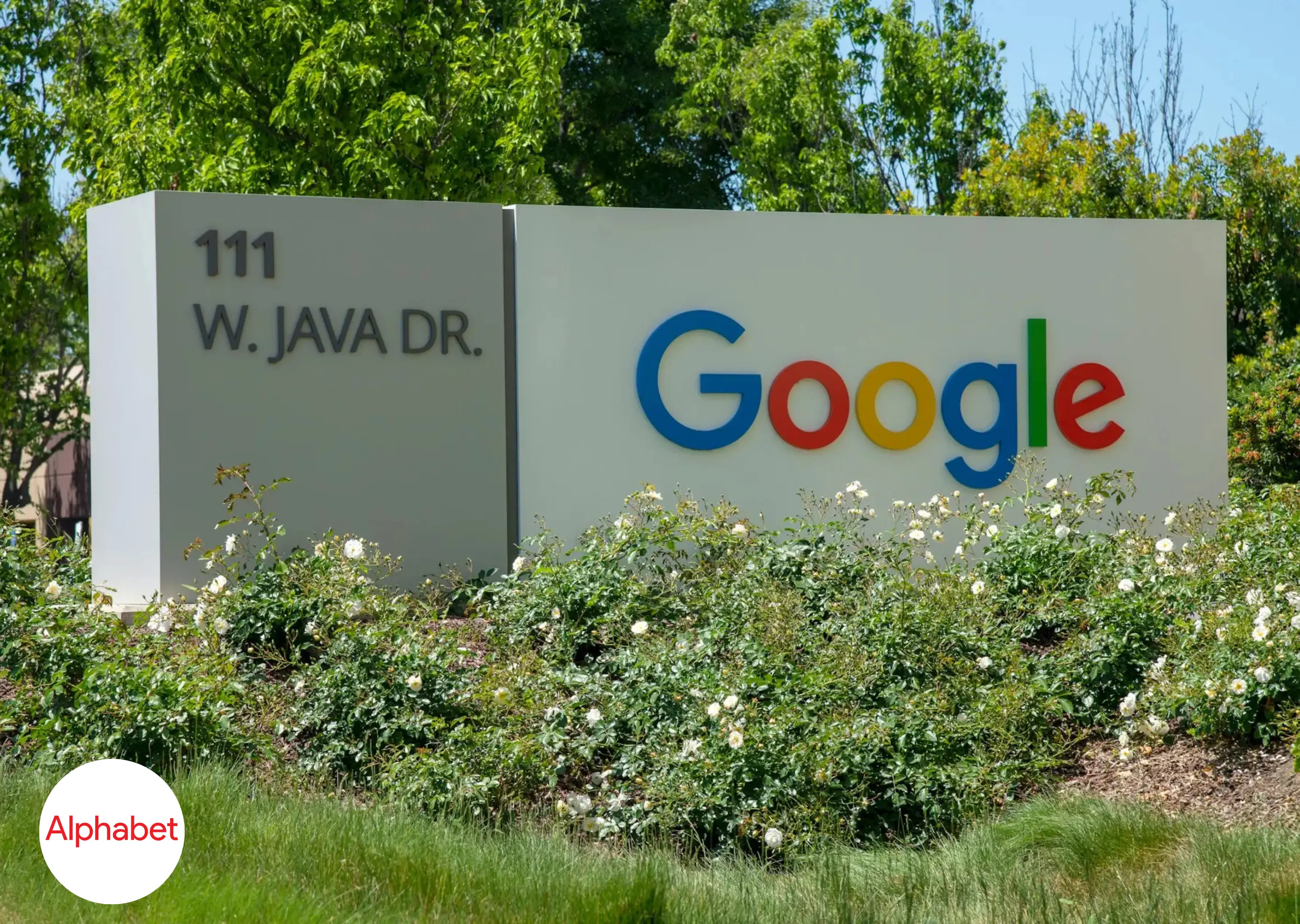
Alphabet Inc. was created in 2015 as a holding company for Google and a portfolio of other technology businesses. It is headquartered in Mountain View, California, and was established by Google’s founders Larry Page and Sergey Brin to separate Google’s core operations from longer-term ventures.

Google remains Alphabet’s main business, spanning Search, YouTube, Android, Chrome, Maps, Google Play, Google Ads, and Google Cloud. Alongside Google, Alphabet owns “Other Bets” that pursue independent products and research, including businesses such as Waymo and Verily, plus early-stage work incubated through X.

Alphabet’s purpose is to provide structure and capital allocation across this mix of mature cash-generating platforms and higher-risk innovation efforts. In practice, that model lets Google scale global consumer and enterprise products while Alphabet funds selective long-horizon projects that target new markets.

Alphabet

Business Model and Market Position

Alphabet runs a holding-company model built around three reporting segments: Google Services, Google Cloud, and Other Bets. Google is Alphabet’s cash engine, while the structure helps allocate capital across mature platforms and longer-horizon projects.

  1. Advertising at global scale (Google Services)
    Most revenue comes from performance and brand advertising across Google Search, YouTube, and Google’s ad network. This business benefits from intent-rich queries, massive reach, and an auction-based ad marketplace that connects advertisers with users across owned and partner surfaces.
  2. Subscriptions, platforms, and devices (Google Services)
    Alphabet adds higher-margin, recurring revenue through consumer subscriptions and platform fees, including services like YouTube subscriptions and Google One, plus Play-related commerce and device sales.
  3. Enterprise cloud (Google Cloud)
    Google Cloud sells infrastructure and platform services (GCP) and productivity software (Workspace) via consumption-based fees and subscriptions. AI infrastructure and developer tools are core parts of the value proposition.
  4. Other Bets as an option portfolio
    Other Bets bundle earlier-stage businesses like Waymo and Verily, with revenues that are small relative to Google but with potential upside if one scales into a standalone profit pool.

Market position
Alphabet’s strength comes from control of key distribution channels and daily-use products. Google held about 90.8% of worldwide search engine market share in December 2025, which anchors advertiser demand and pricing power.  Android also led global mobile operating system share at about 71.7% in December 2025, reinforcing reach for services like Search, YouTube, Maps, and Play.  Competitive pressure is strongest in digital ads (Meta, Amazon, TikTok), cloud (AWS, Microsoft), and AI-driven discovery, where new interfaces can shift how users find information and how ads are delivered.

Alphabet

Performance in China

Alphabet has limited direct exposure to mainland China’s consumer internet. After a censorship dispute and cyberattacks, Google stopped operating a mainland search service in 2010, and core products such as Search, Gmail, and YouTube remain blocked behind the Great Firewall.

Alphabet still maintains a footprint through local offices and through advertising sold to China-based merchants that market to customers overseas.  Most smartphones sold in China run Android-derived software, but they ship without Google Mobile Services and rely on domestic app stores because Google Play is inaccessible.

With Google’s products absent at scale, domestic platforms such as Baidu in search and Tencent and Alibaba across digital services dominate China’s digital economy.

Growth and Future Prospects

Alphabet’s growth agenda builds on two priorities: defending its profit pool in Search and YouTube while scaling AI-driven products and infrastructure across Google Cloud and the wider ecosystem. Management has positioned Gemini as a shared layer across consumer experiences and enterprise offerings, with AI Overviews and multimodal search features intended to lift engagement and ad relevance.

Key growth drivers include:

  1. AI across Search, Ads, and commerce flows
    Alphabet is embedding Gemini into discovery and shopping workflows, including new purchase paths inside Search and Gemini through retail partnerships. This pushes more activity into Google surfaces where ads and merchant tools monetize intent.
  2. Google Cloud as an AI infrastructure and platform business
    Cloud growth is tied to enterprise demand for compute, data, and AI services. In Q3 2025, Google Cloud revenue rose 34% year over year to $15.2B, and Alphabet highlighted strong demand for AI infrastructure and generative AI solutions.  Cloud backlog reached $155B by the end of Q3 2025, reflecting longer-duration enterprise commitments.
  3. Recurring revenue from subscriptions and platforms
    Alphabet continues to grow subscriptions and platform revenues within Google Services, supported by YouTube subscriptions and consumer services like Google One.
  4. Other Bets as upside options, led by Waymo
    Waymo is expanding autonomous driving operations and preparing rider launches in additional U.S. cities, which tests whether robotaxis can scale into a meaningful revenue line.
  5. Long-horizon R&D
    Google Quantum AI reported progress on quantum error correction with its Willow processor, which supports Alphabet’s long-term compute roadmap.

Challenges ahead
Alphabet faces ongoing antitrust and platform regulation, including DMA obligations and active EU proceedings.  U.S. antitrust remedies in search and ad tech remain a persistent overhang.  AI features in Search also create new publisher and legal friction, as seen in recent litigation over AI-generated summaries.

This Company Profile was written by Dominik Diemer

Dominik Diemer blends an investor mindset with execution discipline.

He is a SAFe Program Consultant (SPC) and Lean Portfolio Management (LPM) practitioner at DMG MORI Digital, working as a SAFe Release Train Engineer and internal consultant in the Lean-Agile Center of Excellence (LACE).

His focus is prioritization, flow, and dependency management that turns strategy into outcomes. With experience across Bertelsmann and the Founders Foundation, he bridges corporate and startup thinking.

He also invests privately in private equity deals, sharpening his view on business models, value drivers, and go-to-market.

StockCounterParts reflects that lens.