LandSpace is a Chinese private commercial launch company focused on liquid oxygen and methane rockets. Its business model is to sell space transportation and related mission services to satellite operators, constellation programs and space-system customers, mainly inside China. The company remains in a development-to-commercialization phase rather than a mature launch-services profit model.
The latest public financial disclosure is FY 2025 from updated Shanghai STAR Market IPO materials cited by Chinese financial media. LandSpace reported revenue of RMB 52.0963 million, up about 11 times year over year, and an attributable net loss of RMB 1.711 billion. No Q1 2026 quarterly report is available because the company is not yet publicly listed. The scale of losses compared with revenue shows that LandSpace is still funding vehicle development, launch infrastructure and production capability ahead of higher launch cadence.
Main revenue streams are
- Launch services: LandSpace provides commercial launch capacity for satellites and flight experiments using its own launch vehicles.
- Mission and launch support: The company offers mission analysis and design, launch mission technical support, space engineering TT&C and launch-facility-related services.
- Space-system solutions: LandSpace also provides broader space-system support, including independent launch-facility provision and specialized space-insurance placement.
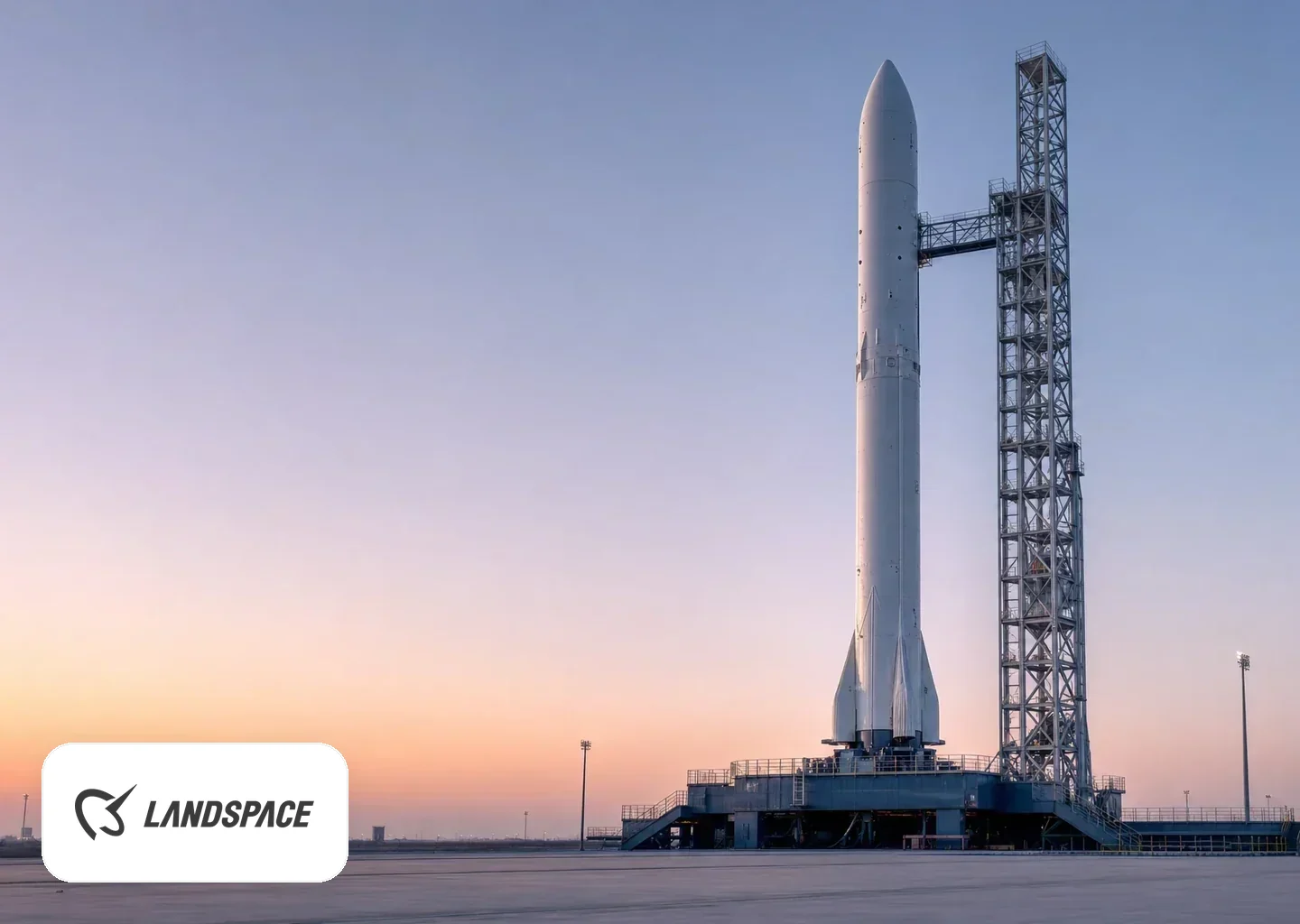
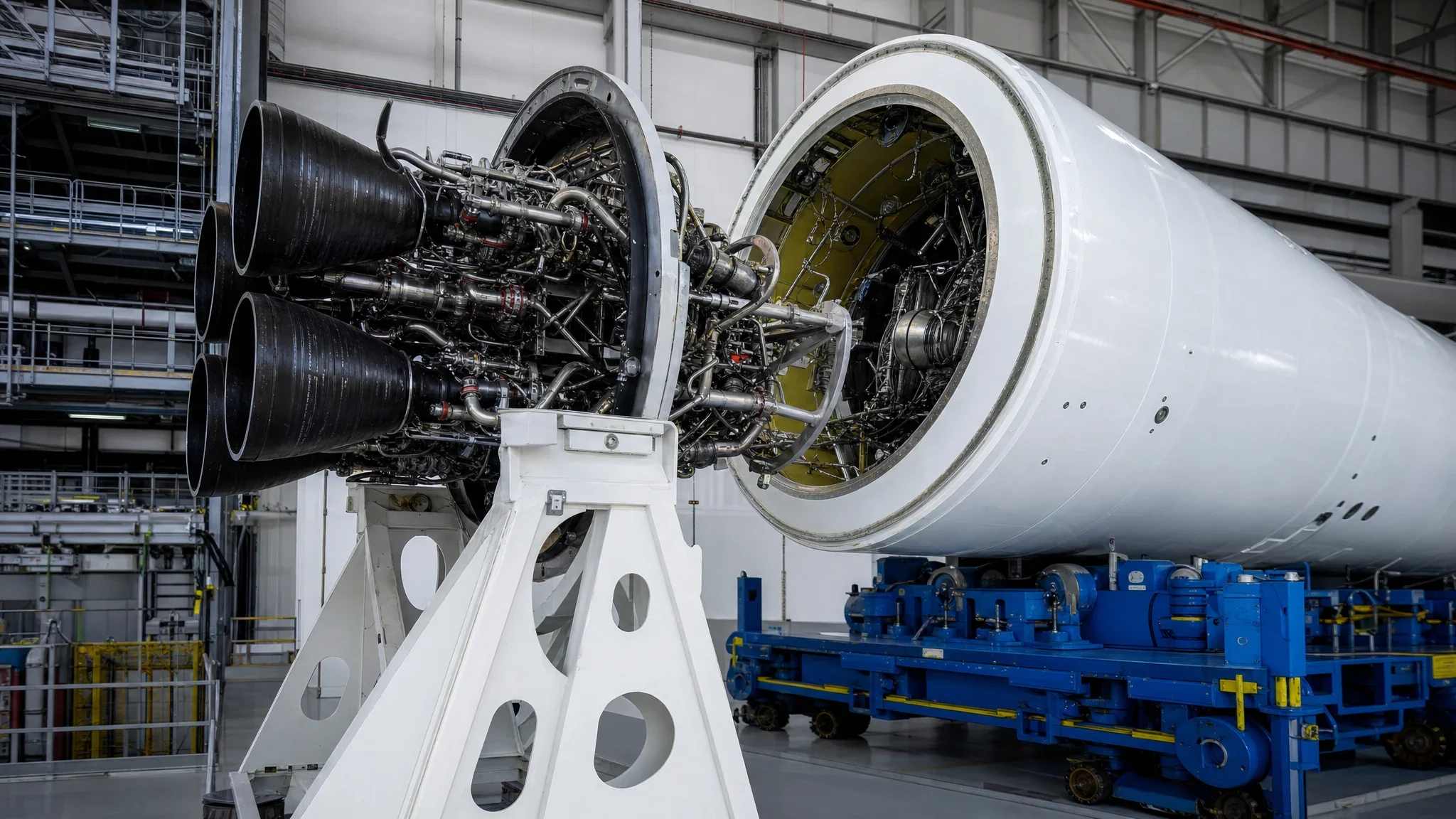
Its main operating product is Zhuque-2E, a two-stage LOX/methane launch vehicle. LandSpace states payload capacity of 4,000 kg to 500 km sun-synchronous orbit and 6,000 kg to 200 km low Earth orbit. The company also develops its own methane engines, including the TQ-12A 80-ton-class LOX/LCH4 engine, and is working on the larger reusable Zhuque-3 vehicle.
LandSpace’s key operating activities are vertically integrated across rocket research and development, engine development, manufacturing, testing and launch operations. Its infrastructure includes a Beijing headquarters, Huzhou test capability, a Jiaxing rocket intelligent manufacturing base and LOX/methane launch infrastructure at Jiuquan and the Dongfeng commercial space zone.
The company’s competitive advantages are technical rather than financial. Zhuque-2 became the world’s first methane-fueled rocket to reach orbit in July 2023, giving LandSpace a credible position in LOX/methane propulsion. The company also has flight-proven self-developed liquid engines and an active methane rocket line, which separates it from earlier-stage private launch companies that have not demonstrated orbital capability.
Direct competitors include other Chinese commercial launch companies seeking constellation launch demand, along with state-backed Chinese launch providers. In a global comparison, Rocket Lab is the closest listed peer because it combines commercial launch activity with space-systems operations. The comparison has limits: Rocket Lab operates in different geographies, serves a broader international customer base and uses a different vehicle class, while LandSpace is more directly tied to China’s domestic satellite-internet and state-supported commercial-space programs.
LandSpace’s market position is strong within China’s private launch sector but still early on a global scale. It is one of China’s earliest private commercial rocket companies and says it was the first Chinese private carrier-rocket company to obtain all necessary qualifications. Recent Zhuque-2E missions in May and June 2026 show continuing operational activity, including the June 9, 2026 launch of Qianfan DTC 01 and China Mobile 02.
Near-term demand is linked to China’s satellite constellation buildout, including reported supplier or procurement roles with China SatNet and Shanghai Yuanxin or Spacesail-related launch programs. This domestic exposure is central to the investment case. It also limits LandSpace’s addressable market because U.S. and allied export controls, national-security rules and customer restrictions constrain access to many international payloads.
The key market question is whether LandSpace converts technical progress into repeatable, lower-cost launches. Current public reports indicate that medium-lift commercial launch contracts remain difficult to make profitable at existing cost levels. Zhuque-3 is therefore central to the company’s market position: successful first-stage recovery and reuse would improve cadence and unit economics, while failure to prove reuse would leave LandSpace exposed to high burn, customer concentration and intense competition for Chinese constellation launches.