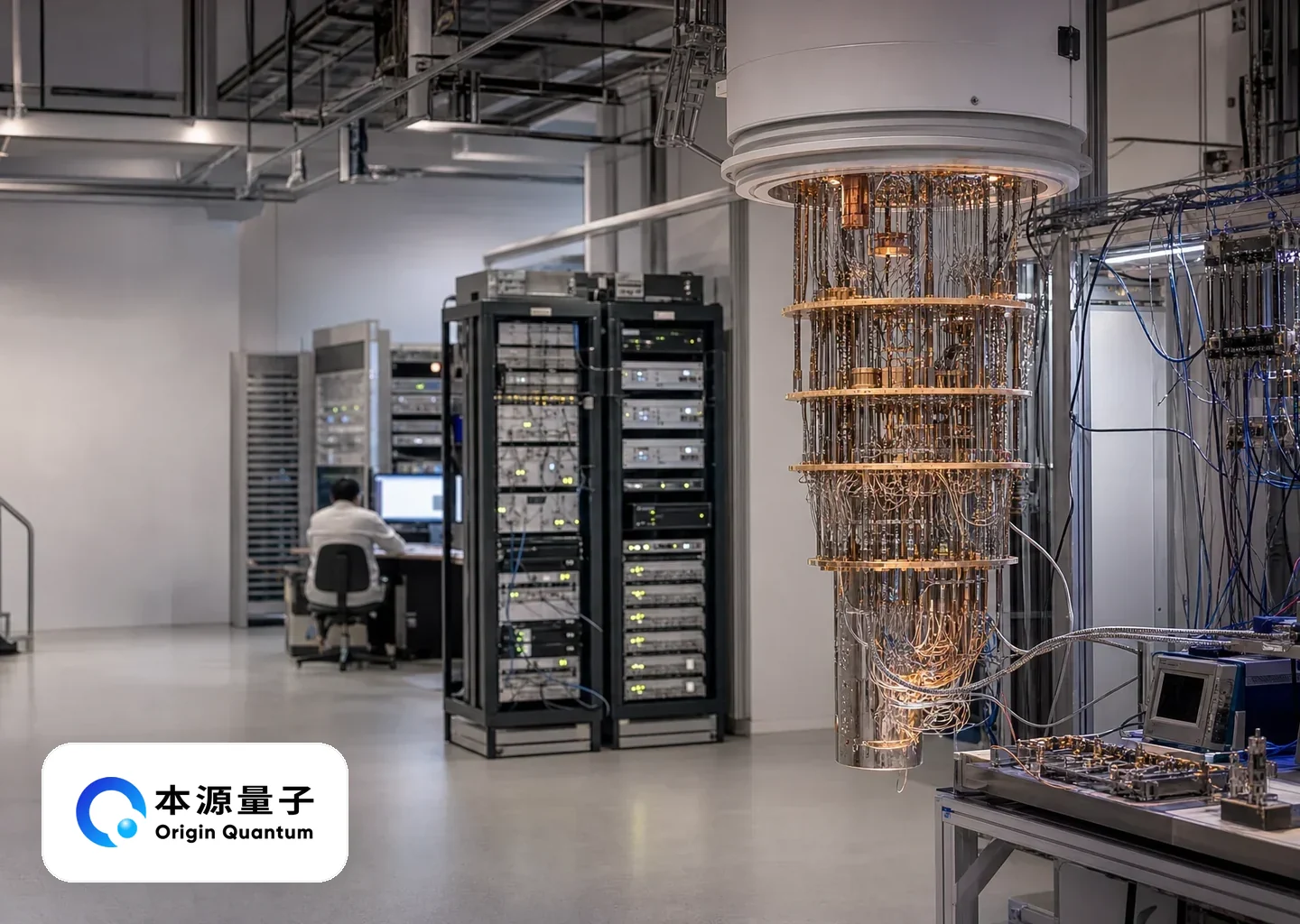
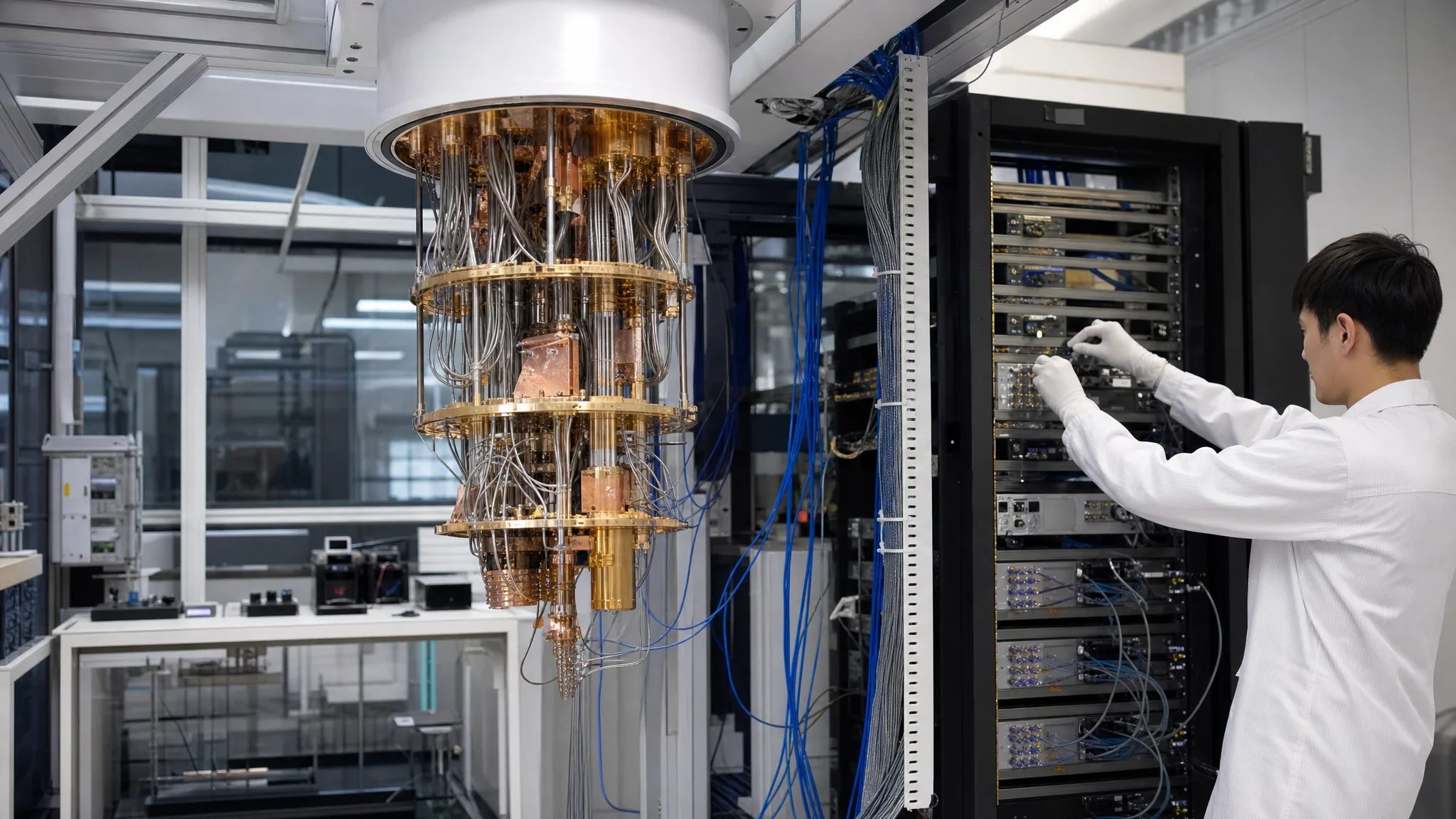
Origin Quantum is a private Chinese full-stack quantum-computing company based in Hefei, Anhui. It does not publish quarterly financial statements, audited revenue, profitability, margins, cash burn, or Q1 2026 results. The latest material public update is operational rather than financial: the May 2026 launch of OriginQ Wukong 180, a fourth-generation superconducting quantum computer offered through cloud access.
The business model is early-stage and R&D-heavy. Origin Quantum sells or provides access to a vertically integrated quantum-computing stack that spans superconducting quantum chips, control and readout systems, cryogenic and environmental support infrastructure, quantum operating-system software, cloud access, developer tools, and application software. Its monetization is likely tied to a mix of government and research projects, cloud usage, education and training, enterprise pilots, system or component delivery, and strategic funding, although the company does not disclose the revenue split.
Main revenue and commercialization channels include
- Cloud quantum access: OriginQ Cloud provides access to quantum computing services, hybrid computing, dedicated cloud services, programming tools, education resources, and application-development support.
- Full-stack systems and components: The company develops quantum chips, control and readout equipment, interconnect modules, cryogenic support systems, and related hardware for engineered quantum computers.
- Software and developer tools: Its stack includes Origin Pilot, QPanda3, VQNet, pyqpanda-algorithm, ChemiQ, and QCFD, supporting algorithm development, quantum simulation, chemistry, and application workflows.
- Education and ecosystem services: Origin Quantum uses training resources, programming tools, and developer support to build a user base around its hardware and software.
- Enterprise and research applications: Target fields include finance, AI, computational chemistry, smart grid, weather forecasting, biomedicine, scientific simulation, cybersecurity, education, and broader industrial use cases.
Origin Quantum’s key operating categories are superconducting quantum hardware, quantum control systems, quantum software, cloud quantum services, and application solutions. Wukong 180 is the company’s most visible current platform. The system was disclosed with 180 computational qubits, 251 coupling qubits, average T1 coherence time of 40 microseconds, average T2 Echo coherence time of 20 microseconds, 99.90% average single-qubit gate fidelity, 99.00% average two-qubit gate fidelity, and 99.00% average readout fidelity. Its earlier Origin Wukong system used a 72-qubit superconducting chip and went online in January 2024.
The company’s main competitive advantage is vertical integration. By developing chips, control electronics, operating software, cloud delivery, and application tools in-house, Origin Quantum aligns closely with China’s policy emphasis on domestic technology self-sufficiency. Its Hefei base also places it near important Chinese quantum research networks linked to USTC and CAS-related talent pools.
Market position is strongest in China. Origin Quantum presents itself as a leader in the domestic quantum-computing industry and one of the more visible private Chinese companies offering cloud-accessible superconducting quantum systems. The launch of Wukong 180 moves its public roadmap into the 100-qubit-plus superconducting category, which strengthens its profile with researchers, developers, government-linked users, and early enterprise customers.
Direct competitors include IBM Quantum, Rigetti Computing, Google Quantum AI, Quantinuum, IonQ, IQM, Oxford Quantum Circuits, and Chinese state-linked or research systems such as Zuchongzhi from USTC and related institutions. Rigetti is the closest public US peer in superconducting quantum computing, while IBM is the larger global reference point for cloud-accessible superconducting quantum systems and developer ecosystems.
Origin Quantum’s market standing is harder to verify than that of listed peers because it lacks audited commercial metrics and standardized public benchmarking. The company claims Wukong 180 has key performance metrics comparable with leading international superconducting systems, but independent comparisons remain difficult because quantum modalities, test methods, workloads, and error measures differ across providers. For investors, Origin Quantum is best viewed as a strategically important Chinese quantum platform company with rising technical visibility, but with limited transparency on revenue scale, margins, customer traction, and path to commercial profitability.