Last Updated -

February 1, 2026

Popmart

Company Profile and Market Insights

Explore the business model, global strategy, and market performance including insights into its position in China.

Key facts
Founded 2010 • Listed on HKEX Dec 2020 • Ticker 9992
571
Stores (as of 30 Jun 2025)
2.597
Roboshops (as of 30 Jun 2025)
18
Countries with stores (as of 30 Jun 2025)
RMB 13,04 bn
Revenue (FY 2024)
RMB 3,31 bn
Profit for the year (FY 2024)
38,9%
Overseas revenue share (FY 2024)
Popmart

About

Pop Mart International Group Limited (HKEX: 9992) is a Beijing-headquartered designer toy company founded in 2010.  It built its business around collectible characters sold through blind boxes, limited releases, and collaborations that blend in-house IP with licensed franchises.  The company listed on the Hong Kong Stock Exchange in December 2020.

IP creation and merchandising sit at the center of Pop Mart’s model, spanning figures, plush products, and larger “MEGA” collectibles. In the first half of 2025, proprietary products contributed 99.1% of total revenue, underlining the importance of owned and operated IP economics. THE MONSTERS line, which includes Labubu, generated RMB 4.814 billion of revenue in that period as product innovation and plush formats accelerated demand.

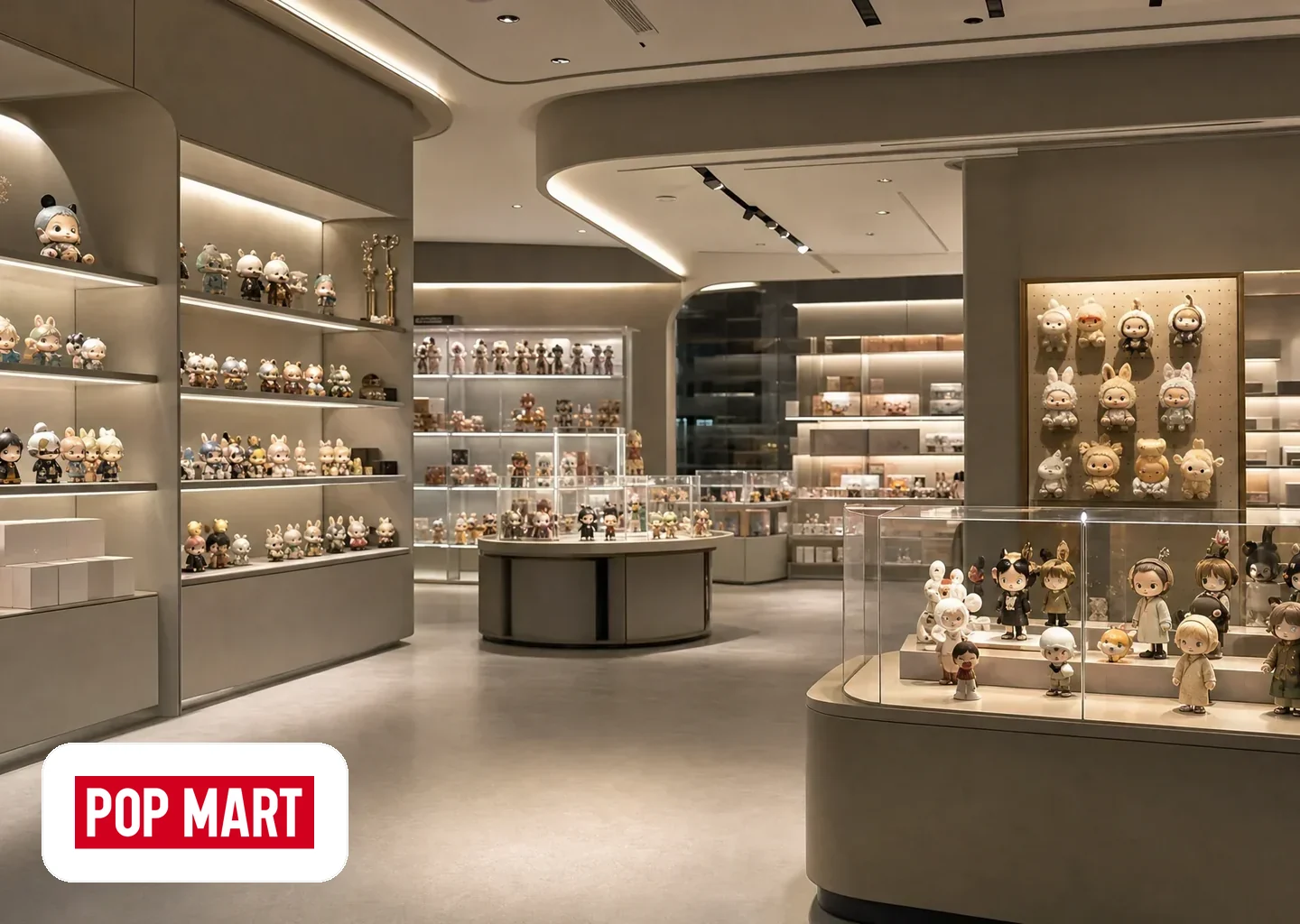
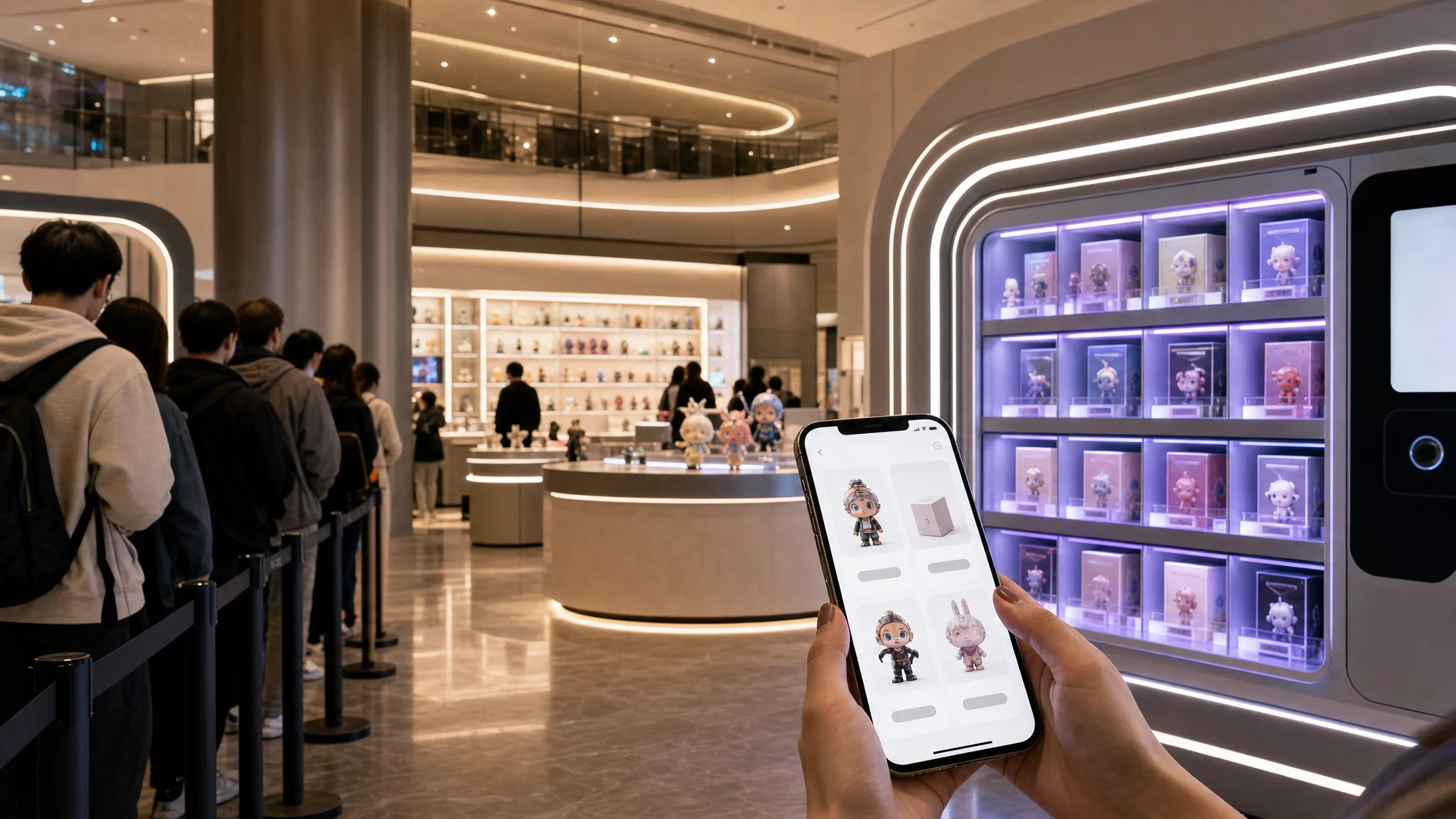
Pop Mart scales distribution through a mix of branded stores, vending “roboshops,” and online channels. As of 30 June 2025, it operated 571 stores across 18 countries and 2,597 roboshops, with 443 stores in mainland China.  In 2024, revenue reached RMB 13.04 billion and profit for the year totaled RMB 3.31 billion.  A Q3 2025 trading update reported year-on-year revenue growth of 245% to 250%, led by overseas growth of 365% to 370%.

Popmart

Business Model and Market Position

Pop Mart earns most of its money by turning character IP into collectible products sold through a mix of owned retail, vending “roboshops,” and online channels. In the first half of 2025, total revenue reached RMB 13.88 billion. Proprietary products contributed 99.1% of revenue, while artist IPs contributed 88.1%. THE MONSTERS alone generated RMB 4.81 billion, equal to 34.7% of revenue.

Core activities

  1. IP incubation and operation
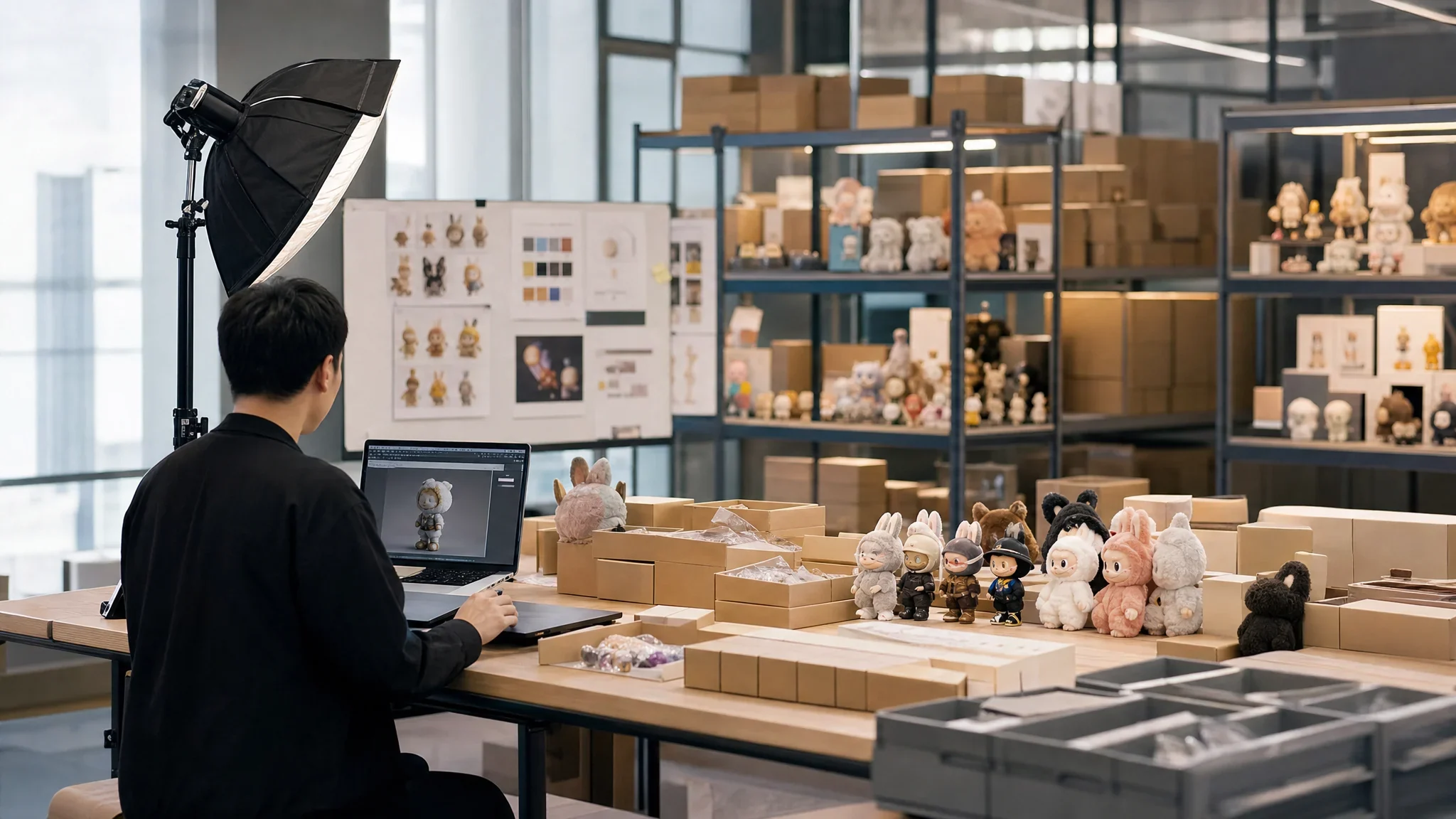
    Pop Mart signs and develops artist-driven characters, then builds long-lived franchises through serialized product lines, offline exhibitions, and fan events. In 2024, revenue from four IPs (THE MONSTERS, MOLLY, SKULLPANDA, CRYBABY) each exceeded RMB 1 billion for the first time, showing growing dependence on a small set of scalable winners.
  2. Merchandising across multiple product formats
    The company uses the same IP across figures, plush, MEGA collectibles, and adjacent categories, which lifts monetization per character. In the first half of 2025, plush products delivered RMB 6.14 billion, equal to 44.2% of revenue, reflecting the Labubu-led shift toward plush accessories and carry items. MEGA COLLECTION produced RMB 1.01 billion, equal to 7.3% of revenue.
  3. Omnichannel retail distribution
    Pop Mart combines brand stores for discovery with roboshops for dense, lower-labor coverage. As of 30 June 2025 it operated 571 stores in 18 countries and 2,597 roboshops. Mainland China stores rose from 431 at 31 December 2024 to 443 at 30 June 2025. The Americas expanded from 22 to 41 stores over the same period, with Europe rising from 14 to 18.
  4. Direct-to-consumer digital funnel and member flywheel
    Online channels include Pop Draw and the POP NOW feature integrated into Pop Mart’s website and app, plus third-party platforms such as Tmall, Douyin, and JD. As of 30 June 2025, registered members in Mainland China reached 59.12 million. Member sales represented 91.2% of total sales, with a 50.8% repeat purchase rate among members during the period.
  5. Experiences and brand extensions
    Pop Mart uses experiences to deepen fandom and create new monetization surfaces, including POP LAND in Beijing and themed exhibitions tied to key IPs. These channels also function as marketing that reinforces scarcity-driven product drops across stores and online.

Market position

Leader in artist-led IP economics in China’s “trendy toy” category.
The revenue mix shows a business anchored in owned franchises rather than third-party resale. Artist IP share rose from 81.0% in the first half of 2024 to 88.1% in the first half of 2025, and proprietary products exceeded 99% of revenue. That structure supports higher capture of value per hit character versus retailers that rely more on licensed franchises.

Competitive set and differentiation.
In China, major peers include Miniso’s Top Toy and 52TOYS. Reporting from Reuters highlights these as key art-toy retailers alongside Pop Mart, with Miniso and others historically leaning more on licensed IP from large global owners. Pop Mart’s edge centers on scaling original artist IP into repeatable product systems, with THE MONSTERS and Labubu as the current flagship example.

International growth has shifted the strategic center of gravity.
In 2024, revenue from Hong Kong, Macao, Taiwan, and overseas markets reached RMB 5.07 billion, equal to 38.9% of total revenue. In the third quarter of 2025, Pop Mart reported overall revenue growth of 245% to 250% year on year, with overseas revenue up 365% to 370%. America grew 1,265% to 1,270% in that quarter, pointing to a fast-scaling new profit pool outside China.

Supply chain model favors speed, with execution risk.
Pop Mart does not run its own factories and relies on partner manufacturing. Reuters reported on 6 January 2026 that the company is expanding its supply chain beyond China and Vietnam through partners in Mexico, Cambodia, and Indonesia to raise capacity and improve global access as demand surged. This keeps the model asset-light, while raising the importance of quality control, lead times, and anti-counterfeit enforcement as volumes rise.

Popmart

Performance in China

China remains Pop Mart’s largest market and its main operating base. In the first half of 2025, revenue from PRC operations reached RMB 8.28 billion, equal to 59.7% of group revenue. PRC offline channels delivered RMB 5.08 billion and PRC online channels delivered RMB 2.94 billion.

Retail density still matters in Mainland China. In the first half of 2025, Pop Mart operated 409 stores and 2,396 roboshops in Mainland China. Mainland store revenue was RMB 3.65 billion and Mainland roboshop revenue was RMB 643 million in that period.

Online is the faster growth engine inside China. PRC online sales grew 212.2% year on year in the first half of 2025, with key platforms including Pop Draw, Tmall, and Douyin. In Q3 2025, the company reported PRC revenue growth of 185% to 190%, with online up 300% to 305% and offline up 130% to 135% year on year.

Member economics are a core advantage. Registered members in Mainland China reached 59.12 million as of 30 June 2025. Member sales represented 91.2% of total sales, with a 50.8% repeat purchase rate.

Regulation is the key China-specific risk. China’s market regulator issued trial guidelines in June 2023 that ban blind-box sales to children under eight and require guardian consent for minors aged eight to 18. A People’s Daily commentary in June 2025 called for tighter oversight of blind-box toys and trading cards, which revived investor focus on policy risk.

Growth and Future Prospects

Pop Mart’s near term trajectory is shaped by two forces that pull in opposite directions. Demand for a small set of hero IPs is scaling fast, while the business needs fresh characters, formats, and geographies to avoid over-reliance on one craze. In the first half of 2025, revenue reached RMB 13.88 billion and profit attributable to owners reached RMB 4.57 billion, supported by a sharp mix shift toward higher velocity products. Plush products delivered RMB 6.14 billion, or 44.2% of revenue. THE MONSTERS generated RMB 4.81 billion, or 34.7% of revenue, which shows both the power and the concentration risk of the current cycle.

Key growth drivers include

  1. International store rollout and brand building
    On 21 October 2025, Pop Mart reported 245% to 250% revenue growth in Q3 2025, with overseas growth of 365% to 370% year on year. The Americas grew 1,265% to 1,270% in that quarter, turning overseas expansion into the main incremental growth pool.
  2. Supply chain scaling and nearshoring for faster replenishment
    On 6 January 2026, Pop Mart said it added partner manufacturing in Mexico, Cambodia, and Indonesia, expanding beyond China and Vietnam. Reuters also reported an August 2025 production ramp to about 30 million plush units per month, aimed at keeping pace with global demand.
  3. Product format expansion led by plush and wearable accessories
    Plush moved from a secondary category to the largest revenue line in H1 2025, supported by character-led carry items and accessories that fit daily use, not only shelf display.
  4. Optionality in entertainment and licensing
    Reuters Breakingviews described ambitions that mirror Disney’s playbook, including a reported movie deal with Sony Pictures in development, which would broaden monetization beyond toys and retail.
  5. Capital allocation to support confidence during volatility
    Pop Mart disclosed share repurchases on 19 January 2026 (1.4 million shares, HK$251.4 million) and 21 January 2026 (0.5 million shares, HK$96.5 million).

Challenges ahead include

  • Hit concentration risk: THE MONSTERS at 34.7% of H1 2025 revenue raises the stakes for new IP incubation and sustained engagement.
  • Trend durability and resale cooling: reporting has flagged concerns about “peak Labubu” and the need for new characters and collaborations to sustain momentum.
  • Counterfeits and brand protection: “Lafufu” style knockoffs and seizures highlight enforcement and consumer trust as ongoing costs of success.
  • Regulatory overhang on blind-box mechanics: state-media scrutiny has periodically tightened investor risk perception around sales practices aimed at minors.

This Company Profile was written by Dominik Diemer

Dominik Diemer blends an investor mindset with execution discipline.

He is a SAFe Program Consultant (SPC) and Lean Portfolio Management (LPM) practitioner at DMG MORI Digital, working as a SAFe Release Train Engineer and internal consultant in the Lean-Agile Center of Excellence (LACE).

His focus is prioritization, flow, and dependency management that turns strategy into outcomes. With experience across Bertelsmann and the Founders Foundation, he bridges corporate and startup thinking.

He also invests privately in private equity deals, sharpening his view on business models, value drivers, and go-to-market.

StockCounterParts reflects that lens.