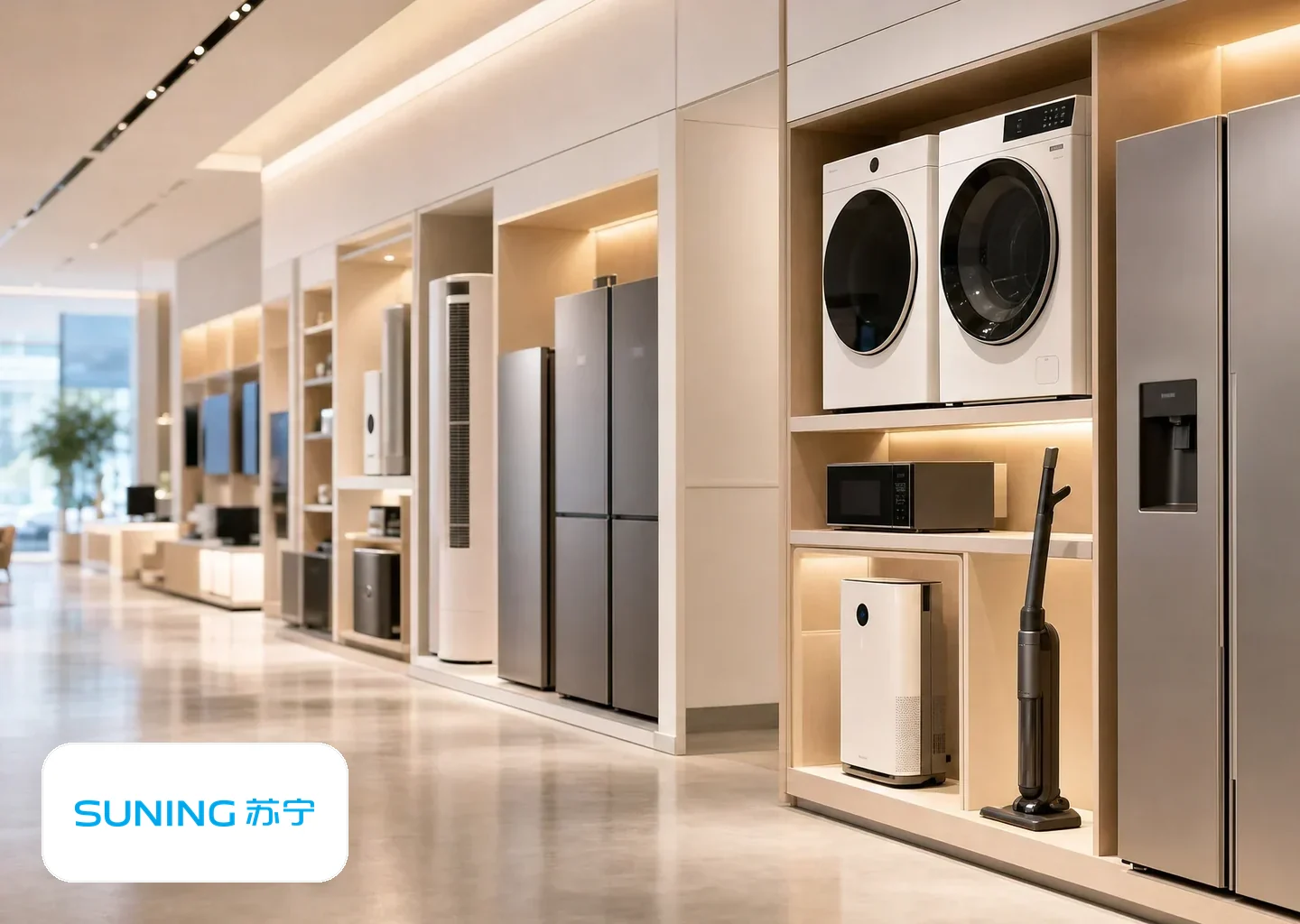
Suning.com Group is an omnichannel Chinese retailer centered on home appliances and consumer electronics. It makes money mainly by selling products through Suning.com, mobile and mini-program channels, self-operated stores, and Suning Retail Cloud franchise stores. It also earns revenue from general merchandise, logistics, installation and repair, open-platform services, and enterprise procurement.
The business remains heavily domestic. In 2025, Mainland China generated RMB 42.958 billion of revenue, equal to 87.74% of total revenue and 96.17% of main-business revenue. Hong Kong, Macau, Taiwan, and overseas markets contributed RMB 1.713 billion, or 3.50% of total revenue. These smaller markets grew in 2025 and again in Q1 2026, when sales rose 43.2% year over year, but management said the scale remained limited.
Revenue is concentrated in retail and in the appliance-electronics category. In 2025, retail business revenue was RMB 44.671 billion, or 91.24% of total revenue. Home appliances and consumer electronics generated RMB 40.005 billion, or 81.71% of total revenue. Daily-use department-store products contributed RMB 3.034 billion, while services and other revenue was RMB 1.633 billion.
Key operating channels and categories are
- Online retail: Suning sells through its website, app, mini-programs, and campaign traffic, with recent investment in AI-based personalization, merchant tools, smart guides, and unified member rights across online and offline channels.
- Self-operated stores: The company retained 863 self-operated stores at the end of Q1 2026, down from 890 at 2025 year-end, reflecting continued store rationalization.
- Retail Cloud franchise stores: Suning operated 9,070 franchise Retail Cloud stores at the end of Q1 2026, down from 9,401 at 2025 year-end. This model extends its reach into lower-tier markets while reducing the direct capital burden of owned stores.
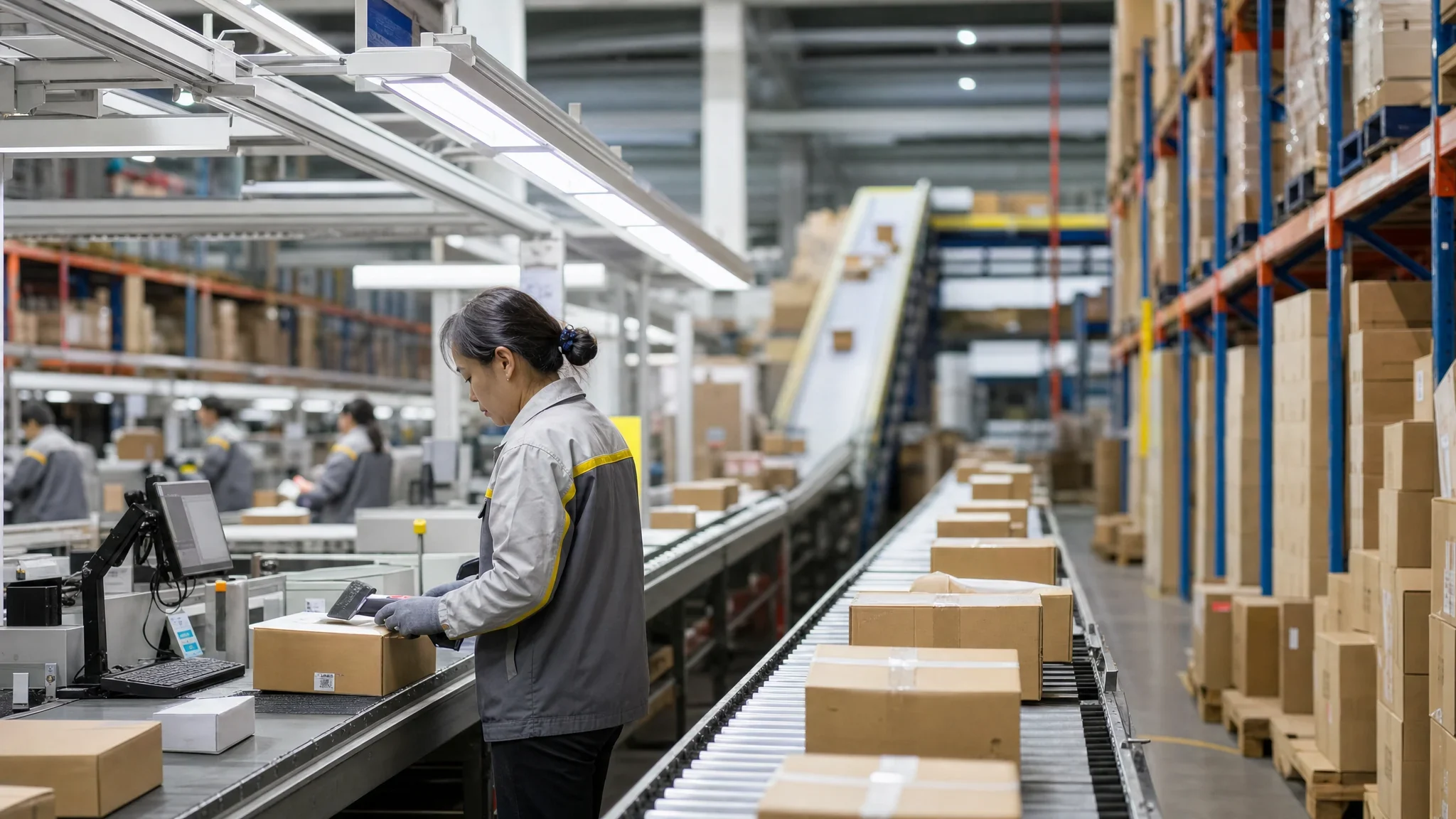
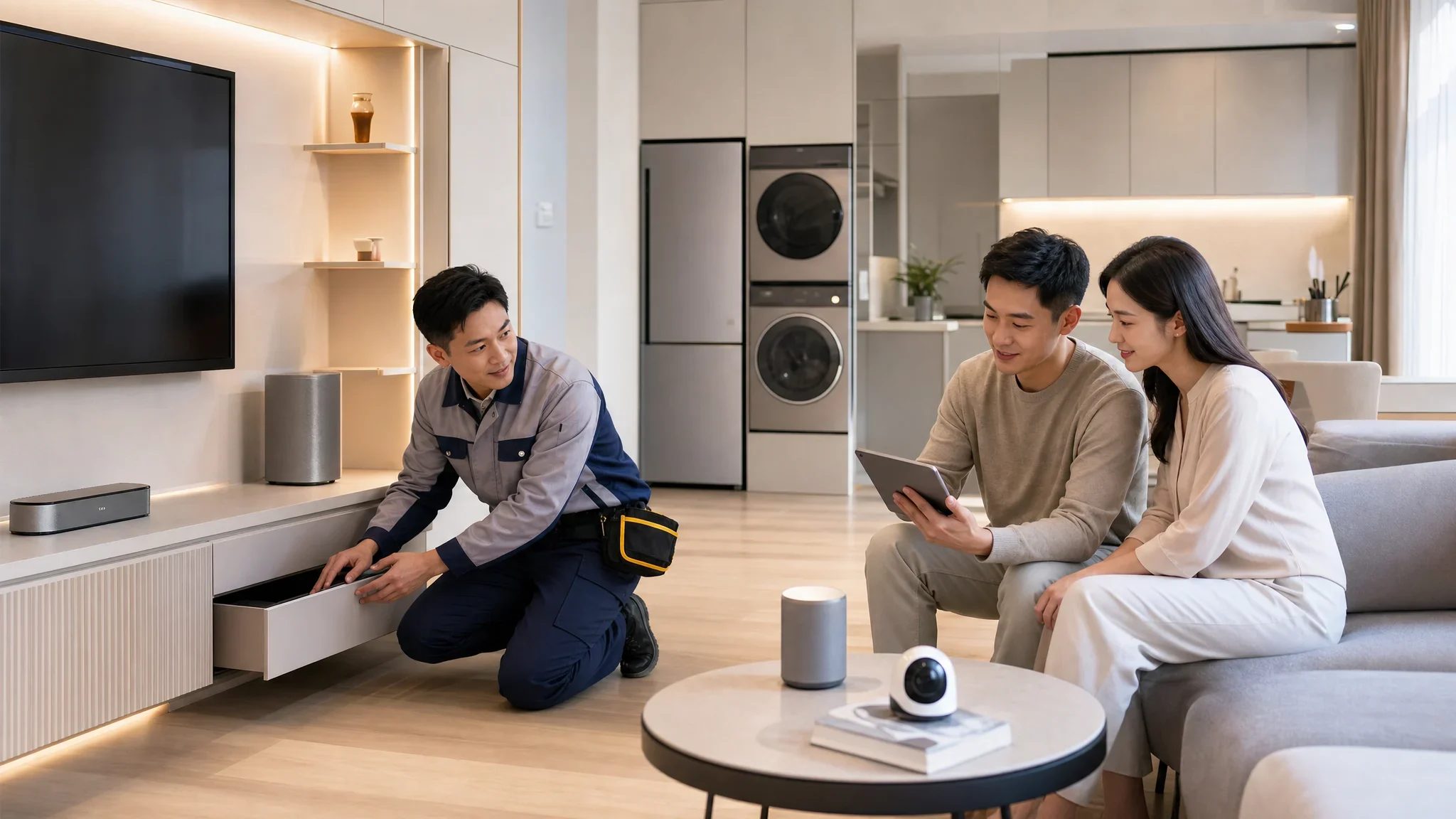
- Services and after-sales: Suning uses logistics, installation, repair, and after-sales support as part of its retail proposition. Its Suning Bangke service network covers more than 300 cities, 2,800 districts and counties, and 30,000 towns, reaching over 98% of China’s regions.
- Enterprise procurement: Suning Yicaiyun serves government and enterprise digital procurement customers. In Q1 2026, Yicaiyun revenue grew about 30% year over year, and by June 2026 first-half procurement customers reached 275,000, up 70%, with 2.21 million procurement orders, up 39%.
Suning’s competitive advantages are its recognized brand in Chinese appliance retail, nationwide store and service coverage, lower-tier-market franchise presence, and a business model that links online traffic with offline fulfillment and after-sales service. Its enterprise procurement platform adds a second growth path outside traditional consumer retail, especially as Yicaiyun expands into industrial and MRO products through the Kuberui private brand.
Its market position is weaker than its brand history suggests. Suning remains a major name in China’s appliance and electronics retail market, but its revenue base has contracted and the company remains under restructuring pressure. Q1 2026 revenue fell 28.82% year over year to RMB 9.178 billion. Reported net profit attributable to shareholders was RMB 28.905 million, but recurring net profit excluding non-recurring items was a loss of RMB 860.574 million, showing that underlying profitability remains weak.
Direct competitors include JD.com, Alibaba’s Tmall, and Gome. JD.com is the clearest listed peer because it competes directly in appliances and consumer electronics while operating a much larger e-commerce and logistics platform. Compared with JD.com, Suning has a stronger legacy in physical appliance retail and after-sales service, but JD.com has greater online scale, logistics depth, and financial capacity. Alibaba’s Tmall competes as a marketplace channel, while Gome remains a closer historical appliance-store peer.
Suning’s near-term market position depends on whether it stabilizes retail sales, improves recurring profitability, and completes balance-sheet and asset restructuring. Demand remains exposed to China’s housing cycle, consumer confidence, appliance trade-in subsidy policy, and intense price competition. The company’s large service network and franchise footprint remain valuable, but Q1 2026 store reductions and declining revenue show that Suning is still defending its position rather than expanding from a position of strength.