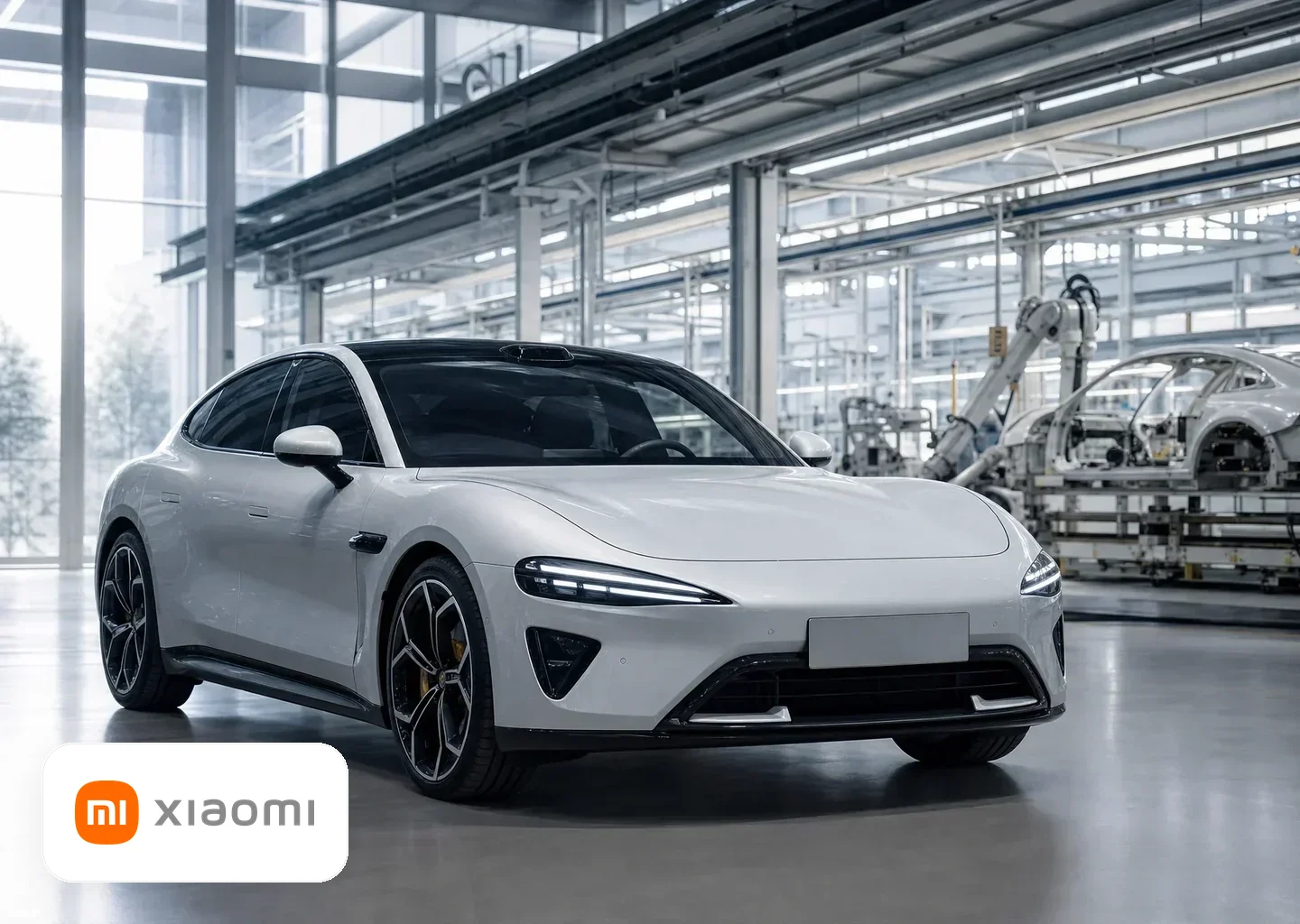
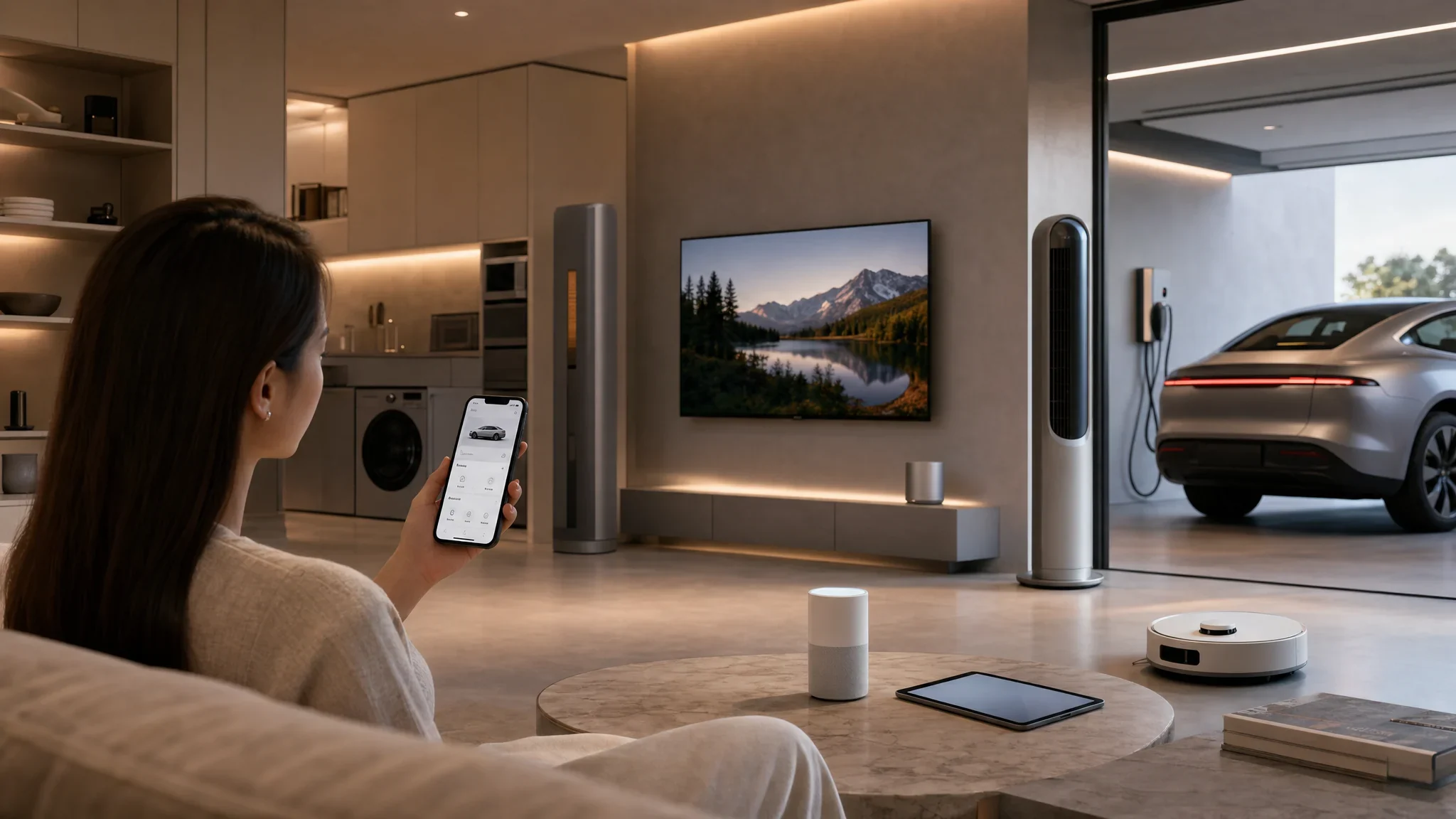
Xiaomi makes money from a scaled consumer technology ecosystem built around smartphones, connected devices, internet services and smart electric vehicles. Its strategy is to link hardware, software, retail and services under a “Human × Car × Home” ecosystem, using smartphones and AIoT devices as the main entry points and EVs as a newer expansion category.
In Q1 2026, Xiaomi generated revenue of RMB99.1 billion, down 10.9% year over year. The Smartphone × AIoT segment remained the core business with RMB79.3 billion of revenue, or 80.0% of the total. Smart EV, AI and other new initiatives contributed RMB19.9 billion, or 20.0% of revenue, showing that EVs have already become a material business line despite continued losses.
Main revenue streams are
- Smartphones: Xiaomi earned RMB44.3 billion from smartphones in Q1 2026. Shipments were 33.8 million units, while average selling price reached a record RMB1,310.1, up 8.2% year over year. This business depends on global shipment scale, product cycles, channel strength and the company’s ability to raise its premium mix.
- IoT and lifestyle products: This category generated RMB24.7 billion in Q1 2026 and includes smart TVs, tablets, wearables, home appliances and other connected hardware. Gross margin was 25.2%, making it a meaningful contributor to hardware profitability and ecosystem depth.
- Internet services: Internet services produced RMB9.5 billion of revenue in Q1 2026, with a 76.1% gross margin. Advertising is the main driver, with Q1 advertising revenue of RMB7.1 billion, up 7.8% year over year. This is Xiaomi’s highest-margin revenue stream and monetizes its installed base rather than one-time hardware sales.
- Smart EV, AI and other new initiatives: This segment generated RMB19.9 billion in Q1 2026, including RMB19.0 billion from smart EVs. The segment recorded an operating loss of RMB3.1 billion, reflecting heavy investment, production scaling and competitive pressure in China’s EV market.
Xiaomi’s main operating segments are Smartphone × AIoT and Smart EV, AI and other new initiatives. The first segment carries the established hardware and services ecosystem. The second segment is the company’s strategic expansion area, with EVs already large enough to affect group revenue, margins and capital allocation.
The company’s competitive advantages come from scale, ecosystem breadth and direct consumer reach. Xiaomi had 1,118.7 million connected IoT devices excluding smartphones, tablets and laptops at the end of March 2026, up 18.5% year over year. It also reported 746.2 million global monthly active users in March 2026, including a record 195.8 million in mainland China. These figures support cross-selling, recurring service revenue and higher customer retention across phones, wearables, appliances, home devices and cars.
Retail presence is another advantage. As of March 2026, Xiaomi had more than 16,000 Xiaomi stores in mainland China, more than 260 large-format stores and more than 520 overseas new retail stores. In smart EVs, it had 490 sales centers across 143 mainland China cities. This gives Xiaomi broad consumer access in its home market and a growing physical channel overseas.
Xiaomi is one of the world’s largest smartphone vendors. In Q1 2026, it ranked No. 3 globally in smartphone shipments with an 11.3% market share, maintaining a top-three global ranking for the 23rd consecutive quarter. Regionally, it ranked No. 2 in Latin America with 17.4% share and No. 3 in Europe, Southeast Asia, the Middle East and Africa. Its smartphone shipments ranked in the top three in 47 countries and regions and in the top five in 65 countries and regions.
Premiumization is important to Xiaomi’s market position. In mainland China, smartphones priced at or above RMB3,000 accounted for 23.5% of Xiaomi smartphone units sold in Q1 2026. This helps the company move beyond its historical value-for-money positioning, although smartphone shipments still declined 19.2% year over year in Q1 2026.
Direct competitors include Apple, Samsung, Huawei, Honor, Oppo and Vivo in smartphones, Apple and Samsung in devices and ecosystem services, Huawei and other Chinese hardware groups in AIoT, and BYD, Tesla, Nio, XPeng, Li Auto, Zeekr and Huawei-backed auto brands in smart EVs. In wearables, Xiaomi competes with Apple, Huawei and Samsung. In internet services, it competes for advertising budgets and user attention with large Chinese and global digital platforms.
Compared with Apple, Xiaomi has a broader low-to-mid and mass-market hardware footprint and a larger range of connected home products, while Apple has stronger premium pricing, services monetization and global brand power in high-end smartphones. Compared with Tesla, Xiaomi’s EV business is earlier-stage and China-focused, but Xiaomi brings an existing consumer electronics user base, retail network and software ecosystem into the car market.
Xiaomi’s market position is strong but uneven. It is a top-three global smartphone vendor with a large connected-device ecosystem, high-margin internet services and a fast-scaling EV business. At the same time, Q1 2026 showed pressure from lower revenue, weaker profits, component costs, reduced China subsidies in IoT and losses in EVs. The investment case depends on whether Xiaomi converts ecosystem scale into higher margins while scaling EVs without eroding group profitability.