Last Updated -

April 19, 2026

CRRC

Company Profile and Market Insights

Explore the business model, global strategy, and market performance including insights into its position in China.

CRRC
Key facts
Founded 2015 • SSE: 601766 • HKEX: 1766 • FY 2025 results (year ended Dec 31, 2025)
RMB 273.1b
Revenue (FY 2025)
RMB 13.18b
Net profit attributable (FY 2025)
RMB 346.1b
New contracts (2025)
RMB 65.0b
International new contracts (2025)
RMB 357.1b
Orders in hand (Dec 31, 2025)
RMB 17.64b
R&D expenses (FY 2025)

About

Formed in 2015 through the merger of CSR Corporation Limited and China CNR Corporation Limited, CRRC is headquartered in Beijing and operates as the flagship listed vehicle of China’s rail equipment industry. The company states that its mission is to connect the world through better mobility, while its long-term goal is to become a world-leading provider of high-end equipment system solutions with rail transit equipment at the core.

‍

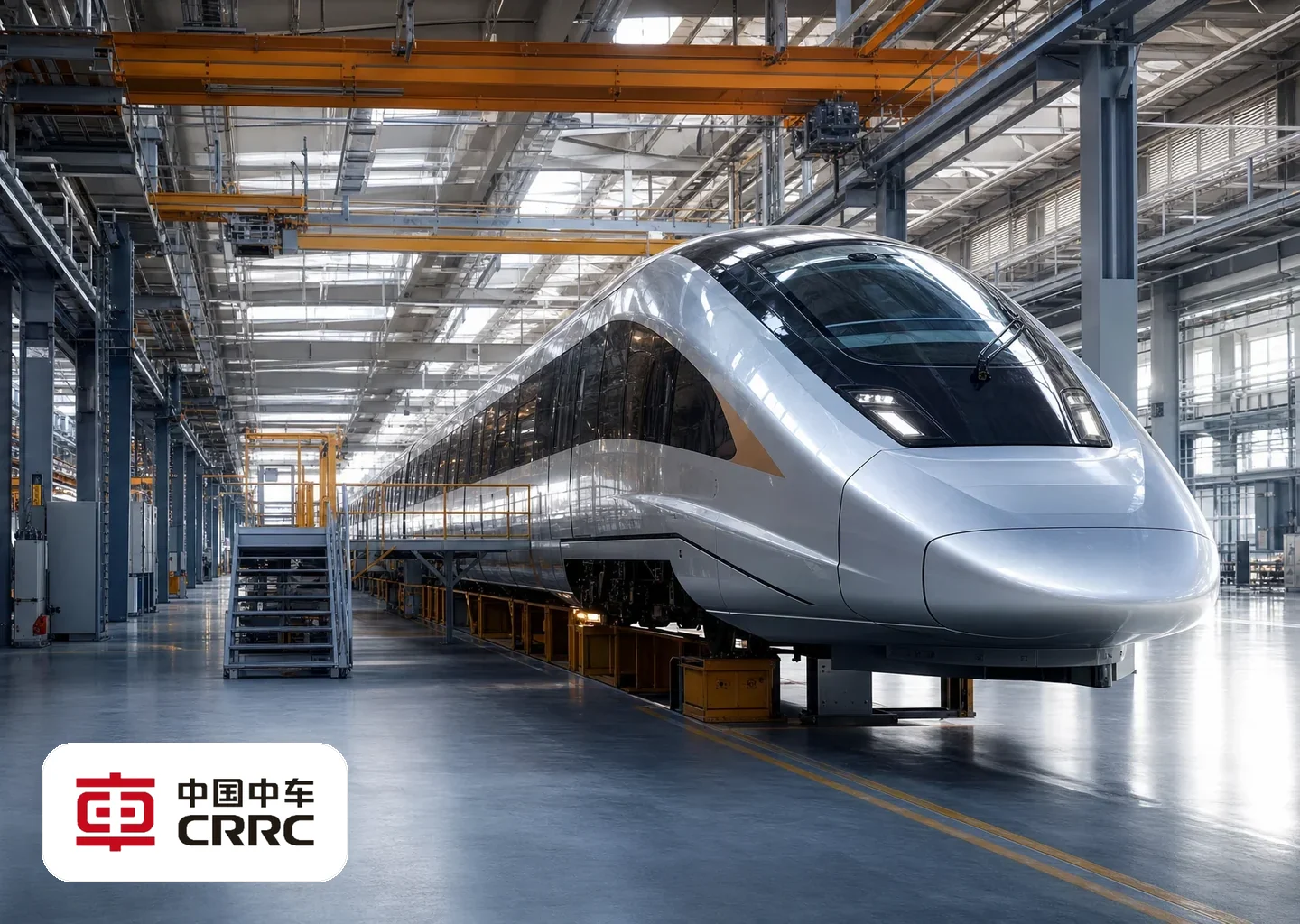
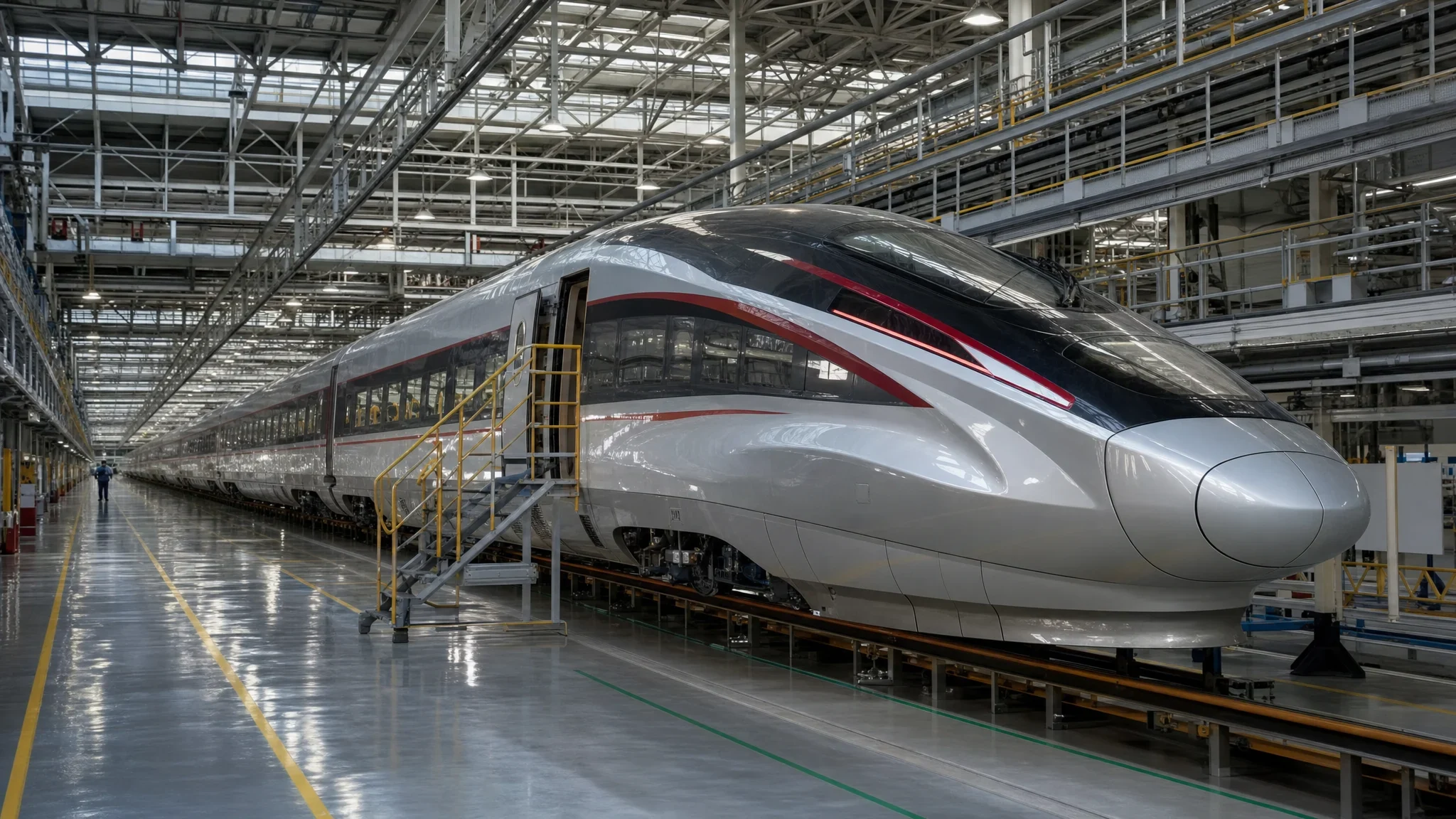
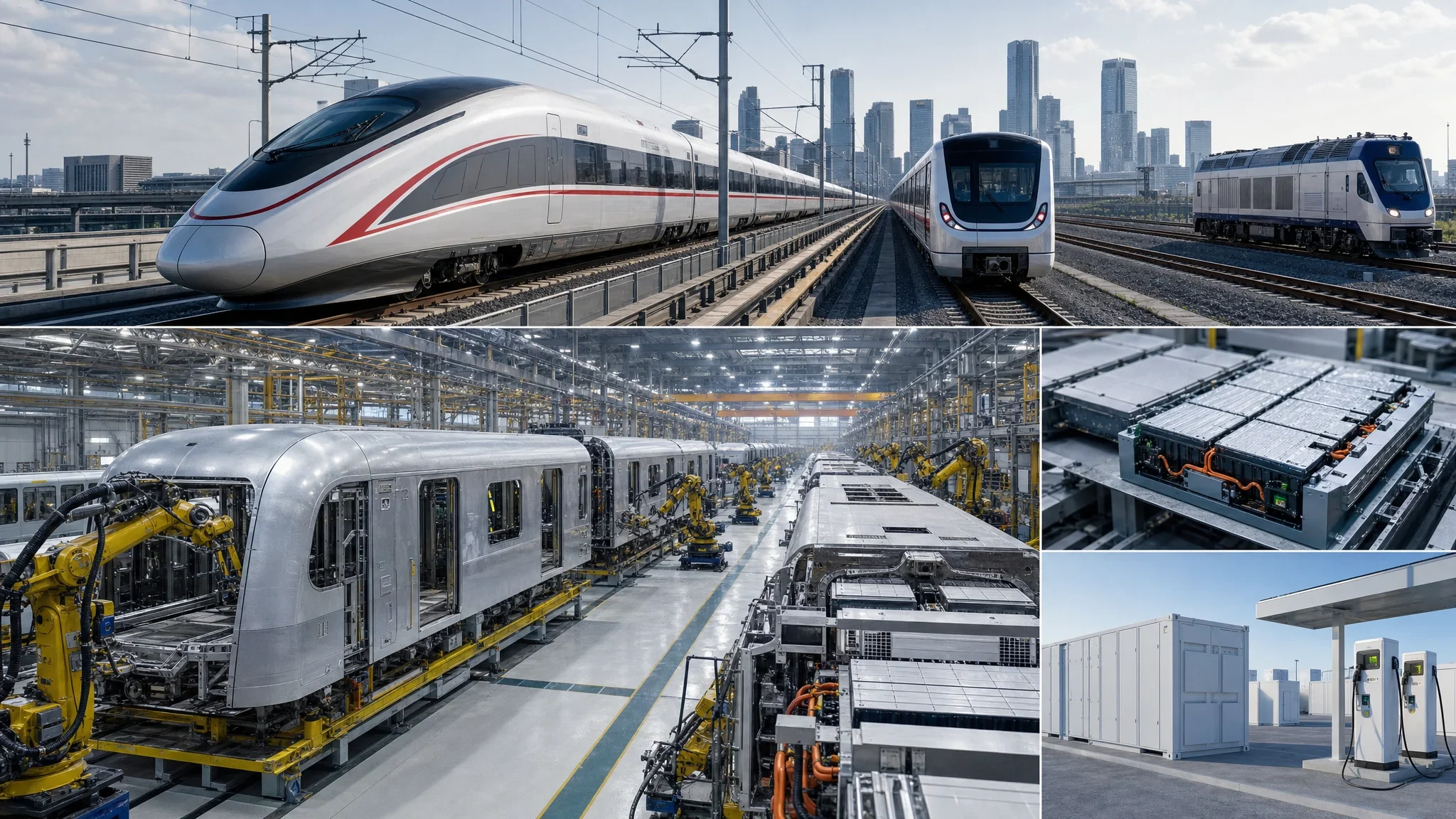
At its core, CRRC designs, manufactures, refurbishes, sells, leases, and services railway equipment, including high-speed trains, locomotives, passenger coaches, freight cars, and urban rail transit vehicles. The business has expanded beyond rolling stock into electrical systems, engineering machinery, industrial components, digital and intelligent solutions, and a broader clean energy equipment platform. In its own description, CRRC remains the world’s largest supplier of rail transit equipment, supported by 46 wholly-owned and majority-owned subsidiaries.

‍

CRRC’s scale stayed significant in 2025. The company reported revenue of RMB 273.063 billion, net profit attributable to shareholders of RMB 13.181 billion, total assets of RMB 550.774 billion, and new contracts worth about RMB 346.1 billion, including about RMB 65.0 billion from international business. It also reported 151,602 total staff, while its new industry segment, which includes businesses such as wind power, photovoltaics, energy storage, hydrogen, and related clean energy equipment, generated RMB 103.121 billion in revenue and accounted for 37.76% of total revenue. That profile shows how CRRC has evolved from a rail vehicle manufacturer into a broader industrial group built on rail transit, electrification, and transport-related clean energy systems.

CRRC

Business Model and Market Position

CRRC runs an order-driven industrial model built around rail transit equipment, urban rail systems, clean energy equipment, and related services. In 2025, revenue reached RMB 273.1 billion. Railway equipment contributed 45.27% of sales, urban rail transit vehicles and urban infrastructure 15.41%, new industry 37.76%, and modern service 1.56%. The group sells mainly by order through open tenders or negotiated tenders, uses a mix of centralized and decentralized procurement, and operates a nationwide manufacturing and R&D network for rolling stock and clean energy equipment.

‍

  1. Railway equipment remains the core profit engine
    CRRC’s railway equipment business covers locomotives, multiple units, passenger carriages, freight wagons, track engineering machinery, and repair and modification services. In 2025, this segment generated RMB 123.6 billion in revenue, up 11.9% year on year, with MUs contributing RMB 68.4 billion, locomotives RMB 29.7 billion, freight wagons RMB 16.9 billion, and railway equipment repair and modification RMB 45.7 billion. This is the base business that ties CRRC closely to China’s national rail buildout and fleet renewal cycle.
    ‍
  2. Urban rail and infrastructure add system-solution depth
    CRRC also earns revenue from metro cars, trams, maglev, monorail, APM systems, and related urban infrastructure. In 2025, this business generated RMB 42.1 billion in revenue, with urban rail vehicles contributing RMB 38.1 billion. Revenue fell 7.37% year on year, which shows that this part of the portfolio is more cyclical than the core railway business. Even so, it still strengthens CRRC’s position as a full-spectrum transport equipment supplier rather than a pure mainline rail manufacturer.
    ‍
  3. New industry is now a major second pillar
    CRRC’s new industry business includes mechanical and electrical systems, new energy equipment, and digital intelligence industry activities. In 2025, this segment generated RMB 103.1 billion in revenue, up 19.39% year on year, driven mainly by wind power and other clean energy equipment. Revenue from non-rail transit parts and components under this segment reached RMB 79.0 billion. This mix shows that CRRC is no longer only a train manufacturer. It is building a wider industrial platform tied to electrification, grid equipment, low-carbon transport, and industrial components.
    ‍
  4. Services and international business extend the value chain
    The modern service segment is still small at RMB 4.2 billion in 2025, though CRRC’s broader service model reaches further than that line item suggests. The company is expanding maintenance, overhaul, operation and maintenance, financial services, asset management, and full life-cycle solutions around its equipment base. Internationally, CRRC’s strategy is to let complete machines pull components, services, and turnkey projects across overseas markets. In 2025, the company signed about RMB 346.1 billion of new contracts, including about RMB 65.0 billion from international business, and finished the year with about RMB 357.1 billion in orders on hand.

‍

CRRC’s market position remains unusually strong. The company describes itself as the world’s leading diversified rolling stock supplier, says its rail transit equipment business ranked first in the world by revenue in 2025, and states that it kept a stable position in the rail transit equipment industry while clean energy equipment and low-carbon transport equipment grew quickly. It also said wind power equipment, energy storage equipment, and polymer composite materials moved into the forefront in China. Its main clients remain China National Railway Group and its affiliates, along with domestic and foreign urban rail transit groups. Revenue from other countries or regions rose 22.88% in 2025, faster than the 9.22% increase in mainland China. For investors, the key point is that CRRC still dominates where it started, in rail, while its next layer of growth is coming from clean energy, full-system delivery, and life-cycle services.

CRRC

Performance in China

China remains CRRC’s core market by a wide margin. In 2025, revenue from mainland China reached RMB 238.242 billion, up 9.22% year on year, while revenue from other countries and regions was RMB 34.821 billion. That means the domestic market still represents the clear center of CRRC’s business, supported by national rail buildout, fleet renewal, urban transit demand, and after-sales work.

‍

Key strategic drivers in China include:

‍

  1. Rail investment is still supporting demand.
    China reported RMB 901.5 billion of railway fixed-asset investment in 2025 and put 3,109 km of new rail lines into operation, including 2,862 km of high-speed rail. The momentum continued into 2026, with railway fixed-asset investment up 5.1% year on year to RMB 137.9 billion in the first quarter. That matters for CRRC because its domestic performance is still closely tied to new train procurement, upgrades, and rail system expansion.
    ‍
  2. Urban rail remains a second domestic pillar.
    CRRC said in its 2025 interim materials that China’s urban rail transit operating mileage was expected to reach about 13,000 km by the end of 2025, with Shanghai and Beijing each nearing 1,000 km. Inside that market, CRRC has been pushing urban rail maintenance and refurbishment, medium- and low-capacity systems, and its standard subway train 2.0 platform.
    ‍
  3. Domestic strategy is moving beyond new rolling stock alone.
    CRRC’s current China plan also includes faster expansion in maintenance, refurbishment, logistics equipment for railways, and the conversion of legacy internal-combustion locomotives to new energy. That matters because China’s rail market is maturing. More of the domestic opportunity is now shifting from pure line expansion toward replacement cycles, efficiency upgrades, and cleaner equipment.

‍

Competition in China is concentrated and policy-linked rather than retail-like. This is an inference based on CRRC’s position as the world’s largest rail transit equipment supplier, its full product range, and the continued scale of state-led rail investment in China. In practice, CRRC’s main domestic pressure points are project timing, budget allocation, and execution across rail, city transit, and clean-energy equipment rather than a broad field of equally scaled local rivals.

Growth and Future Prospects

CRRC enters 2026 with a stronger base than it had a year ago. In 2025, revenue rose to RMB 273.1 billion, new contracts reached RMB 346.1 billion, international new contracts reached RMB 65.0 billion, and orders in hand stood at about RMB 357.1 billion at year-end. The company’s own 2025 report also frames 2026 as the opening year of the 15th Five-Year Plan, with policy support still pointing toward rail transportation equipment, clean energy equipment, and higher-end manufacturing.

‍

Key growth drivers include:

‍

  1. Mainline rail demand still gives CRRC a large home-market runway.
    CRRC’s railway equipment business remains the core earnings base, and management says it plans to defend domestic market share, deepen cooperation with major customers such as China State Railway Group, and expand after-sales, maintenance, overhaul, and life-cycle service capabilities. That matters because growth is no longer tied only to new train deliveries. It is increasingly tied to refurbishment, parts centers, service contracts, and full-life-cycle management. The broader demand backdrop also remains supportive. China’s railway fixed-asset investment reached RMB 137.9 billion in the first quarter of 2026, up 5.1% year on year.
    ‍
  2. Clean energy and the new industry segment are now central to the story.
    CRRC’s new industry business accounted for 37.76% of 2025 revenue, and segment revenue rose 19.39% year on year, driven mainly by wind power and other clean energy equipment. The company says this business now spans wind power, photovoltaics, energy storage, hydrogen, automotive electric drive systems, and related industrial technologies. In the 2025 report, management said CRRC won its first GW-scale offshore wind power project, ranked among the top three in photovoltaic inverter orders, and maintained an industry leadership position in energy storage. For investors, this is one of the biggest changes in the CRRC story. The company is no longer dependent on rail equipment alone.
    ‍
  3. International business is shifting from export sales to deeper localization.
    CRRC says its international strategy is moving through five shifts, including a move from mid-to-low-end exports toward high-end products, from traditional export markets toward developed markets, and from product-only exports toward exports that also include technology, service, capital, and management. In 2025, revenue from markets outside mainland China rose 22.88%, which was faster than domestic growth, and the company highlighted breakthroughs such as its first overseas direct-sales orders for complete wind turbines and photovoltaic certification and market access progress in Europe and North America. This matters because overseas growth is starting to widen beyond trains and locomotives into broader clean-energy and industrial equipment categories.
    ‍
  4. System solutions and digitalization are widening the profit pool.
    CRRC’s future plan puts clear weight on “Product+” and “System+” models, smarter factories, intelligent services, and integrated system solutions across transport, energy, and industry. In urban rail, it wants stronger planning, design consulting, general contracting, operation services, and financing support. In new industry, it is pushing standardized core systems, digital and intelligent offerings, and integrated solutions that combine equipment, factories, and services. That direction matters because it gives CRRC more ways to monetize engineering depth and installed base relationships, not only one-time hardware sales.

‍

‍

Challenges ahead include:

‍

  1. Urban rail policy and infrastructure discipline are real constraints.
    CRRC states that reforms in overhaul cycles, changes in intercity and urban rail development models, and tighter policy focus on regulating infrastructure investment and local government debt create pressure for its urban rail business in China. This is important because not every transport segment is growing at the same rate. Mainline rail looks steadier than some city-level rail investment categories.
    ‍
  2. Competition is intensifying in both rail and wind equipment.
    CRRC’s own risk section says the rail transit equipment market has become more liberalized, social capital investment has increased, and state-owned, private, and foreign enterprises are all competing more aggressively. The company also states directly that it faces fierce competition in wind turbines. That puts pressure on pricing, mix, and gross margin, especially in the clean-energy businesses that are supposed to drive the next phase of growth.
    ‍
  3. Overseas execution still carries political, supply-chain, and currency risk.
    CRRC lists foreign exchange risk and overseas operating risk as major risk factors. Its report says product exports, overseas investment, and acquisitions increase exposure to currency swings, while trade protectionism, tougher foreign investment screening, labour shortages, parts supply interruptions, and higher project costs can disrupt overseas execution. That means international expansion is a growth lever, though it also raises the operating complexity of the group.

‍

CRRC’s outlook is broader than a pure rail manufacturing story. The company still has a strong domestic rail base, though the next leg of growth is increasingly tied to clean energy equipment, overseas localization, full-life-cycle services, and digital system solutions. The main debate for investors is not whether CRRC has scale. It is whether the company can turn that scale into better mix, stronger margins, and more durable growth outside its traditional rolling-stock core.

‍

This Company Profile was written by Dominik Diemer

Dominik Diemer blends an investor mindset with execution discipline.

He is a SAFe Program Consultant (SPC) and Lean Portfolio Management (LPM) practitioner at DMG MORI Digital, working as a SAFe Release Train Engineer and internal consultant in the Lean-Agile Center of Excellence (LACE).

His focus is prioritization, flow, and dependency management that turns strategy into outcomes. With experience across Bertelsmann and the Founders Foundation, he bridges corporate and startup thinking.

He also invests privately in private equity deals, sharpening his view on business models, value drivers, and go-to-market.

StockCounterParts reflects that lens.