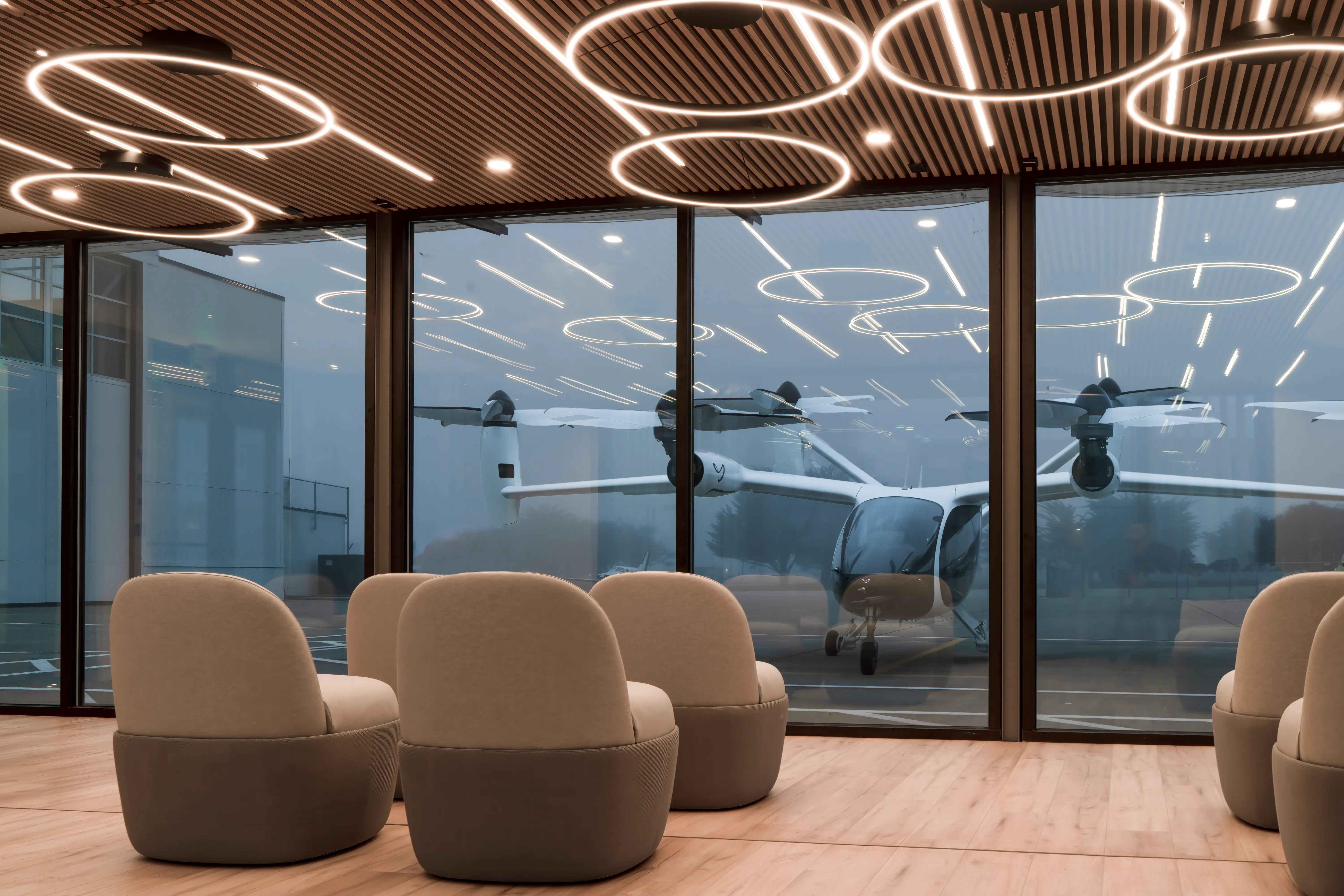
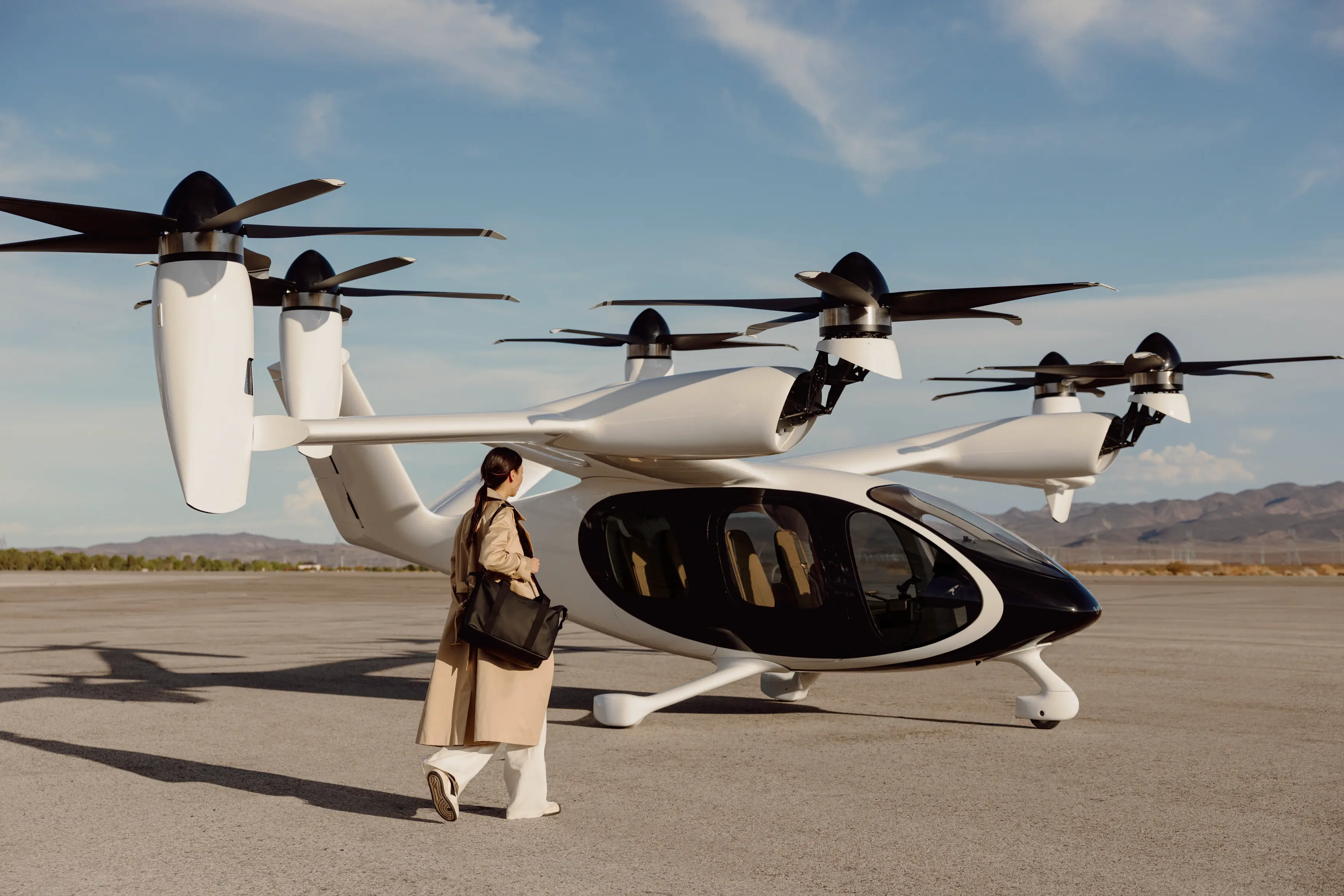
Joby Aviation is building a vertically integrated electric air taxi business. Its core plan is to design, certify, manufacture and operate an all-electric vertical takeoff and landing aircraft for short urban and regional passenger routes. The company is not yet generating revenue from certified Joby eVTOL service, so the investment case still depends on FAA certification, manufacturing readiness, infrastructure buildout and proof of commercial unit economics.
Q1 2026 revenue was $24.2 million, compared with no revenue in Q1 2025, mostly from the BLADE passenger business acquired in 2025. This gives Joby an operating premium air-mobility platform before eVTOL launch, with existing customer relationships, routes, brand recognition and operational experience. Management maintained full-year 2026 revenue guidance of $105 million to $115 million.
The main revenue streams are
- BLADE passenger operations: Near-term revenue comes mainly from conventional premium air-mobility services, giving Joby a live customer and operations base ahead of certified eVTOL service.
- Future Joby-operated air taxi service: The long-term model is direct passenger service in launch markets, led by the United States and the United Arab Emirates.
- Aircraft and services to partners: Joby has longer-term opportunities to sell aircraft, provide services to operators, or support partner-led networks.
- Government and defense applications: Defense-adjacent work, hybrid VTOL development, autonomy capabilities and Department of Defense relationships broaden the addressable market beyond passenger transport.
Joby’s operating model is capital-intensive. In Q1 2026, operating expenses were $257.8 million, including $177.5 million of R&D and $61.6 million of SG&A. The company posted a $234.0 million loss from operations, a $110.0 million net loss and a $178.5 million adjusted EBITDA loss. Cash, cash equivalents and short-term investments were $2.47 billion at March 31, 2026, after major equity, convertible note and other financing activity during the quarter.
The key operating areas are
- Aircraft development and certification: Joby is advancing FAA type certification and producing FAA-conforming aircraft for testing.
- Manufacturing scale-up: The company is expanding production capacity in California and Ohio, with nearly 1.5 million square feet of manufacturing footprint after the Ohio facility acquisition.
- Passenger operations: The BLADE platform provides current revenue and operating infrastructure while Joby prepares for eVTOL launch.
- Infrastructure and market launch: Joby is working on vertiports and related launch infrastructure in Dubai and several U.S. markets, including Los Angeles, Santa Monica, John Wayne Airport and San Jose.
- Defense, hybrid and autonomy programs: A turbine-electric VTOL demonstrator, L3Harris collaboration, Department of Defense work and autonomy capabilities support non-commercial passenger opportunities.
Joby’s main competitive advantages are its advanced certification position, large cash balance, vertically integrated model, Part 135 operating certificate, acquired BLADE passenger network, Toyota manufacturing relationship and growing infrastructure footprint. As of May 1, 2026, Joby reported FAA type-certification progress of 100% on Stage 1, 97% on Stage 2, 82% Joby and 75% FAA on Stage 3, 15% Joby and 6% FAA on Stage 4, and 100% Joby and FAA on Stage 5. Its first FAA-conforming aircraft intended for Type Inspection Authorization testing flew in Q1 2026, with parts for the ninth conforming aircraft in production and five aircraft intended for TIA flight testing.
Joby is one of the most advanced U.S.-listed eVTOL developers, but it remains pre-certification and pre-scaled commercial operation. Its market position is strongest in the United States and the UAE, with additional international relationships in markets such as Japan, Korea, Saudi Arabia and Europe through partners or BLADE operations. China is not a meaningful disclosed market in the latest materials, with no identified China-specific revenue, manufacturing footprint, certification plan or material customer relationship.
Direct competitors include Archer Aviation, Beta Technologies, Vertical Aerospace, Wisk/Boeing, traditional helicopter operators and other advanced air mobility entrants. Archer Aviation is the closest U.S.-listed comparison for public investors because both companies are pursuing electric air taxi certification and commercialization. Joby’s relative positioning is differentiated by its BLADE passenger platform, larger disclosed cash balance, vertically integrated aircraft-and-service strategy and reported FAA certification progress, while Archer remains a key benchmark for investor expectations around certification timing, capital needs and early market launch.

.webp)