Last Updated -

August 5, 2026

Joby Aviation

Company Profile and Market Insights

Explore the business model, global strategy, and market performance including insights into its position in China.

Joby Aviation
Key facts
Founded 2009 • NYSE: JOBY • Q1 2026 results (Mar 31, 2026 quarter)
$24.2m
Q1 2026 revenue
$110.0m
Q1 2026 net loss
$144.4m
Q1 2026 operating cash burn
$2.466b
Cash + short-term investments
$1.958b
Total stockholders' equity
SR3 FAA audit complete
Certification progress

About

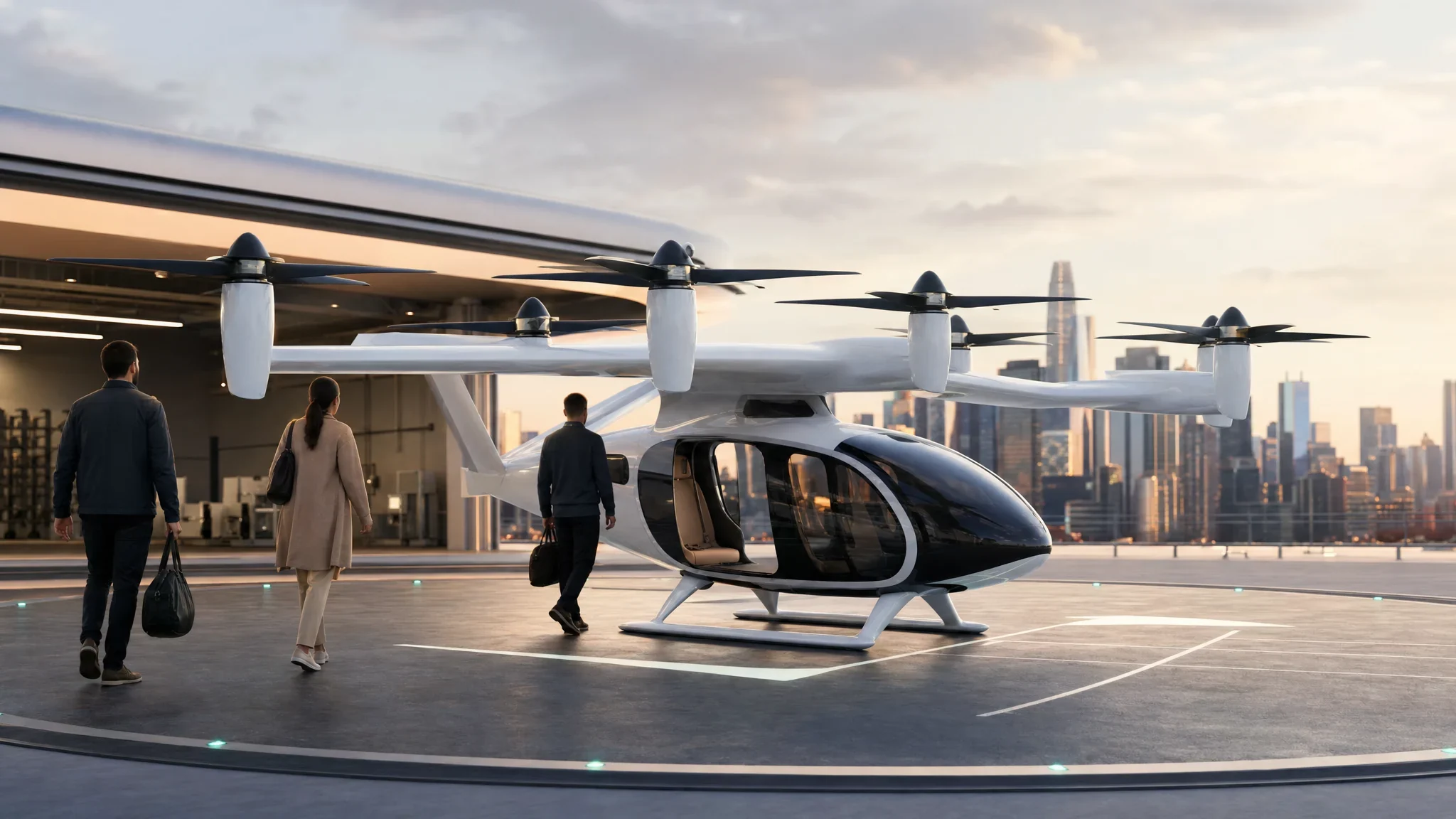
Joby Aviation, Inc. is an advanced air mobility company founded in 2009 and headquartered in Santa Cruz, California. The company is developing an all-electric vertical takeoff and landing aircraft, known as an eVTOL, designed to carry passengers in short urban and regional air-taxi trips without needing a runway. Joby’s aircraft is marketed as quiet, all-electric, and capable of up to 100 miles of range, with the long-term plan to operate its own aerial ridesharing service and sell aircraft to partners and other operators.

Joby has developed from an aircraft research and testing company into one of the most visible U.S.-listed eVTOL developers. Its business is vertically integrated across aircraft design, FAA certification, testing, manufacturing, and future air-transportation services. The company’s current revenue is still transitional rather than from scaled eVTOL passenger flights, with Q1 2026 revenue of $24.2 million coming from services such as helicopter and fixed-wing passenger transportation facilitation, DoD-related flights and on-base operations, and other related services.

The company’s strategic purpose is to bring quiet, emissions-free air transportation into commercial passenger service, with near-term investor focus on certification, manufacturing scale-up, and launch readiness. In Q1 2026, Joby completed its SR3 audit with the FAA, the third of four major certification reviews, and reported that its first FAA-conforming aircraft for Type Inspection Authorization had flown. At March 31, 2026, Joby had about $2.5 billion in cash, cash equivalents, and short-term investments, while reporting a Q1 net loss of $110.0 million and operating cash use of $144.4 million. Its manufacturing footprint has expanded to nearly 1.5 million square feet, supported by a strategic manufacturing alliance with Toyota aimed at improving productivity, quality, cost, and production capacity.

Joby Aviation

Business Model and Market Position

Joby Aviation is a pre-scale advanced air mobility company built around the design, certification, production and planned operation of an all-electric vertical takeoff and landing aircraft. Its long-term commercial model is to run an aerial ridesharing air-taxi service with Joby-operated aircraft, while also selling aircraft to operators and strategic partners where that route supports market entry or fleet deployment.

The company is still in the transition from development to commercialization. In Q1 2026, Joby reported $24.2 million of revenue, compared with no revenue in Q1 2025. That revenue did not come from broad eVTOL passenger service. It came from the Services business, including Blade-related helicopter and fixed-wing passenger transportation facilitation, Department of Defense customer-directed flights and on-base operations, and other services tied to the company’s operating platform.

Joby has one reportable segment: air transportation and related services. This segment combines current services revenue with the research, testing, manufacturing and certification work required to bring the Joby eVTOL aircraft into commercial use. The reported structure reflects the company’s integrated model rather than a mature multi-division aviation business.

Main revenue streams and operating activities are

  1. Current services revenue: Transitional revenue from helicopter and fixed-wing transportation facilitation, defense-related flights, on-base operations and related services.
  2. Future passenger air-taxi service: The intended core business, using Joby-operated eVTOL aircraft for short urban and regional trips.
  3. Aircraft sales and partner deployments: A planned route to revenue through sales of aircraft to other operators and partners, alongside Joby’s own operating model.
  4. Defense and government work: A potential early revenue path through customer-directed flight operations and related aviation services before scaled consumer air-taxi operations.

Joby’s product focus is narrow but technically ambitious. The company markets its aircraft as quiet, all-electric, capable of vertical takeoff and landing, and designed for up to 100 miles of range. The near-term product categories are the eVTOL aircraft, supporting manufacturing systems, air operations, passenger-service infrastructure and related defense or government aviation services.

Joby’s competitive advantages center on vertical integration, certification progress, capital position and partnerships. By controlling aircraft design, testing, certification preparation, manufacturing and planned operations, Joby has more direct control over the safety case, customer experience and production roadmap. In Q1 2026, it completed its SR3 audit with the FAA, described by the company as the third of four major certification reviews. Joby also reported that its first FAA-conforming aircraft for Type Inspection Authorization had flown and that parts were in production for eight additional conforming aircraft.

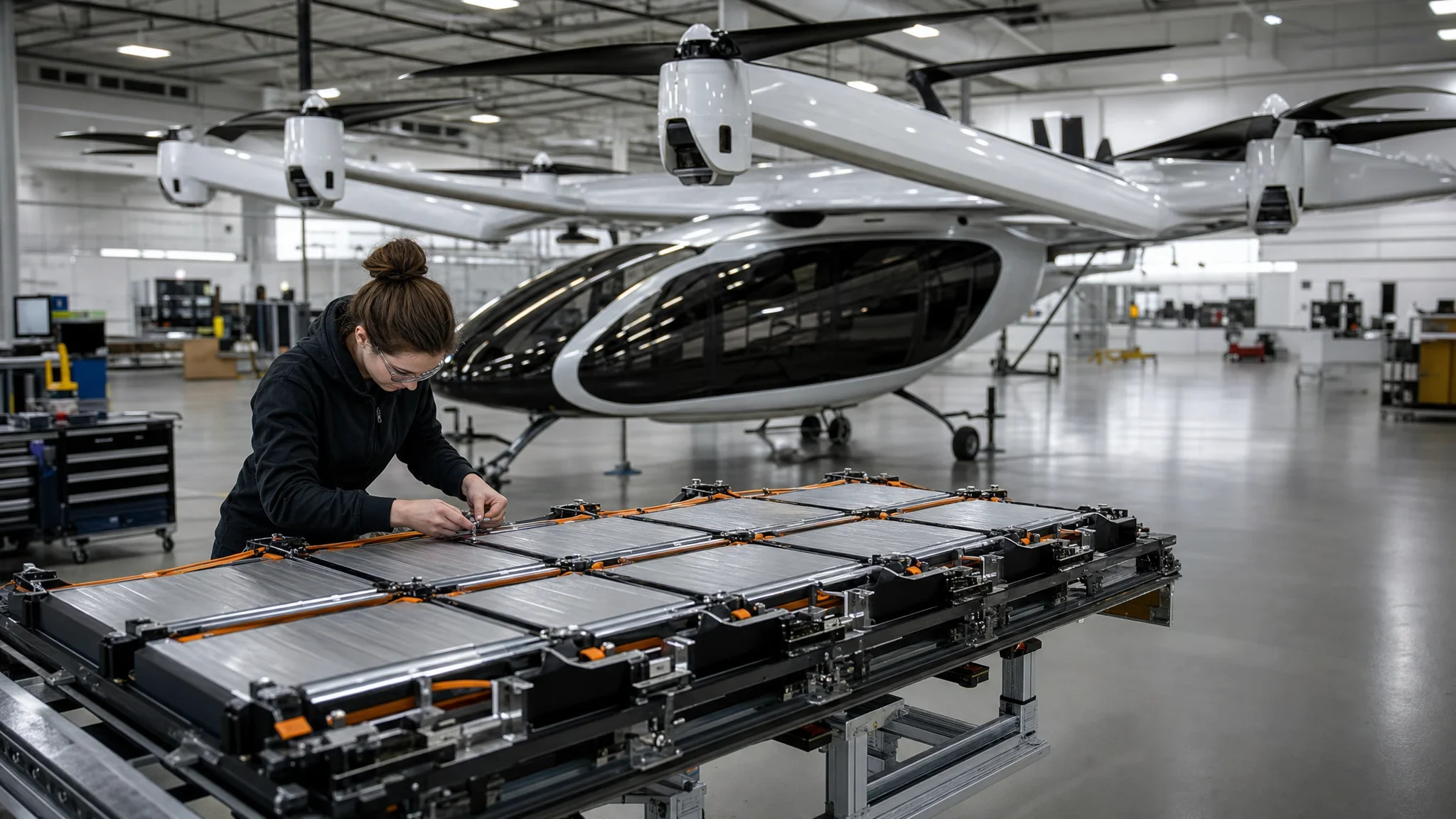
Manufacturing is becoming a more important part of the investment case. Joby said its Ohio expansion brought its total manufacturing footprint to nearly 1.5 million square feet, while composites production was running at more than 2.5 times the prior-year volume. The Toyota relationship is strategically important because it supports production-system development, quality, productivity and cost improvement as Joby moves toward commercial-scale aircraft production.

The balance sheet gives Joby a stronger runway than many early-stage aviation peers. At March 31, 2026, the company had $874.5 million of cash and cash equivalents and $1.592 billion of short-term investments, for total cash, cash equivalents and short-term investments of $2.466 billion. That funding base matters because the company remains loss-making, with a Q1 2026 net loss of $110.0 million and operating cash use of $144.4 million.

Joby is one of the most visible U.S.-listed eVTOL developers and is competing to be among the first companies to launch certified electric air-taxi operations in the United States. Its direct competitors include Archer Aviation, other eVTOL developers, helicopter operators, premium ground transportation providers and longer-term autonomous or advanced mobility alternatives. Archer Aviation is the most relevant public U.S. peer because it is also targeting electric air-taxi and advanced air mobility markets.

Compared with Archer, Joby’s positioning is defined by a more vertically integrated operating model, a large disclosed liquidity base and a strong manufacturing partnership with Toyota. The comparison also highlights a shared risk: both companies still depend on certification, production readiness, infrastructure buildout, operating approvals and customer adoption before their air-taxi models become commercially proven.

Geographically, Joby’s current revenue base is still limited and transitional. In Q1 2026, revenue was $14.6 million from the United States, $7.7 million from Europe and $2.0 million from other markets. China was not separately reported as a revenue market, asset base or operating focus, making it less relevant to the current business model than the United States and selected international markets such as Europe and the Middle East.

Joby’s market position is therefore best viewed as early leader rather than established operator. It has strong visibility, major partners, meaningful cash resources and measurable certification and manufacturing progress. The business still lacks scaled eVTOL passenger revenue, so the central question for investors is whether Joby turns its technical and regulatory progress into certified aircraft, repeatable production and commercially viable air-taxi operations.

Joby Aviation

Performance in China

China is not a meaningful disclosed market for Joby Aviation at this stage. In Q1 2026, Joby reported $24.2 million of revenue, with $14.6 million from the United States, $7.7 million from Europe, and $2.0 million from Other markets. China was not separately reported for revenue, assets, stores, deliveries, users, or operations. The company’s near-term strategy is centered on FAA certification, U.S. launch preparation, selected international expansion, and manufacturing scale-up in California and Ohio, where its total manufacturing footprint reached nearly 1.5 million square feet. Joby’s key partners include Toyota, Delta Air Lines, and Uber, with Toyota supporting production systems and manufacturing capability. In China, relevant competitors would include local eVTOL developers and global air-mobility entrants, but Joby has not disclosed a material China localization strategy or operating partnership.

Growth and Future Prospects

Joby Aviation remains in the transition phase between development and commercialization. Q1 2026 marked a clearer turning point because the company reported $24.2 million of revenue, compared with no revenue in Q1 2025, but that revenue came from services such as Blade-related helicopter and fixed-wing transportation facilitation, DoD-related flights and on-base operations, and other activities rather than scaled eVTOL passenger operations. The company also reported a Q1 2026 net loss of $110.0 million and operating cash use of $144.4 million, showing that certification, testing and manufacturing scale-up still dominate the financial profile. Its balance sheet remains a major support, with $2.47 billion of cash, cash equivalents and short-term investments at March 31, 2026.

Key growth drivers

  1. FAA certification progress: Joby completed its SR3 audit in Q1 2026, described as the third of four major FAA reviews. Moving through the remaining certification stages is the central requirement for commercial air-taxi launch.
  2. Manufacturing scale-up: Joby has expanded its manufacturing footprint to nearly 1.5 million square feet, including Ohio capacity, while composites production was running at more than 2.5 times the prior-year volume. Parts were in production for eight additional conforming aircraft.
  3. Toyota manufacturing alliance: The initial phase of the Toyota strategic manufacturing alliance launched in June 2026. The goal is to improve productivity, quality, cost and production capacity before certified aircraft enter service.
  4. Early route and infrastructure validation: Demonstration flights in New York and San Francisco, along with visible vertiport progress at Century Plaza, support route planning, public-sector coordination and customer education.
  5. Defense and government work: DoD-related services and turbine-electric VTOL activity provide potential revenue paths before broad consumer air-taxi scale.

Challenges ahead

  1. Certification and approvals: Commercial service depends on FAA certification, operating approvals, vertiport permits, airspace integration and local acceptance.
  2. Manufacturing execution: Joby must prove that aircraft performance, safety, quality and cost targets hold at commercial production volumes.
  3. Cash burn: Losses and operating cash use remain substantial. Delays in certification or launch timing would increase financing risk.
  4. Transitional revenue base: Current revenue does not yet validate the economics of scaled eVTOL passenger service.
  5. Competition: Archer Aviation and other mobility alternatives compete for capital, partners, routes and regulatory attention.

Joby’s future outlook depends less on near-term revenue growth and more on converting technical progress into certified operations. The company has meaningful liquidity, visible strategic partners and early infrastructure progress, but the investment case still rests on execution through FAA certification, production ramp and launch of safe, reliable passenger service.

Next Earnings Planned for:

August 5, 2026

This Company Profile was written by Dominik Diemer

Dominik Diemer blends an investor mindset with execution discipline.

He is a SAFe Program Consultant (SPC) and Lean Portfolio Management (LPM) practitioner at DMG MORI Digital, working as a SAFe Release Train Engineer and internal consultant in the Lean-Agile Center of Excellence (LACE).

His focus is prioritization, flow, and dependency management that turns strategy into outcomes. With experience across Bertelsmann and the Founders Foundation, he bridges corporate and startup thinking.

He also invests privately in private equity deals, sharpening his view on business models, value drivers, and go-to-market.

StockCounterParts reflects that lens.