Last Updated -

May 30, 2026

Shenghe Resources

Company Profile and Market Insights

Explore the business model, global strategy, and market performance including insights into its position in China.

Shenghe Resources
Key facts
Founded 1998 • SSE:600392 • Q1 2026 results (Mar 31, 2026 quarter)
RMB 3.383b
Q1 2026 revenue
RMB 327m
Q1 2026 net profit
+94.46%
Q1 2026 net profit YoY
RMB 14.991b
FY2025 revenue
RMB 839m
FY2025 net profit
7.79%
FY2025 ROE

About

Shenghe Resources Holding Co., Ltd. is a China-based rare earth and mineral-products company founded in 1998 and headquartered in Chengdu, Sichuan. Listed in Shanghai under ticker 600392, the company focuses on rare earth mining and beneficiation, smelting and separation, rare earth metals processing, recycling, and zirconium-titanium heavy-mineral processing. Its products include rare earth concentrates, oxides, salts and compounds, metals, metallurgical materials, zircon sand, titanium concentrate, and rutile.

Shenghe has developed from a domestic rare earth processor into a vertically linked supplier with resource sourcing, processing, recycling, trading, and selected downstream materials activities. Its Chinese production base includes rare earth metal processing facilities in Sichuan, Jiangxi, and Inner Mongolia, along with zirconium-titanium beneficiation operations in Hainan and Jiangsu. The company also built overseas feedstock links and resource interests, including the 2025 acquisition of Peak Rare Earths and control of the Ngualla rare earth project in Tanzania, while the expiry of its MP Materials offtake agreement in January 2026 reduced a historically important U.S. concentrate channel.

The company’s strategic purpose is to strengthen rare earth and related mineral supply through resource control, integrated processing, and higher-value materials for markets such as permanent magnets, electric vehicles, wind power, electronics, aerospace, defense, and environmental technologies. In 2025, rare earth products generated about RMB 14.107 billion of revenue, far above the RMB 814 million from zirconium-titanium and other products, confirming rare earths as the economic core. Shenghe reported Q1 2026 operating revenue of RMB 3.383 billion, up 13.07% year over year, and net profit attributable to shareholders of RMB 327 million, up 94.46%, following a strong FY2025 rebound in revenue, profit, and operating cash flow.

Shenghe Resources

Business Model and Market Position

Shenghe Resources makes money from rare earth and related mineral products, with rare earths as the economic core. Its model links feedstock sourcing, beneficiation, smelting and separation, rare earth metal processing, recycling, trading, and selected downstream materials. In Q1 2026, the company reported operating revenue of RMB 3.383 billion, up 13.07% year over year, and net profit attributable to shareholders of RMB 327 million, up 94.46%.

The company’s main revenue streams are

  1. Rare earth products: This includes rare earth concentrates, oxides, salts and compounds, metals, and metallurgical materials. In FY2025, rare earth products generated about RMB 14.107 billion of revenue, up 32.94%, with gross margin of about 11.12%.
  2. Zirconium-titanium products: Shenghe processes heavy-mineral sands into zircon sand, titanium concentrate, and rutile. This segment generated about RMB 814 million of FY2025 revenue, up 17.71%, with gross margin of about 2.80%.
  3. Processing, recycling, and trading: The company uses Chinese processing capacity and domestic and overseas feedstock relationships to support smelting, separation, metal production, rare earth waste recycling, and product trading.

Operationally, Shenghe is built around a vertically linked rare earth chain. Its Chinese rare earth metal processing assets are located in Sichuan, Jiangxi, and Inner Mongolia. Its zirconium-titanium beneficiation facilities are in Wenchang, Hainan and Lianyungang, Jiangsu, with approved or registered raw-material processing capacity cited at 2 million tonnes per year in the annual report summary.

Shenghe’s products serve new energy, new materials, energy-saving and environmental protection, aerospace, defense, electronics, and information-technology markets. Demand is especially tied to permanent magnets, electric vehicles, wind power, electronics, military and aerospace uses, and industrial materials. This gives the company exposure to structural demand for strategic minerals, while leaving earnings sensitive to rare earth prices and policy controls.

The company’s main competitive advantage is its combination of Chinese separation and processing capacity with a broader resource-sourcing footprint. Shenghe has historically used overseas offtake and investment structures to secure raw material, including relationships with MP Materials in the United States and Peak Rare Earths’ Ngualla project in Tanzania. In FY2025, it completed the acquisition of Peak Rare Earths through Ganzhou Chenguang Rare Earths New Material, gaining control of the Ngualla rare earth project.

That global sourcing model is also a vulnerability. MP Materials stopped sales to China in 2025 and did not renew the Shenghe offtake agreement when it expired in January 2026, ending a historically important Mountain Pass concentrate channel. This highlights the geopolitical risk in cross-border rare earth supply chains and increases the strategic importance of Shenghe’s domestic and other overseas resource projects.

Shenghe is one of China’s significant listed rare earth producers and processors, but it is not the dominant Chinese rare earth group. China Northern Rare Earth and China Rare Earth Group remain key domestic counterparts, while MP Materials is a useful U.S. comparison because it controls the Mountain Pass mine and has moved to reduce China-linked sales exposure. Compared with MP Materials, Shenghe is more processing- and China-value-chain centered, with a broader mix of rare earth separation, metals, recycling, trading, and zirconium-titanium activities.

The FY2025 and Q1 2026 results show a clear earnings rebound. FY2025 operating revenue rose 31.83% to RMB 14.991 billion, while attributable net profit rose 304.94% to RMB 839 million. The rebound was driven by better rare earth market conditions, higher sales prices and volumes, and internal efficiency measures. Q1 2026 continued that momentum, with recurring attributable net profit up 96.66% year over year to RMB 326 million.

Shenghe’s market position is therefore best understood as a China-centered rare earth processor and resource integrator with selective global upstream exposure. Its strengths are scale in China’s rare earth processing ecosystem, vertical integration, overseas resource optionality, and exposure to magnet-material demand. Its main constraints are commodity-price volatility, Chinese quota and export-control policy, geopolitical scrutiny, and the need to replace or diversify feedstock after the loss of the MP Materials channel.

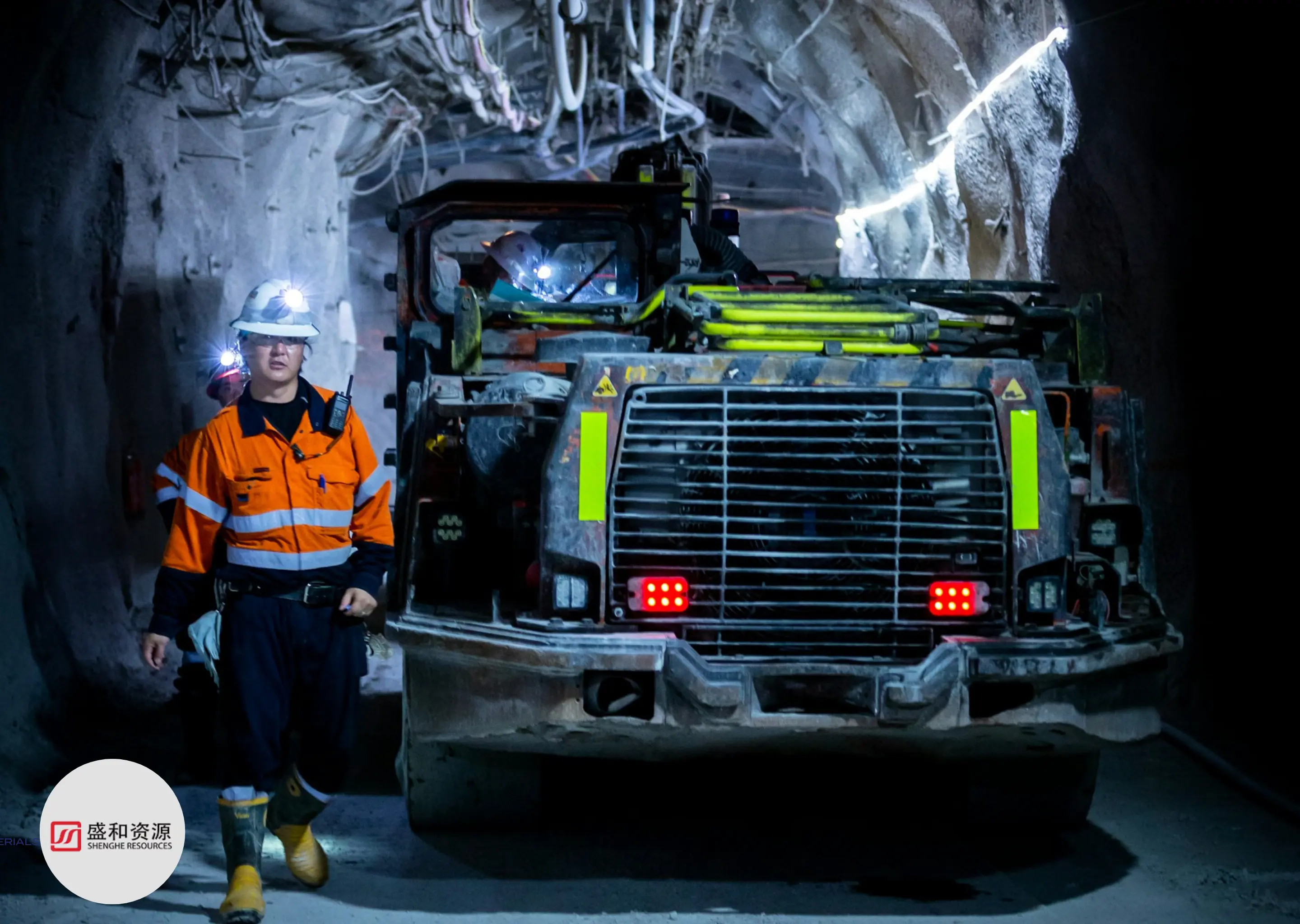
Shenghe Resources

Performance in China

China is Shenghe Resources’ core market and operating base. The company is Shanghai-listed, reports in RMB, and runs rare earth metal processing facilities in Sichuan, Jiangxi and Inner Mongolia, plus zirconium-titanium beneficiation sites in Hainan and Jiangsu. Its China strategy centers on feedstock security, domestic separation and processing scale, recycling, and selective downstream products such as high-performance polishing powder. Q1 2026 revenue rose 13.07% year over year to RMB 3.383 billion, while attributable net profit rose 94.46% to RMB 327 million. FY2025 rare earth products generated about RMB 14.107 billion, confirming the segment as the earnings core. Competitors include China Northern Rare Earth and China Rare Earth Group. Key China drivers are NdPr magnet demand, EVs, wind power, export-control policy, production quotas and environmental regulation. The loss of MP Materials feedstock after January 2026 increases the importance of Shenghe’s domestic and alternative overseas supply channels.

Growth and Future Prospects

Shenghe Resources entered 2026 with stronger earnings momentum after a sharp rebound in 2025. Revenue in Q1 2026 rose 13.07% year over year to RMB 3.383 billion, while net profit attributable to shareholders rose 94.46% to RMB 327 million. Recurring attributable profit rose 96.66%, which indicates that the improvement was mainly operating-driven rather than one-off gains. This followed FY2025 revenue growth of 31.83% to RMB 14.991 billion and a 304.94% increase in attributable net profit to RMB 839 million. The turning point reflects better rare earth market conditions, higher sales prices or volumes, and efficiency measures after a weaker commodity cycle.

Key growth drivers

  1. Rare earth pricing and magnet demand: Shenghe remains highly exposed to NdPr-related materials used in permanent magnets, EVs, wind power, electronics, aerospace and defense. Higher rare earth prices flow through quickly to margins, as shown by the FY2025 and Q1 2026 recovery.
  2. Vertical integration and resource security: The company’s strategy is to link feedstock sourcing, beneficiation, separation, metal processing, recycling and selected downstream materials. This reduces reliance on spot purchases when supply is tight.
  3. Overseas resource expansion: The acquisition of Peak Rare Earths gives Shenghe control of the Ngualla project in Tanzania, with planned ore mining and processing capacity of 800,000 tonnes per year if development progresses as intended.
  4. Zirconium-titanium projects: Shenghe is developing heavy-mineral-sand resources in Tanzania and Madagascar to support its own beneficiation plants, although this segment remains lower-margin than rare earths.
  5. Product expansion: Downstream projects such as the 15,000-ton-per-year high-performance polishing powder project in Leshan aim to capture more value from rare earth processing and improve use of high-abundance elements.

Challenges ahead

  1. Feedstock disruption: MP Materials stopped sales to China in 2025 and did not renew Shenghe’s offtake agreement when it expired in January 2026, ending an important historical Mountain Pass concentrate channel.
  2. Policy and geopolitical risk: China’s quotas, export controls, environmental rules and industry consolidation directly affect Shenghe. Its China-centered processing role also creates scrutiny from Western customers seeking non-China supply chains.
  3. Project execution risk: Tanzania, Madagascar and other overseas projects involve permitting, financing, infrastructure, host-government approvals and local stakeholder risks.
  4. Margin mix: FY2025 rare earth products generated about RMB 14.107 billion of revenue with an 11.12% gross margin, while zirconium-titanium and other products generated about RMB 814 million with a 2.80% margin. Faster growth in lower-margin minerals would dilute group profitability if pricing does not improve.
  5. Cost control: Q1 2026 management expenses rose to RMB 77.2 million from RMB 54.9 million a year earlier, making integration costs and operating leverage important to monitor.

Shenghe’s future direction is likely to remain centered on securing rare earth feedstock, expanding overseas resource control, and moving into higher-value rare earth materials. The company has a clearer growth platform after the 2025 earnings rebound, but the outlook depends heavily on rare earth prices, policy decisions and the successful replacement of lost U.S. feedstock with new domestic and overseas supply.

Next Earnings Planned for:

April 30, 2026

This Company Profile was written by Dominik Diemer

Dominik Diemer blends an investor mindset with execution discipline.

He is a SAFe Program Consultant (SPC) and Lean Portfolio Management (LPM) practitioner at DMG MORI Digital, working as a SAFe Release Train Engineer and internal consultant in the Lean-Agile Center of Excellence (LACE).

His focus is prioritization, flow, and dependency management that turns strategy into outcomes. With experience across Bertelsmann and the Founders Foundation, he bridges corporate and startup thinking.

He also invests privately in private equity deals, sharpening his view on business models, value drivers, and go-to-market.

StockCounterParts reflects that lens.