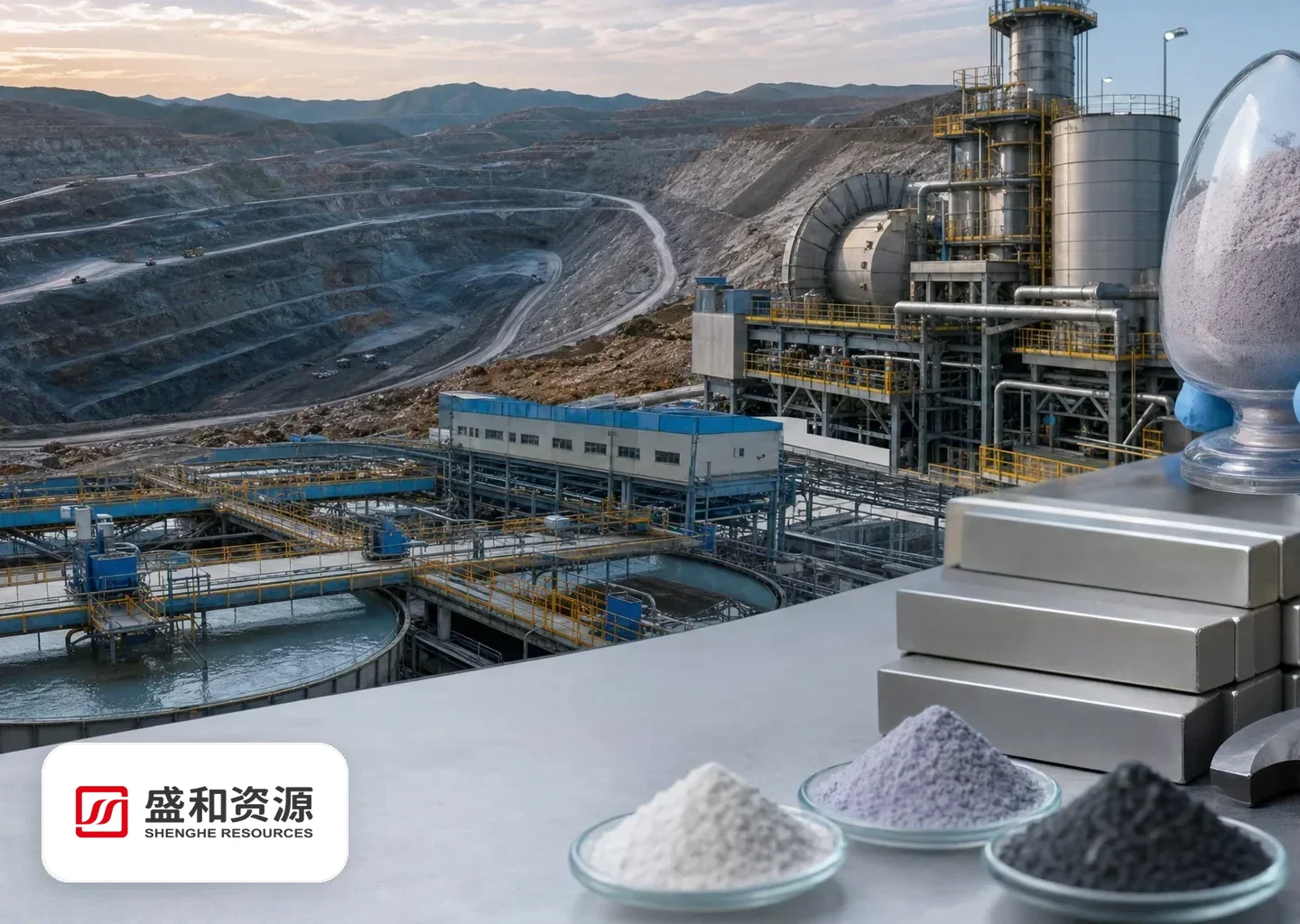
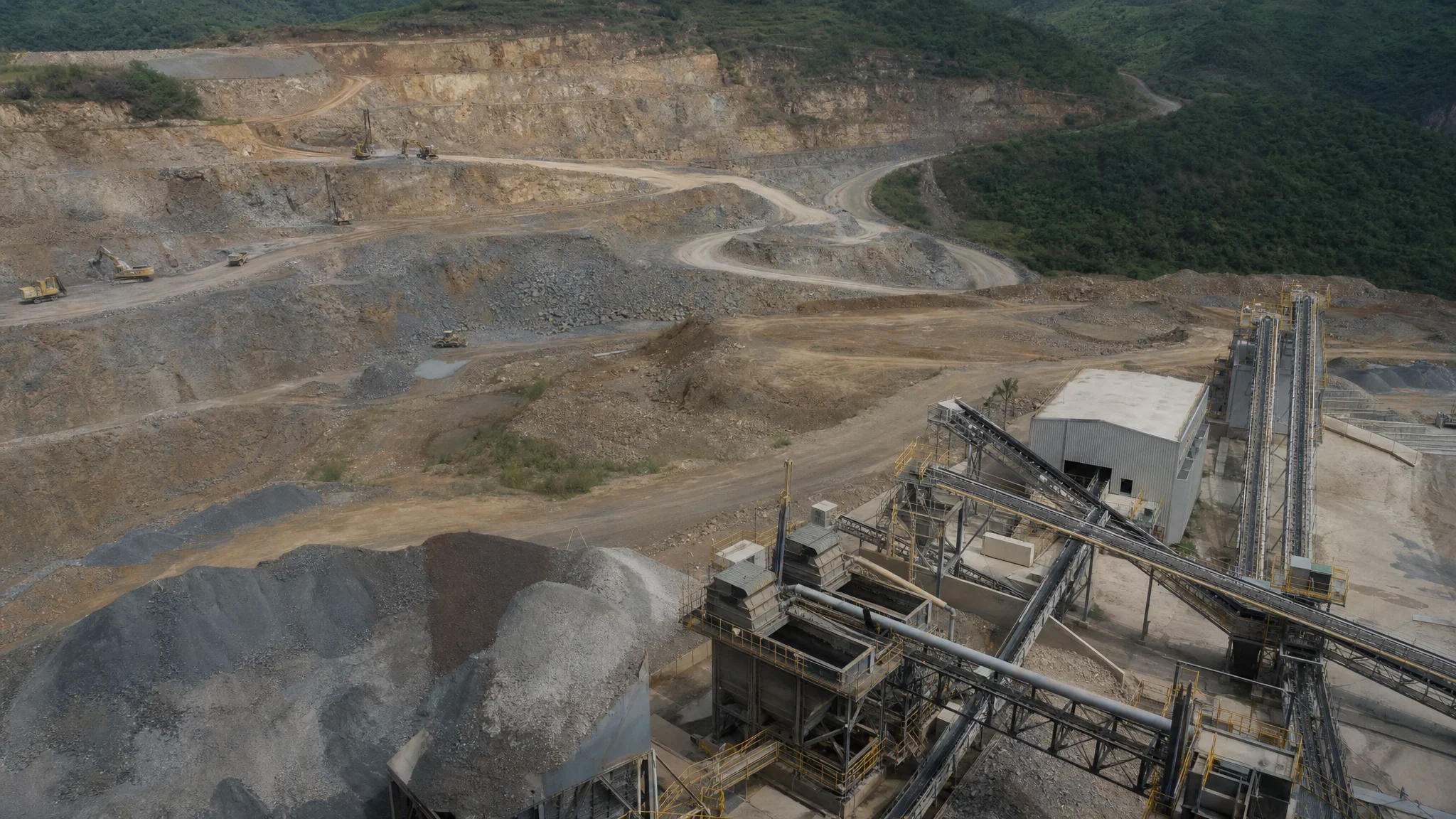
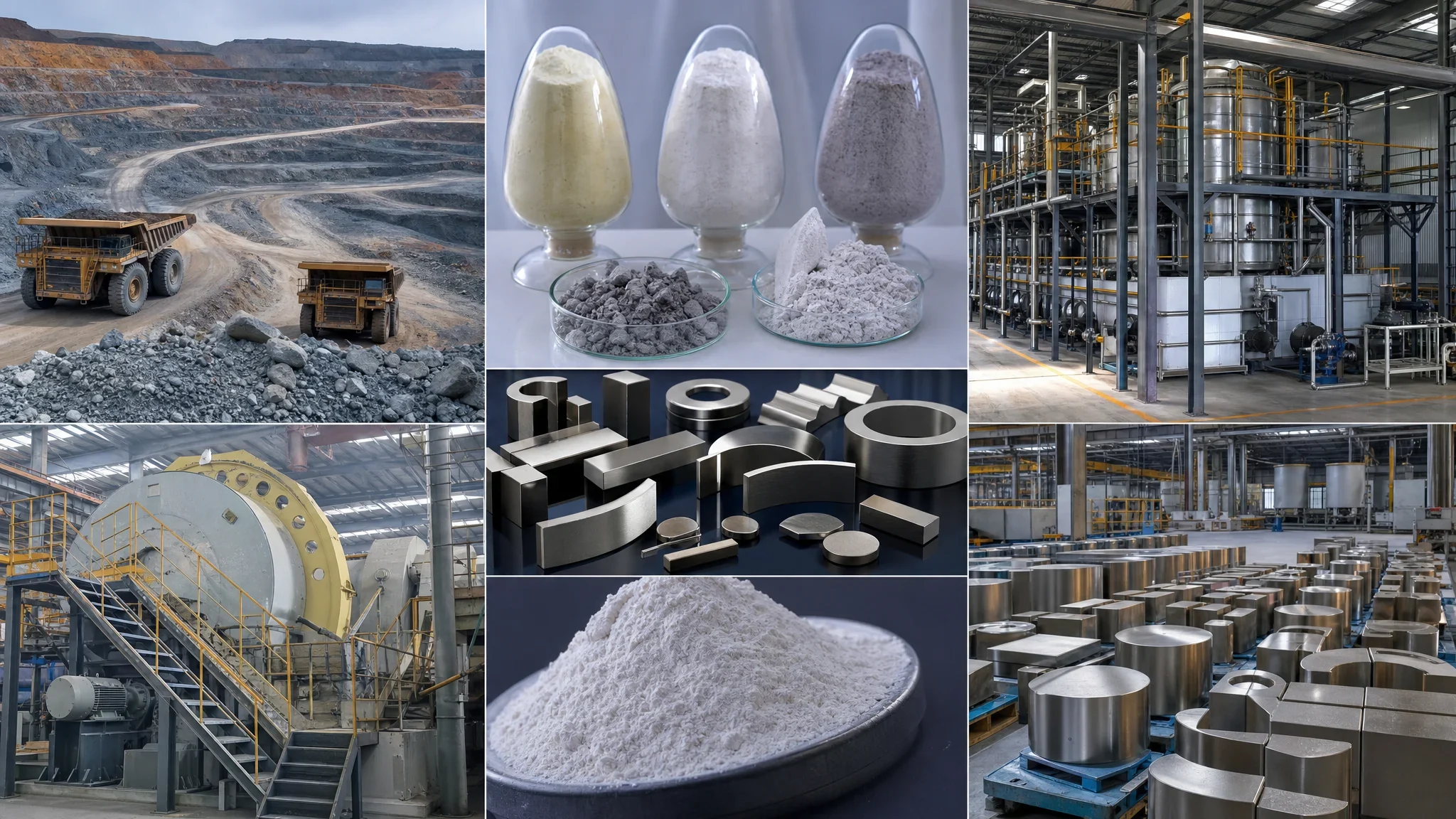
Shenghe Resources is a China-listed rare-earth and critical-minerals company with an integrated model across resource development, beneficiation, separation, processing, recycling, trading and product sales. The company makes money by selling rare-earth concentrates, oxides, salts and compounds, metals, metallurgical materials and catalysts, supplemented by zirconium, titanium and monazite-related heavy-mineral products.
The latest available reported quarter shows the scale of the model. In Q1 2026, Shenghe reported operating revenue of RMB 3.383 billion, up 13.07% year over year, and net profit attributable to shareholders of RMB 327.3 million, up 94.46%. The profit improvement reflected stronger rare-earth market conditions, higher average selling prices, product-mix optimization and cost control. Operating cash flow was negative RMB 595.4 million, which shows that working-capital swings remain important despite stronger earnings.
- Rare-earth chain: Shenghe produces and sells rare-earth concentrates, oxides, compounds, salts, metals and related materials. Its business covers light rare earths in Sichuan, medium and heavy rare-earth separation and recycling in Jiangxi, and international resource cooperation through entities in Hainan, Singapore, Vietnam and other locations.
- Zirconium-titanium-monazite chain: The company processes and sells zircon sands, titanium concentrate, rutile, monazite-related products and other rare or scattered-resource products. This gives Shenghe exposure beyond rare earths to mineral feedstocks where China has high demand and limited domestic resource availability.
- Recycling and circular economy: Shenghe also operates rare-earth recycling activities, including waste recovery and reuse. This supports feedstock flexibility and fits China’s policy emphasis on resource efficiency and environmental compliance.
- Trading and resource cooperation: The company uses domestic and overseas sourcing to secure raw materials and support sales flows. It has pursued resource links including Mountain Pass in the United States, Kvanefjeld in Greenland and Ngualla in Tanzania. At 2025 year-end, Shenghe held 5,546,140 shares of MP Materials through Singapore subsidiaries.
Raw-material security is central to Shenghe’s competitive position. Rare-earth processing margins depend heavily on feedstock availability, ore grades, policy quotas and market prices. Shenghe’s advantage is its relatively complete rare-earth industrial chain, its mix of domestic processing bases, its international resource relationships and its exposure to both rare-earth and heavy-mineral products.
The company’s market position is strongest in China, which is both its home market and the world’s main rare-earth processing center. Shenghe is headquartered in Chengdu, listed in Shanghai and operates major production bases in Sichuan, Jiangxi, Hainan and Jiangsu. Its business is directly affected by China’s rare-earth mining and separation quotas, environmental rules, export policies and controls on imported rare-earth ore separation.
China’s role in the industry gives Shenghe strategic relevance. In 2025, global rare-earth mine output was about 400,000 tonnes, while China remained the largest rare-earth raw-material producer and accounted for around 90% of global rare-earth separation and metal-processing activity. Demand is tied to NdFeB permanent magnets and downstream uses in new energy, new materials, energy saving and environmental protection, aerospace, military, electronic information and intelligent or electrified industries.
Shenghe also benefits from China’s structural import dependence in zirconium and titanium feedstocks. China accounted for about half of global zircon demand but lacked sufficient domestic zircon resources. In 2025, China imported 2.1418 million tonnes of zircon sand and concentrate, up about 20.96%. China also imported 5.2029 million tonnes of titanium sand and concentrate, up about 3.05%, reflecting limited domestic supply of high-grade, low-impurity ore.
The most relevant direct listed peer is China Northern Rare Earth, a larger China-listed rare-earth producer with integrated resource and processing exposure. Compared with Northern Rare Earth, Shenghe has a more visibly international resource-cooperation profile and broader heavy-mineral exposure through zirconium, titanium and monazite processing. MP Materials is also a relevant global comparison because of Shenghe’s historical commercial and equity links to Mountain Pass, although MP is more focused on the United States rare-earth supply chain while Shenghe remains centered on China-based processing and global feedstock access.
Shenghe’s near-term market position improved after a strong 2025 and Q1 2026. FY2025 revenue rose 31.83% to RMB 14.991 billion, and attributable net profit rose about 304.94% to RMB 839.0 million. The company also pre-announced H1 2026 attributable net profit of RMB 800 million to RMB 930 million, up 112.25% to 146.75% year over year, before formal half-year statements were available. This indicates that improved rare-earth pricing and demand conditions continued after Q1.
Strategically, the company is moving toward a more resource-controlled profile. The 2025 acquisition of Peak Rare Earths gave Shenghe control of the Ngualla rare-earth project in Tanzania, described by the company as its first controlling interest in a world-class rare-earth mine project. Its 2026 plan also includes the Tanzania Nyati zirconium-titanium project, the Madagascar Jiacheng zirconium-titanium project and a Leshan 15,000 tonnes per year polishing-powder project.
Overall, Shenghe is an important Chinese rare-earth and critical-minerals producer with a broad processing base, international resource ambitions and meaningful exposure to China’s industrial policy cycle. Its strengths are chain integration, feedstock access, product breadth and participation in markets linked to electrification and high-performance magnets. Its position remains tied to commodity prices, Chinese quota and export policy, overseas project execution and working-capital management.