Baidu makes money from a mix of legacy internet monetization and newer AI-led businesses. The core model combines search and feed advertising, AI cloud infrastructure, enterprise and consumer AI applications, AI-native marketing services, autonomous ride-hailing through Apollo Go, and consolidated video-streaming revenue from iQIYI.
In Q1 2026, total revenue was RMB32.1 billion, down 2% quarter over quarter. Baidu General Business revenue was RMB26.0 billion, flat quarter over quarter and up 2% year over year. iQIYI contributed RMB6.2 billion, down 8% quarter over quarter.
- Online marketing: Baidu’s traditional search and feed advertising business remains a major revenue source, supported by the Baidu App’s 655 million monthly active users in March 2026. In Q1 2026, online marketing services generated RMB12.6 billion, equal to 48% of Baidu General Business revenue, but declined 22% year over year.
- AI cloud and infrastructure: AI Cloud Infra is now Baidu’s clearest growth engine. Revenue reached RMB8.8 billion in Q1 2026, up 79% year over year, while GPU Cloud revenue grew 184% year over year. This business monetizes demand for AI computing, model training, inference, and enterprise AI deployment.
- AI applications and AI-native marketing: AI Applications revenue was RMB2.5 billion in Q1 2026, roughly flat year over year. AI-native marketing services generated RMB2.3 billion, up 36% year over year, reflecting Baidu’s attempt to replace declining legacy ad formats with AI-driven advertising tools.
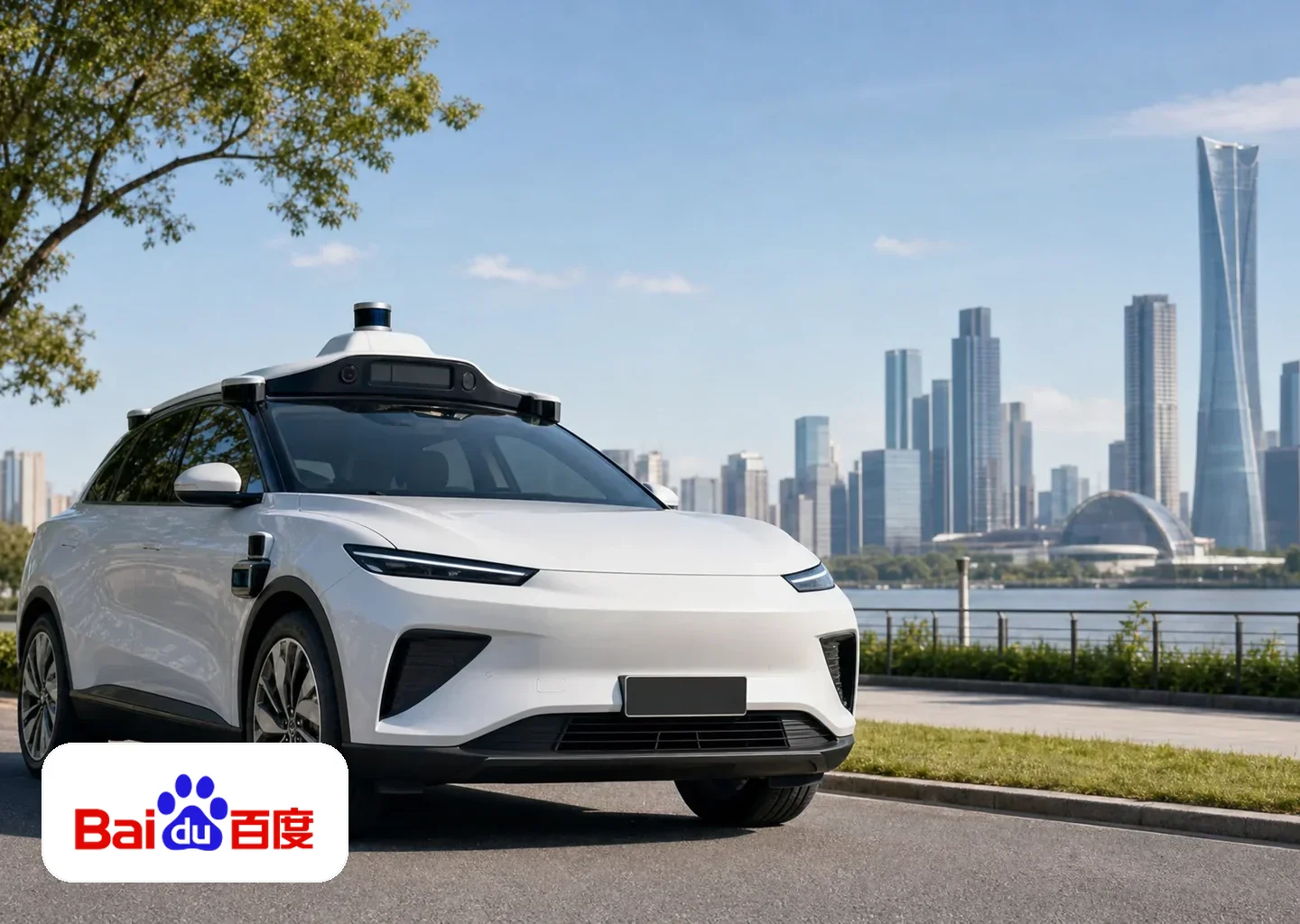
- Autonomous driving: Apollo Go is Baidu’s robotaxi and autonomous mobility platform. It delivered 3.2 million fully driverless operational rides in Q1 2026, with total rides up more than 120% year over year. Cumulative public rides exceeded 22 million by April 2026.
- iQIYI: Baidu consolidates iQIYI, which generates revenue from subscriptions, advertising, and content. The segment adds scale and consumer media exposure, but its Q1 2026 revenue decline shows the variability of China’s streaming and content market.
The main operating split is between Baidu General Business and iQIYI. Within Baidu General Business, the strategic mix has changed sharply. Core AI-powered Business revenue reached RMB13.6 billion in Q1 2026, up 49% year over year and equal to 52% of General Business revenue. This was the first quarter in which AI-powered business exceeded half of General Business revenue. By contrast, legacy business revenue fell 29% year over year to RMB10.2 billion.
Baidu’s competitive advantages are its Chinese-language search base, large user reach, AI infrastructure, proprietary foundation models, and long-running investment in autonomous driving. ERNIE 5.1 launched in May 2026 with stronger text capabilities, smaller model size, and enhanced reasoning. Apollo Go also gives Baidu a differentiated position in robotaxi operations, with a footprint across 27 cities as of May 2026 and fleets that had accumulated more than 330 million autonomous kilometers, including more than 220 million fully driverless autonomous kilometers.
Baidu competes with Alibaba and Tencent across China’s AI cloud, internet platform, advertising, and enterprise technology markets. In search and AI, Alphabet’s Google is the most useful global comparison, although Google has a far larger global advertising base and stronger international reach. In robotaxis, Waymo is the closest global operating peer, while Baidu’s Apollo Go is one of the largest Chinese and global platforms by ride volume and autonomous kilometers.
Baidu’s market position is best understood as a Chinese search leader in transition. The company still has a meaningful online marketing base, but that business is shrinking. AI cloud, GPU cloud, AI-native marketing, and Apollo Go now define the growth case. China remains the company’s central market, while international exposure is emerging mainly through Apollo Go testing and operations in markets such as Dubai, Switzerland, and the UK.