Broadcom makes money from two large businesses: high-value semiconductors and infrastructure software. Its current profile is shaped by AI data-center demand, especially custom AI accelerators, XPUs and Ethernet networking, alongside VMware-led private and hybrid cloud software.
In fiscal Q2 2026, Broadcom reported net revenue of $22.187 billion, up 48% year over year. Semiconductor Solutions generated $15.009 billion, or 68% of revenue, and Infrastructure Software generated $7.178 billion, or 32%. Adjusted EBITDA was $15.244 billion, equal to 69% of revenue, showing the high-margin nature of the combined model.
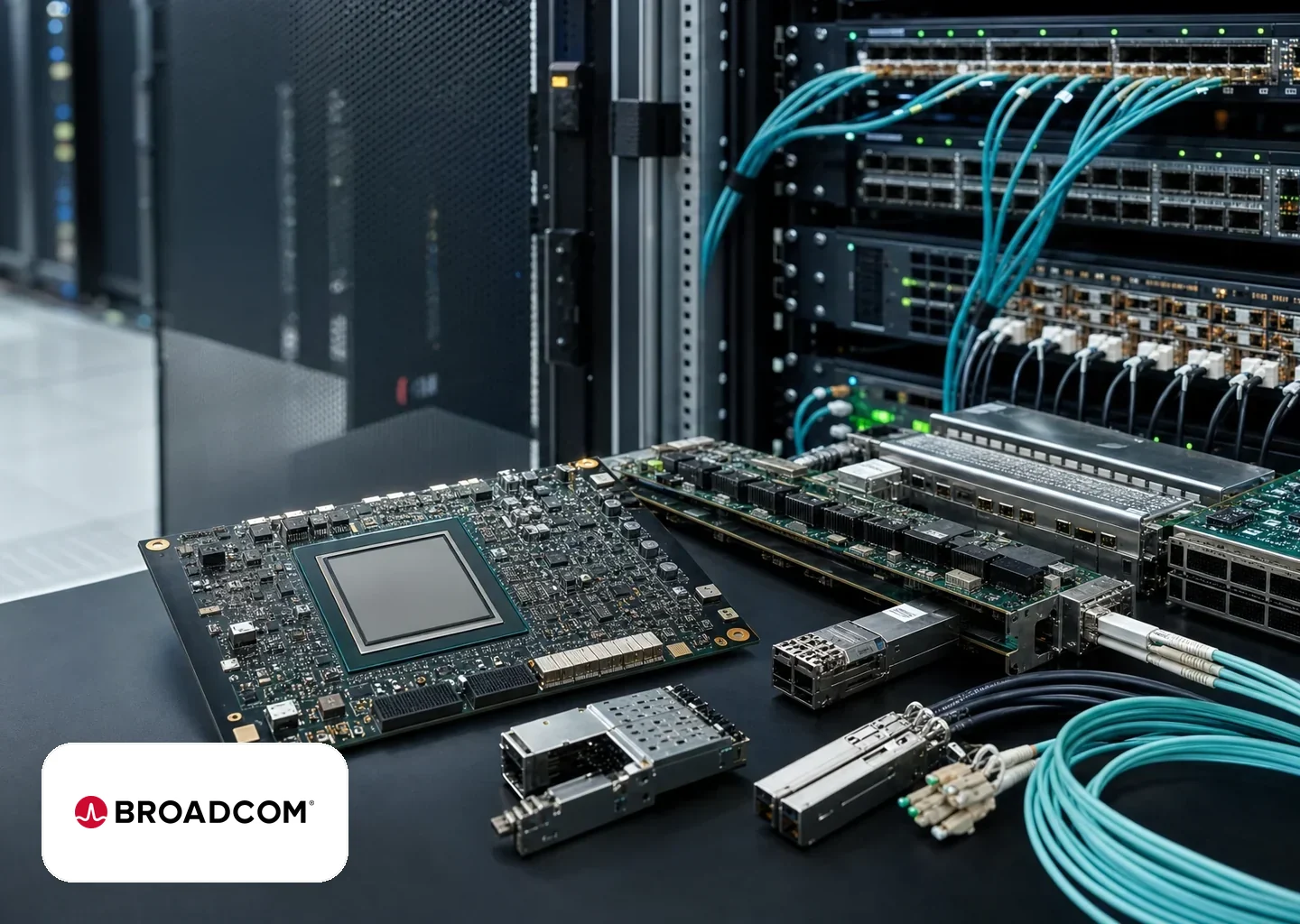
- Semiconductor Solutions: Broadcom designs and supplies chips and related components for AI data centers, networking, wireless connectivity, broadband, storage, industrial and related markets. The AI portfolio includes custom accelerators and XPUs, Ethernet switching and routing silicon, Ethernet NICs, PHYs, optical components and XPU-based racks or systems.
- Infrastructure Software: This segment is anchored by VMware Cloud Foundation after the VMware acquisition. Revenue comes from private and hybrid cloud infrastructure, security, observability, application development and other enterprise software products, with subscription licensing and renewals central to the model.
- Customer and channel model: Broadcom sells through long design-win cycles to hyperscalers, OEMs, system integrators, distributors and channel partners. In semiconductors, revenue depends on product ramps, customer forecasts and outsourced manufacturing capacity. In software, revenue depends more on enterprise contracts, subscriptions and renewals.
The main growth engine is AI infrastructure. AI semiconductor revenue was $10.8 billion in Q2 FY2026, up 143% year over year, driven by custom AI accelerators and AI networking. Management expects AI semiconductor revenue to reach $16.0 billion in Q3 FY2026, up more than 200% year over year. Broadcom also guided total Q3 FY2026 revenue to about $29.4 billion, up 84% year over year.
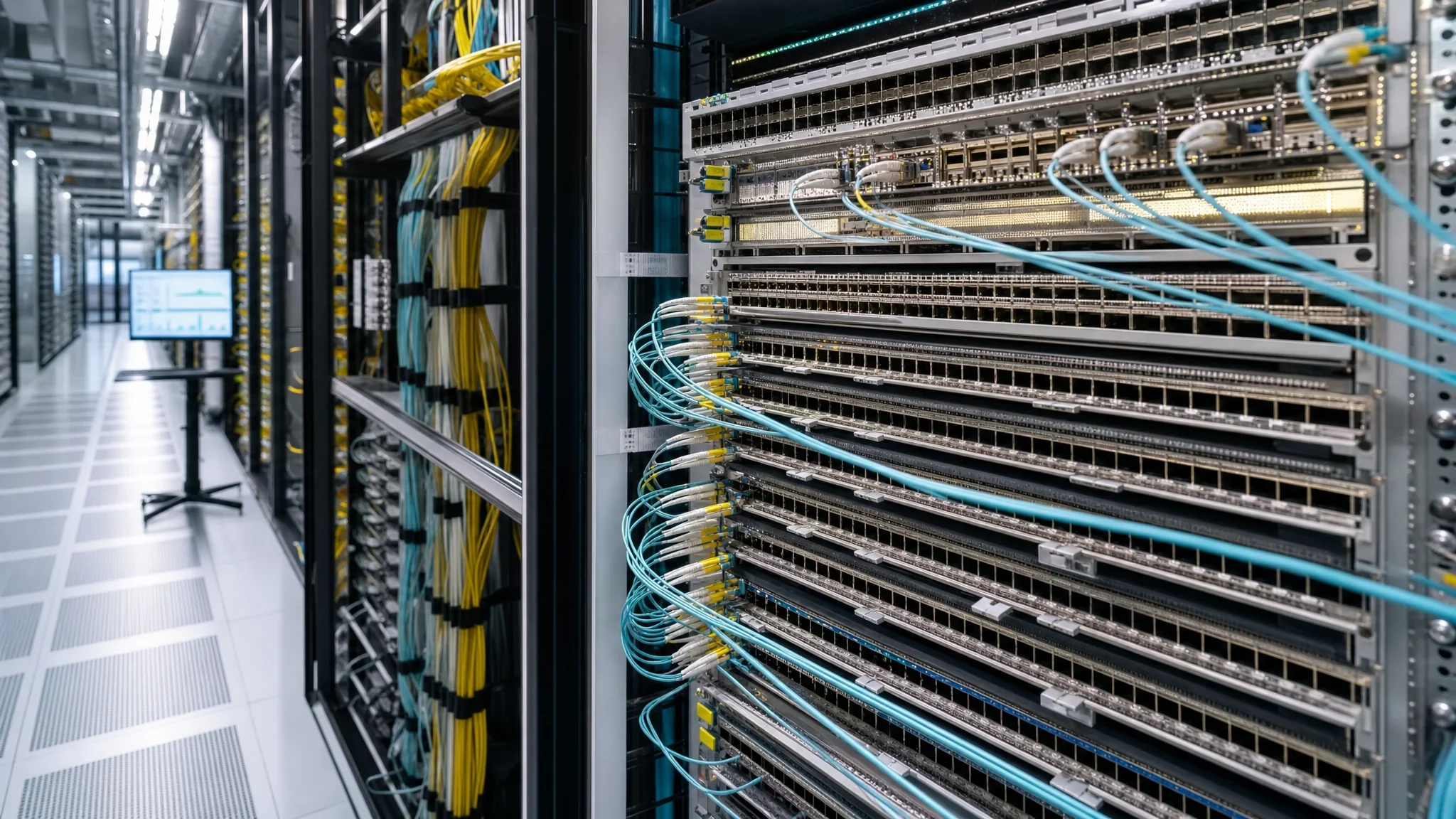
Broadcom’s competitive advantages include deep relationships with hyperscale customers, high-value custom silicon capabilities, broad Ethernet networking exposure and a software base tied to mission-critical enterprise infrastructure. Its emphasis on open, standards-based Ethernet gives it a strong position in AI data-center scale-out, where high-bandwidth and low-latency networking are essential.
The company’s market position is strong but concentrated. In fiscal 2025, one customer accounted for 32% of total net revenue, and the top five end customers represented about 40%. These relationships support scale and visibility when AI spending is rising, but they also increase exposure to customer order timing, pricing pressure, internal chip development and hyperscaler capital spending cycles.
Broadcom competes with NVIDIA, Marvell Technology, AMD, Qualcomm, Cisco, Intel, Arista Networks and enterprise software vendors, depending on the product area. NVIDIA is the most relevant AI infrastructure comparison. NVIDIA leads in merchant GPU computing ecosystems, while Broadcom is positioned as a major supplier of custom AI silicon and Ethernet networking that serves as an alternative or complement to GPU-based platforms.
China is a meaningful shipment location but a less clear measure of final demand. Broadcom disclosed that China, including Hong Kong, represented 17% of fiscal 2025 net revenue by delivery location, or $11.155 billion. The company notes that many products delivered into China are ultimately built into devices sold by customers in the United States and Europe, so delivery location does not fully reflect end-market exposure.