Last Updated -

April 20, 2026

Hikvision

Company Profile and Market Insights

Explore the business model, global strategy, and market performance including insights into its position in China.

Hikvision
Key facts
Founded 2001 • SZSE: 002415 • FY2025 preliminary results (Jan 21, 2026 filing)
RMB92.52b
Revenue (FY2025 prelim.)
RMB14.19b
Net profit attributable (FY2025 prelim.)
RMB16.98b
Operating profit (FY2025 prelim.)
15.34%
Net margin (FY2025 prelim.)
180+
Countries & regions served
47.37%
R&D / technical staff share (2024)

About

Founded on November 30, 2001 and headquartered in Hangzhou, Hikvision is a listed Chinese technology company focused on integrated security and scenario-based digitalization. The company describes its business around AIoT, combining machine perception, artificial intelligence, and software-led systems for a wide range of industry use cases. Hikvision has been listed on the Shenzhen Stock Exchange since May 28, 2010.

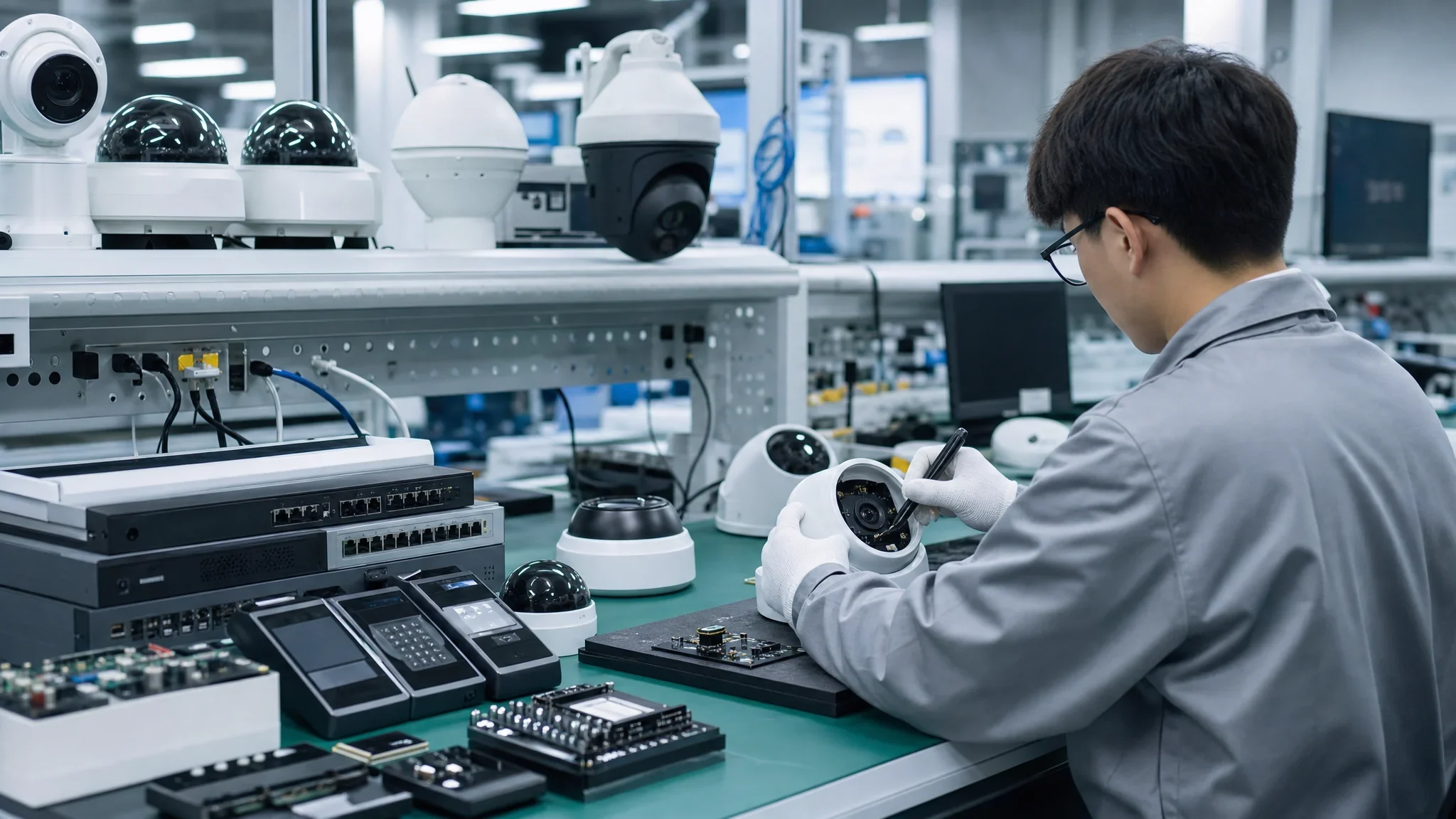
Today, Hikvision operates across security hardware, software platforms, and digital systems, supported by a large in-house manufacturing base. Official company materials state that it has more than 1 million square meters of manufacturing facilities, and Hikvision reported RMB 92.496 billion in revenue for 2024. Recent company messaging also places greater weight on compliance, cybersecurity, and its THRIVE sustainability framework, with “Tech for Good” presented as the core idea behind its ESG agenda. On Hikvision’s current investor relations pages, Hu Yangzhong is listed as chairman and Xu Peng as director and general manager.

Hikvision

Business Model and Market Position

Hikvision generates revenue from integrated security hardware, management software, and scenario-based digitalization projects. Its portfolio spans network products, Turbo HD products, access control, video intercom, display and control systems, LED displays, and broader AIoT solutions. The company sells into industries such as traffic, logistics, manufacturing, buildings, retail, healthcare, education, energy, and public transport.

  1. Scaled hardware base with software attached
    Hikvision still begins with devices and system infrastructure. Official materials describe nearly 30,000 hardware models and more than 200 software products, supported by 11 R&D centers and 7 manufacturing bases. This scale supports lower costs, fast product iteration, and a large installed base for software, upgrades, and bundled solutions.
  2. Five-part operating structure
    The domestic core is organized through PBG, EBG, and SMBG, while overseas main business and innovative businesses form the other two growth engines. In 2024, overseas main business revenue reached RMB 25.989 billion, and Hikvision stated that the combined revenue of overseas main business and innovative businesses exceeded the revenue of its three domestic main business groups for the first time. This points to a broader revenue base with more weight from overseas markets and adjacent AIoT lines.
  3. Partner-led go-to-market model
    Hikvision scales through distributors, resellers, system integrators, and installers in its channel partner program. It also runs HEOP, which lets partners develop and deploy their own applications on Hikvision hardware. That combination supports both high-volume standardized sales and more customized vertical projects.
  4. Innovative businesses widen the addressable market
    Hikvision’s innovative business portfolio includes EZVIZ, HikRobot, HikMicro, HikAuto, HikSemi, HikFire, HikRayin, and HikImaging. These operations extend the company into smart home, robotics, thermal and industrial sensing, automotive electronics, storage, fire safety, and related AIoT niches. This reduces dependence on classic video surveillance alone.
  5. Market position
    In asmag’s 2025 Security 50 ranking, Hikvision remained the world’s No. 1 physical security company by 2024 security product revenue, ahead of Dahua and a group that includes Motorola Solutions, Axis Communications, Tiandy, and Hanwha Vision. Its core advantages are manufacturing depth, product breadth, and reach across entry-level, mid-market, and industry-specific deployments. The main constraint is regulatory friction in policy-sensitive markets, with India tightening certification requirements in 2025 and the U.S. moving in late 2025 to tighten restrictions further around listed Chinese vendors.
Hikvision

Performance in China

China remains Hikvision’s largest operating base, but domestic security is no longer its only growth anchor. Based on Hikvision’s 2024 segment disclosure, domestic main business revenue was about RMB 44.0 billion, with EBG at RMB 17.651 billion, PBG at RMB 13.467 billion, SMBG at RMB 11.971 billion, and others at RMB 0.933 billion. Hikvision also stated that 2024 was the first year in which overseas main business plus innovative businesses generated more revenue than its domestic main business, showing that China is still the company’s foundation while growth is becoming more diversified.

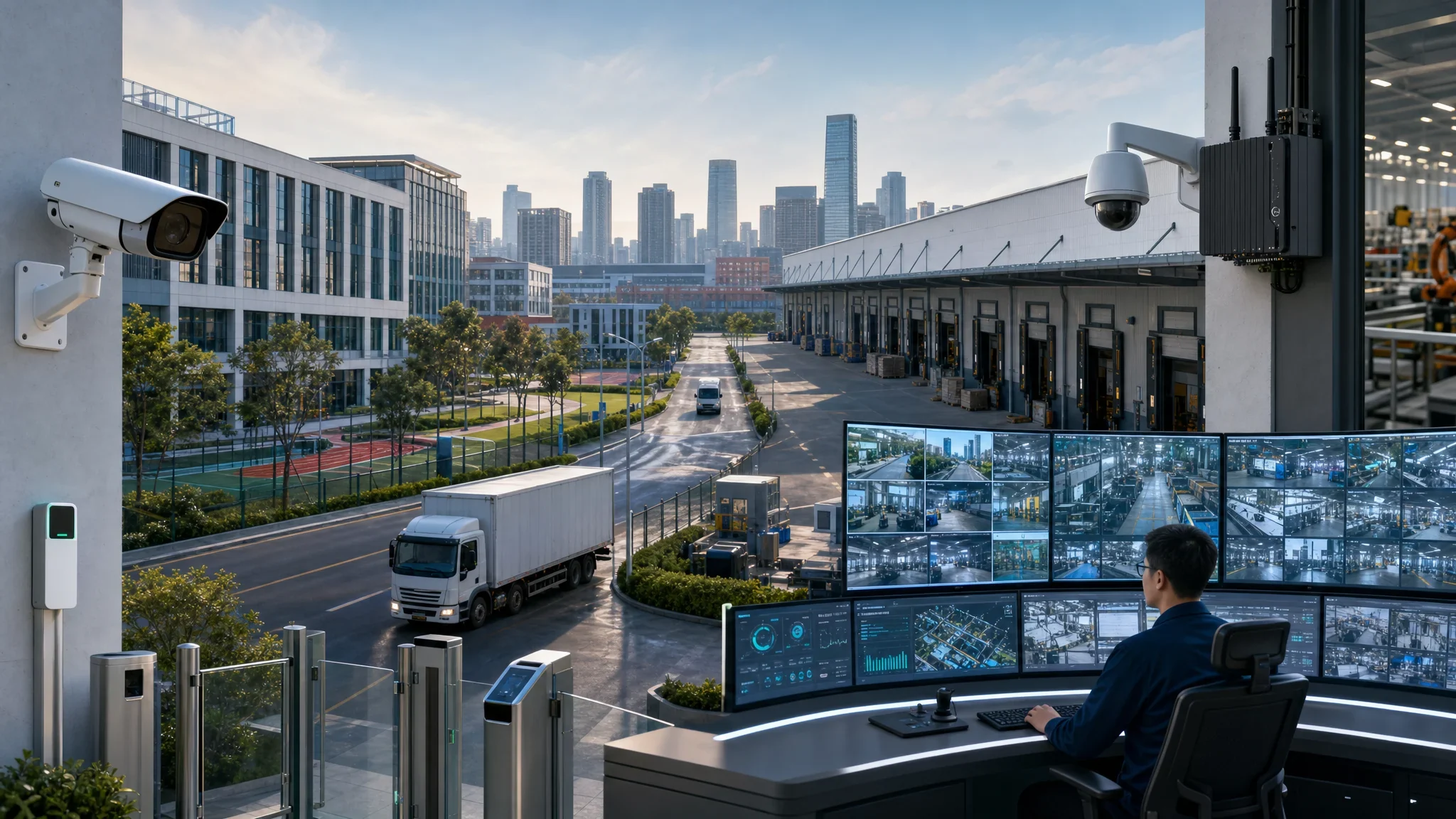
Within China, Hikvision is moving beyond camera hardware toward scenario-based digitalization for enterprises, logistics sites, traffic systems, retail, energy, education, and industrial settings. That shift fits its strongest domestic segment, EBG, and supports more software, analytics, and workflow revenue on top of installed devices. The latest official filings listed on Hikvision’s IR page currently run through 3Q2025. They show total revenue up 4.01% in 1Q2025 and 1.48% in 1H2025, pointing to a steadier demand backdrop after a softer domestic cycle. Competition in China remains intense, with Dahua and Uniview as the closest large peers in a market where the three together held about 58.85% share in 2025, according to Mordor Intelligence.

Growth and Future Prospects

Hikvision entered 2025 in a transition from volume recovery to higher-quality growth. In 2024, revenue rose 3.53% to RMB 92.496 billion. In 1Q2025, revenue increased 4.01%. In 1H2025, revenue reached RMB 41.82 billion, up 1.48%, and by 3Q2025 cumulative revenue was RMB 65.76 billion, up 1.18%. Management tied the stronger profit and cash flow trend to a profit-centered operating strategy that started in the second half of 2024, with tighter receivables control, lower channel inventory pressure, and better gross margin.

Key growth drivers include:

  1. Large-scale AI models moving into commercial rollout
    Hikvision said in its 2024 reporting that it was increasing R&D around AIoT large-model technologies. By the first half of 2025, management said it had already launched hundreds of large-model products. Releases such as Guanlan, AcuSeek NVR, DeepinViewX cameras, and AcuSeek integration in HikCentral and Hik-Connect show a clear push from device sales toward software, search, and workflow tools with higher value per deployment.
  2. A revenue mix that is less tied to domestic security hardware
    In 2024, the combined revenue of overseas main business and innovative businesses exceeded domestic main business revenue for the first time. Hikvision’s investor presentation said this mix was already nearing 60% of revenue by June 30, 2025. That shift gives the company more exposure to robotics, automotive electronics, thermal imaging, smart home products, and other AIoT categories beyond traditional surveillance.
  3. Industrial and enterprise digitalization as the next scaling engine
    Management said innovative businesses kept fast growth in 2025, supported by demand from autos, lithium batteries, electronics, logistics, and traffic. Hikvision’s March 2026 Hannover Messe lineup points in the same direction, with industrial cameras, machine vision, and logistics automation taking a larger role in the product story.
  4. R&D and compliance staying at the center
    Hikvision invested RMB 11.86 billion in R&D in 2024, equal to 12.83% of revenue, and employed 28,272 R&D and technical professionals. In 2025 and early 2026, the company also highlighted new cybersecurity and vulnerability-management certifications. That matters because product trust now affects market access as much as product performance.

Challenges ahead include:

  1. Regulatory pressure in the United States
    Hikvision remains on the FCC Covered List. A U.S. appeals court rejected its bid to lift the FCC equipment authorization ban on February 27, 2025. On March 27, 2026, the FCC opened another proceeding that proposes to prohibit continued importation and marketing of certain previously authorized covered equipment.
  2. Tougher market access in India
    India’s STQC framework for CCTV security requirements was issued in 2024 and tightened certification procedures from 2025. By April 2026, Indian reporting indicated that China-made connected CCTV products were being shut out in practice, adding another constraint in a large surveillance market.
  3. A slower domestic demand backdrop
    Hikvision’s own 2025 reporting still flagged domestic economic transformation as a core risk. That puts more weight on overseas execution, innovative businesses, and AI-led upgrades to carry future growth.

Overall, Hikvision’s growth case now rests less on selling more standard cameras and more on AI-enabled products, overseas execution, and the expansion of innovative businesses. The company’s scale remains a strength, but the next leg of growth depends on better mix, better margins, and lower exposure to geopolitically constrained markets.

This Company Profile was written by Dominik Diemer

Dominik Diemer blends an investor mindset with execution discipline.

He is a SAFe Program Consultant (SPC) and Lean Portfolio Management (LPM) practitioner at DMG MORI Digital, working as a SAFe Release Train Engineer and internal consultant in the Lean-Agile Center of Excellence (LACE).

His focus is prioritization, flow, and dependency management that turns strategy into outcomes. With experience across Bertelsmann and the Founders Foundation, he bridges corporate and startup thinking.

He also invests privately in private equity deals, sharpening his view on business models, value drivers, and go-to-market.

StockCounterParts reflects that lens.