Last Updated -

March 25, 2026

Baidu

Company Profile and Market Insights

Explore the business model, global strategy, and market performance including insights into its position in China.

Baidu
Key facts
Founded 2000 • NASDAQ: BIDU / HKEX: 9888 • Q4 2025 results (Dec 31, 2025 quarter)
RMB32.7b
Revenue (Q4 2025)
RMB1.8b
Net income attributable to Baidu (Q4 2025)
RMB4.7b
Adjusted EBITDA (Q4 2025)
RMB11.3b
Baidu Core AI-powered Business revenue (Q4 2025)
RMB5.8b
AI Cloud Infra revenue (Q4 2025)
3.4m
Apollo Go fully driverless operational rides (Q4 2025)

About

Founded in 2000 by Robin Li and Eric Xu, Baidu is headquartered in Beijing and has grown from China’s leading search engine into one of the country’s most important AI platforms. The company’s mission is to make the complicated world simpler through technology. That mission now extends far beyond search into cloud infrastructure, foundation models, digital content, enterprise software, and autonomous mobility.

Today, Baidu describes itself as a leading AI company with a strong internet foundation. Its business spans three core areas: mobile ecosystem, AI Cloud, and intelligent driving. This reflects a major shift in Baidu’s identity. Search remains a key traffic and monetization engine, but the company now builds around its full AI stack, from cloud infrastructure and deep learning frameworks to ERNIE foundation models and consumer and enterprise applications. Baidu updated ERNIE 5.0 in January 2026, underlining how central generative AI has become to the group’s strategy.

Baidu still operates at massive scale. Baidu App reached 679 million monthly active users in December 2025, while its AI-powered business generated RMB 40.0 billion in 2025. Apollo Go, Baidu’s autonomous ride-hailing platform, had provided more than 20 million cumulative rides by February 2026 and had expanded to 26 cities globally. For full-year 2025, Baidu reported total revenue of RMB 129.1 billion, showing that it remains a large internet company while pushing deeper into AI cloud, AI applications, and autonomous driving.

Baidu

Business Model and Market Position

Baidu runs a hybrid business model. Legacy search and feed advertising still provides the cash engine, while AI cloud, AI applications, and autonomous mobility now drive the strategic shift. In 2025, Baidu General Business revenue was RMB 102.5 billion. Online marketing remained the primary revenue source, though the company said that this business declined in 2024 and 2025 as Baidu changed its monetization approach during its AI transition and faced weaker macro demand. At the same time, Baidu Core AI-powered Business reached RMB 40.0 billion in 2025 and accounted for 39% of Baidu General Business revenue. In the fourth quarter of 2025, that share rose to 43%, which shows how fast the revenue mix is moving toward AI.

  1. Mobile Ecosystem and online marketing
    At the center of Baidu’s consumer business is Baidu App, which the company describes as China’s leading search-plus-feed app, with 679 million monthly active users in December 2025. Baidu monetizes this traffic through pay-for-performance search ads, feed ads, and other performance-based marketing products. Its open-platform model also routes users to third-party apps, merchants, creators, and service providers, which helps Baidu turn search intent into advertising demand and transaction activity.
  2. AI Cloud and AI applications
    Baidu’s second engine is AI Cloud, which combines infrastructure and software. The company says this business is differentiated by its full-stack AI architecture, spanning cloud infrastructure, PaddlePaddle, ERNIE foundation models, and application layers. That gives Baidu a business model that covers both enterprise AI infrastructure and packaged AI software. In 2025, AI Cloud Infrastructure revenue reached about RMB 19.8 billion, up 34% year over year, while AI Applications revenue exceeded RMB 10.2 billion. Baidu’s AI applications, including Baidu Wenku, Baidu Drive, and Digital Employee, are largely subscription-based. Baidu also released an updated version of ERNIE 5.0 in January 2026, which underlines how central foundation models are to its commercial strategy.
  3. Intelligent driving and new growth initiatives
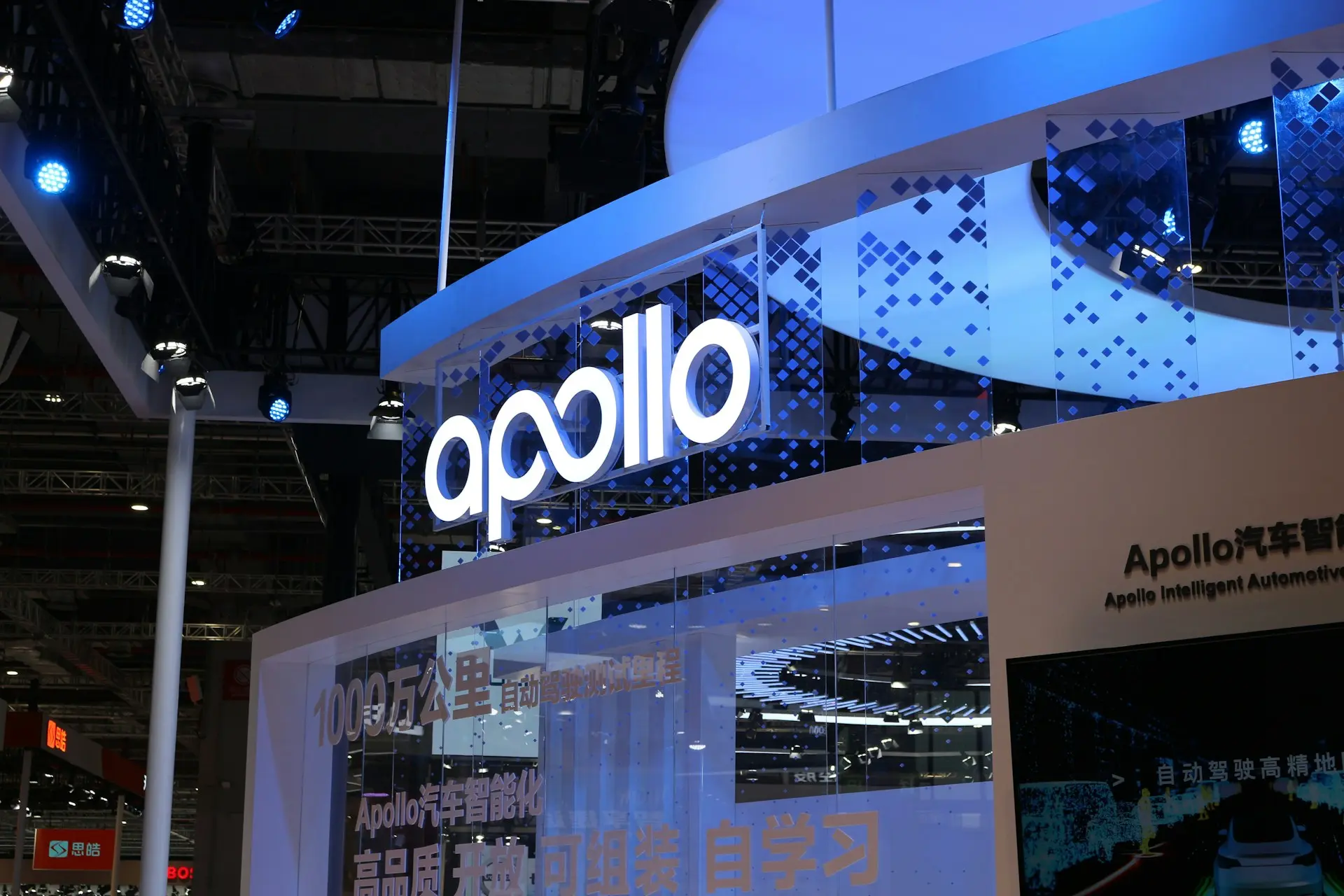
    Apollo Go gives Baidu exposure to autonomous mobility, not only internet traffic and advertising. As of February 2026, Apollo Go had delivered more than 20 million cumulative public rides and expanded its footprint to 26 cities globally. Since February 2025, Apollo Go has operated fully driverless services across all of its operating cities in mainland China. In the fourth quarter of 2025 alone, Apollo Go completed 3.4 million fully driverless rides, up more than 200% year over year. Baidu is also pushing an asset-light expansion model through partnerships with Uber, Lyft, and PostBus.

Baidu’s market position now rests on four linked strengths: high-intent search traffic, a large consumer entry point through Baidu App, a proprietary AI stack from infrastructure to foundation models, and a scaled autonomous driving platform with real commercial operations. This makes Baidu less of a pure search company than in the past. It is becoming a company where legacy ads fund the build-out of AI infrastructure, AI software, and robotaxi services. The pressure point is margin mix. Baidu states that online marketing still matters most for revenue, while cloud, generative AI, and intelligent driving require heavier investment and carry lower margins than the traditional ad business. For investors, Baidu now looks like a transition story from search-funded internet platform to AI-led technology platform.

Baidu

Performance in China

Baidu remains one of China’s largest digital entry points. Baidu App, which the company describes as the leading search-plus-feed app in China, reached 679 million monthly active users in December 2025. In the same month, ERNIE Assistant reached 202 million MAUs, which shows that Baidu’s domestic traffic base is expanding from classic search into AI-led usage.

  1. Search, feed, and AI-native monetization
    China is still anchored by Baidu’s search and feed ecosystem, but the revenue mix is shifting. In the fourth quarter of 2025, Baidu Core AI-powered Business generated RMB 11.3 billion and accounted for 43% of Baidu General Business revenue. AI Cloud Infrastructure contributed RMB 5.8 billion in the quarter, AI Applications added RMB 2.7 billion, and AI-native Marketing Services reached RMB 2.7 billion, up 110% year over year. This points to a domestic business that is becoming more AI-driven at the monetization layer.
  2. Enterprise and public-sector relevance
    Baidu’s AI Cloud in China serves manufacturing, the public sector, energy and utilities, financial services, and internet and media. That broad industry exposure matters because it ties Baidu’s AI push to practical deployment inside China’s enterprise economy, rather than to consumer AI alone.
  3. Autonomous driving leadership on Chinese roads
    Apollo Go is the clearest sign of Baidu’s local execution. Since February 2025, it has operated fully driverless services across all of its operating cities in mainland China, including Beijing, Shanghai, Shenzhen, Wuhan, Chengdu, Chongqing, Haikou, and Sanya. In the fourth quarter of 2025, Apollo Go completed 3.4 million fully driverless rides, and cumulative public rides passed 20 million by February 2026. That gives Baidu one of the most scaled commercial robotaxi operations in China.

For investors, Baidu’s performance in China now looks less like a pure search story and more like a transition toward AI software, AI infrastructure, and autonomous mobility, built on top of a still-massive domestic traffic base.

Growth and Future Prospects

Baidu’s next phase is centered on turning its AI stack into scaled revenue. In 2025, Baidu Core AI-powered Business grew 48% to RMB 40.0 billion. AI Cloud Infrastructure rose 34% to RMB 19.8 billion, AI Applications exceeded RMB 10.2 billion, and AI-native Marketing Services reached RMB 9.8 billion. By the fourth quarter, AI-powered Business represented 43% of Baidu General Business revenue. That shift shows a real change in mix, away from a business led almost entirely by legacy advertising and toward cloud, software, and AI-driven monetization.

  1. AI Cloud is becoming the main growth engine
    Baidu’s AI Cloud reached RMB 30 billion in 2025, with infrastructure revenue at roughly RMB 20 billion. In the fourth quarter, subscription-based revenue from AI accelerator infrastructure grew 143% year over year, and management said adoption expanded across internet services, gaming, autonomous driving, and embodied AI. This matters because it points to broader enterprise demand, not only one-off projects. It also strengthens Baidu’s position as a full-stack AI supplier inside China’s enterprise market.
  2. AI applications are moving from traffic to paid software
    Baidu’s AI applications are already producing meaningful revenue, with most products built on subscription models. The company grouped these efforts under the Personal Super Intelligence Business Group, combining Baidu Wenku and Baidu Drive, and reported roughly 300 million combined MAUs for those two products in December 2025. This gives Baidu a clearer path to recurring software revenue, which is strategically stronger than relying only on search ads.
  3. Apollo Go remains the long-duration upside case
    Apollo Go is still one of Baidu’s most important future assets. In the fourth quarter of 2025, it delivered 3.4 million fully driverless rides, with total rides up more than 200% year over year. By February 2026, cumulative public rides had exceeded 20 million, and since February 2025 Apollo Go has operated fully driverless across all of its cities in mainland China. Baidu is also pushing an asset-light international model through partnerships with Uber, Lyft, and PostBus, which gives the robotaxi business a route to expand without building every market from scratch.

Challenges ahead include:

  1. Pressure on legacy online marketing
    Online marketing services still matter most for cash generation, yet Baidu states that this revenue declined in both 2024 and 2025. The reasons were its ongoing AI transformation, which changed monetization, and a weak macro backdrop that hurt advertiser budgets. Baidu also warns that AI-powered search and virtual assistants are changing user behavior and reducing the role of traditional sponsored links.
  2. Heavy infrastructure spending
    Baidu is spending more to support AI growth. Capital expenditures reached RMB 12.1 billion in 2025, equal to 9% of revenue, mainly for servers, network equipment, and other hardware tied to network capacity and Gen-AI research inputs. That supports future scale, though it also keeps pressure on margins and cash conversion during the build-out phase.
  3. Competition and regulation
    Baidu states that its AI businesses face intense competition from both established technology firms and startups. It also faces an evolving legal framework for autonomous driving and internet-related regulation in China. Those two pressures matter because Baidu is trying to grow in exactly the areas where technology cycles move fast and regulatory standards are still being defined.

Overall, Baidu’s outlook is strong on strategic direction and more mixed on near-term execution. The company has scale, a full AI stack, real enterprise traction, and one of the largest commercial robotaxi operations in China. It also entered 2026 with substantial liquidity, including RMB 115.5 billion in cash, cash equivalents, restricted cash, and short-term investments, alongside a new US$5 billion repurchase program and its first dividend policy. The proposed Kunlunxin spin-off is another important watch point, since Baidu says it would improve transparency and management focus, though the process still depends on approvals and final decisions.

This Company Profile was written by Dominik Diemer

Dominik Diemer blends an investor mindset with execution discipline.

He is a SAFe Program Consultant (SPC) and Lean Portfolio Management (LPM) practitioner at DMG MORI Digital, working as a SAFe Release Train Engineer and internal consultant in the Lean-Agile Center of Excellence (LACE).

His focus is prioritization, flow, and dependency management that turns strategy into outcomes. With experience across Bertelsmann and the Founders Foundation, he bridges corporate and startup thinking.

He also invests privately in private equity deals, sharpening his view on business models, value drivers, and go-to-market.

StockCounterParts reflects that lens.