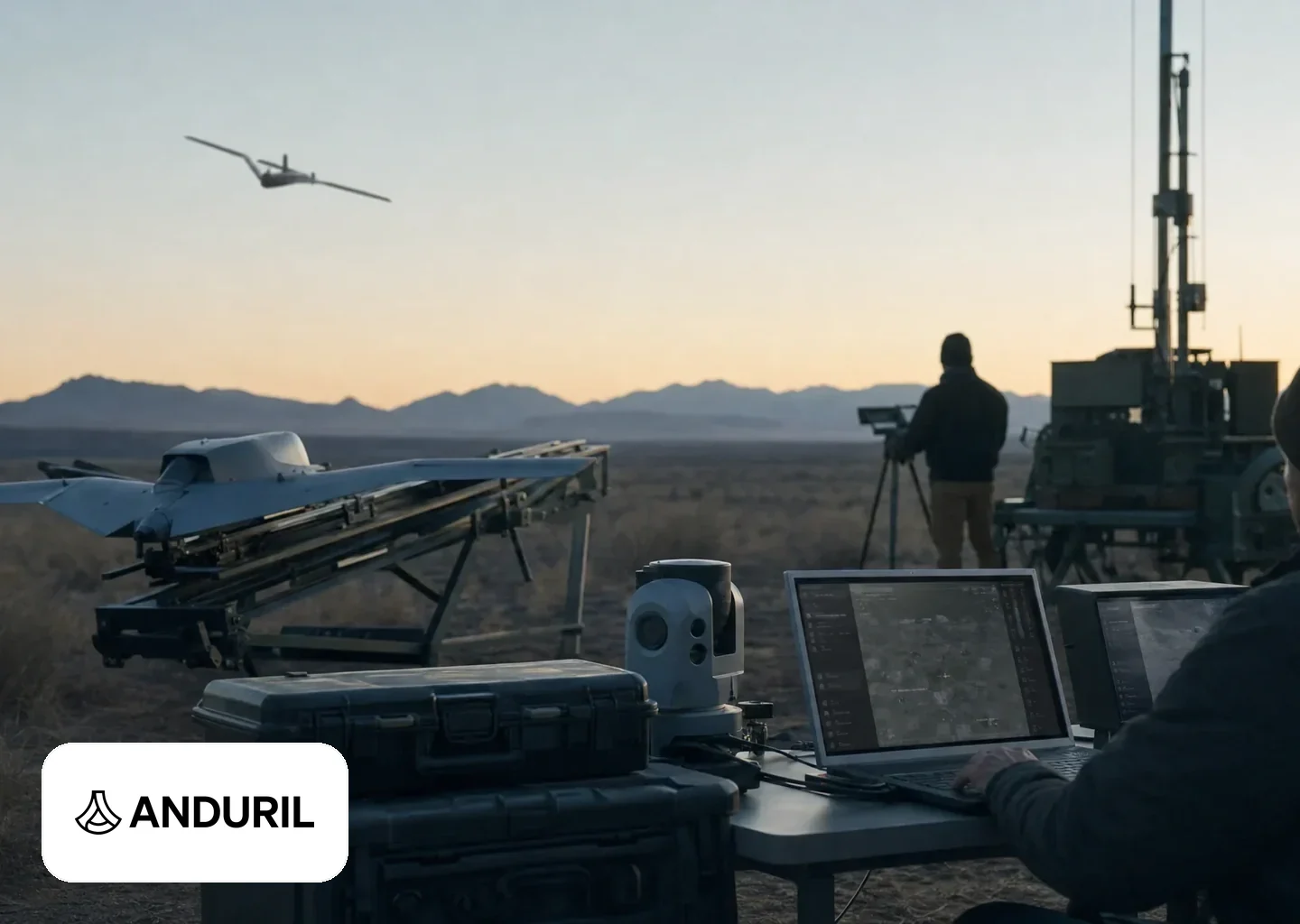
Anduril is a privately held U.S. defense technology company that makes money by selling autonomous systems, AI-enabled command-and-control software, sensors, counter-drone systems, undersea vehicles, loitering munitions, and related integration services to the U.S. military and allied governments. It does not publish quarterly earnings, so there are no public Q1 2026 revenue, margin, backlog, or cash-flow figures. The latest public financial datapoints are about $2.2 billion of 2025 revenue and a May 2026 Series H financing of $5.0 billion at a reported $61.0 billion valuation.
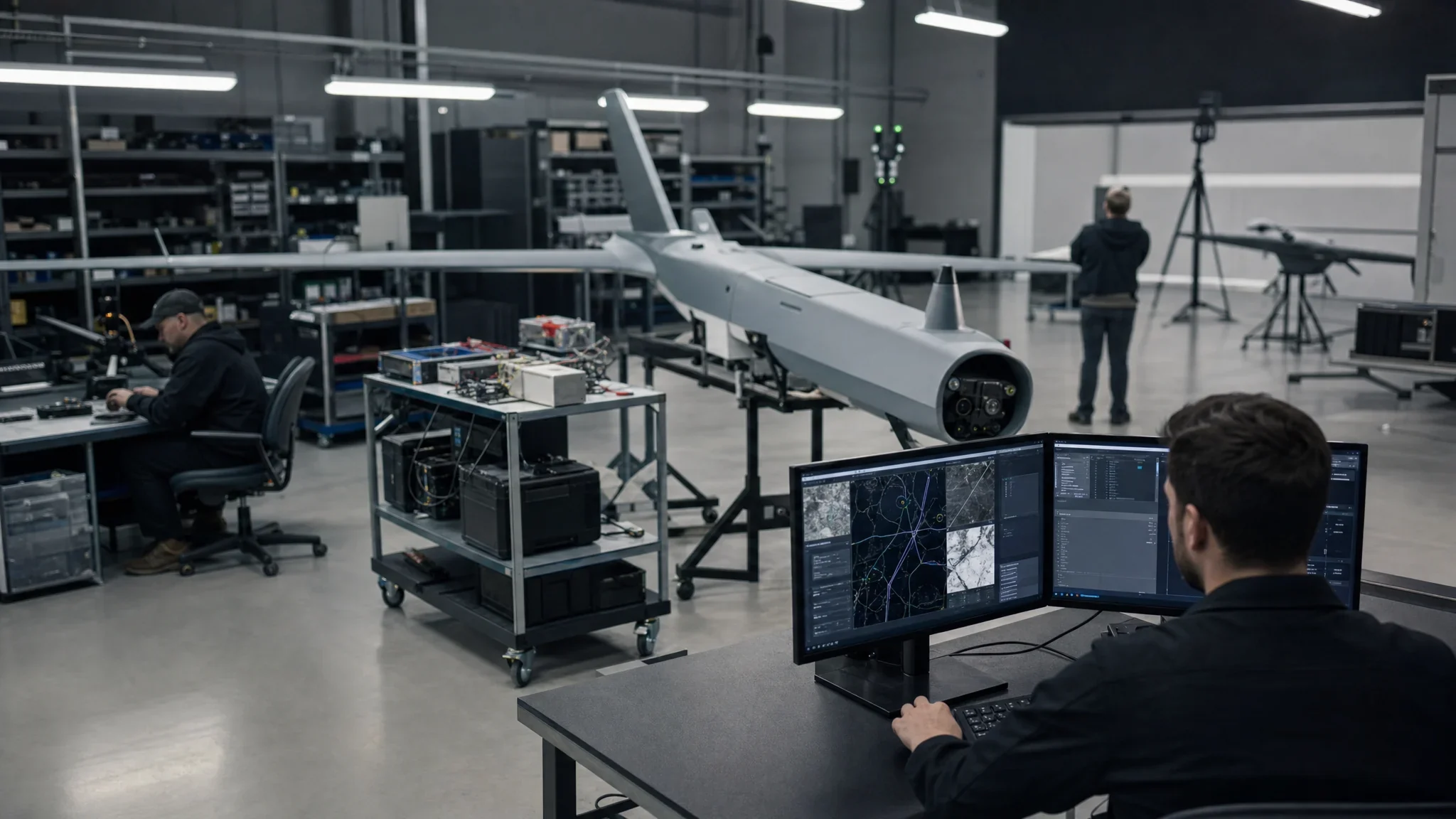
The company’s model differs from the traditional cost-plus prime contractor approach. Anduril often uses private capital to develop products before formal procurement, then sells mature systems through government contracts, program awards, production orders, and software deployments. This product-led model depends on rapid iteration, software-defined systems, vertical integration, and scaled manufacturing capacity.
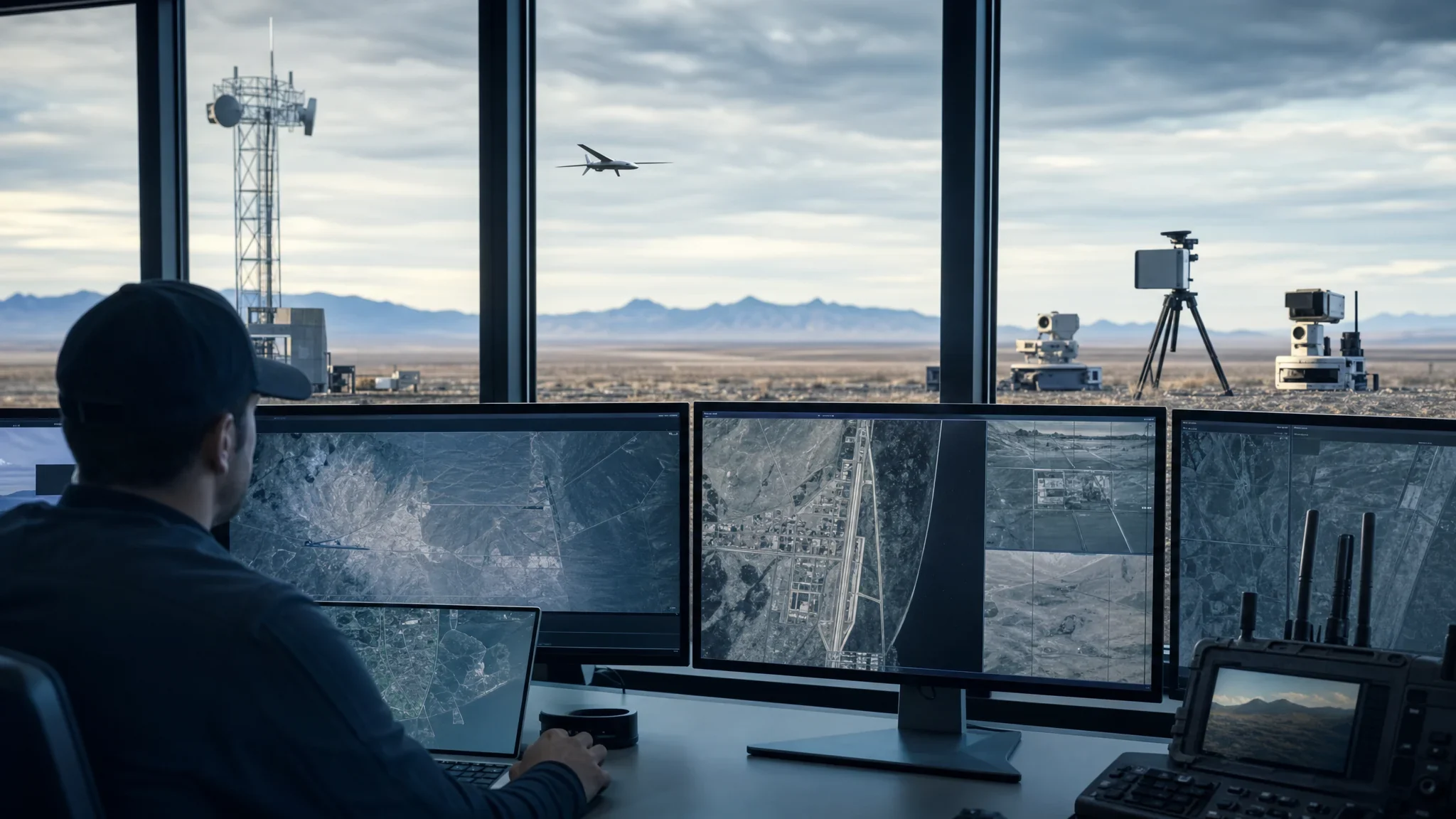
- Lattice software: Anduril’s core command-and-control platform connects sensors, autonomous systems, and human operators into a common operating picture. It competes most directly with defense software and data platforms, including Palantir in some mission areas.
- Autonomous air and counter-UAS systems: The company sells drones, mission autonomy, counter-drone defenses, and related sensor and command systems. This places it against newer defense-tech peers such as Shield AI and public unmanned-systems companies such as AeroVironment.
- Undersea and maritime systems: Anduril develops autonomous underwater vehicles, including Ghost Shark-related allied work, aimed at distributed maritime operations and Indo-Pacific deterrence.
- Weapons and loitering munitions: The company is expanding into weapons manufacturing and higher-volume production, supported by the planned Arsenal-1 facility in Ohio, a roughly 5 million-square-foot site with more than $900 million of planned capital investment.
- Tactical compute, communications, and integration: Anduril also provides fielded systems that combine hardware, software, networking, and mission integration for military customers.
Anduril’s competitive advantages are its private-capital funding base, software-first architecture, speed of product development, and focus on autonomy across air, land, sea, and command-and-control use cases. The May 2026 funding round gives it substantial capital for research, manufacturing expansion, and program execution. The March 2026 U.S. Army single-award enterprise contract, with a ceiling of up to $20.0 billion over 10 years, strengthens its U.S. government sales channel by giving Army buyers a single vehicle for Anduril commercial technologies. The ceiling is not guaranteed revenue, but it is a meaningful procurement advantage.
The company’s market position is that of a high-growth challenger to legacy defense primes rather than a replacement for them. Lockheed Martin, RTX, Northrop Grumman, and General Dynamics have larger installed bases, deeper procurement relationships, and much greater manufacturing scale. Anduril’s relative strength is in newer categories where the defense market is shifting, including AI-enabled command and control, autonomous vehicles, counter-drone systems, and distributed sensing.
Compared with Palantir, Anduril is more vertically integrated in defense hardware and autonomous systems, while Palantir is more concentrated in software platforms and data integration. Compared with Shield AI, Anduril has a broader portfolio across sensors, counter-UAS, undersea vehicles, software, and manufacturing infrastructure. Compared with AeroVironment, Anduril is larger by disclosed private valuation and broader in product scope, although AeroVironment has the transparency and public-market reporting that Anduril lacks.
China is not a customer market for Anduril. Its China exposure is strategic and geopolitical, tied to Taiwan, Indo-Pacific deterrence, missile defense, and U.S.-China defense tensions. China announced countermeasures against Anduril in July 2024 in response to U.S. arms sales to Taiwan. For investors, China is better viewed as a demand driver and policy risk factor than as a revenue opportunity.
Overall, Anduril occupies one of the strongest positions among private defense-technology companies. Its reported $61.0 billion valuation reflects expectations that U.S. and allied defense spending will continue shifting toward autonomy, AI software, counter-drone defenses, missile defense, and faster procurement of commercial defense technologies. The main constraint for analysis is financial opacity, since the company does not disclose GAAP quarterly results, profitability, backlog, segment revenue, or cash burn.