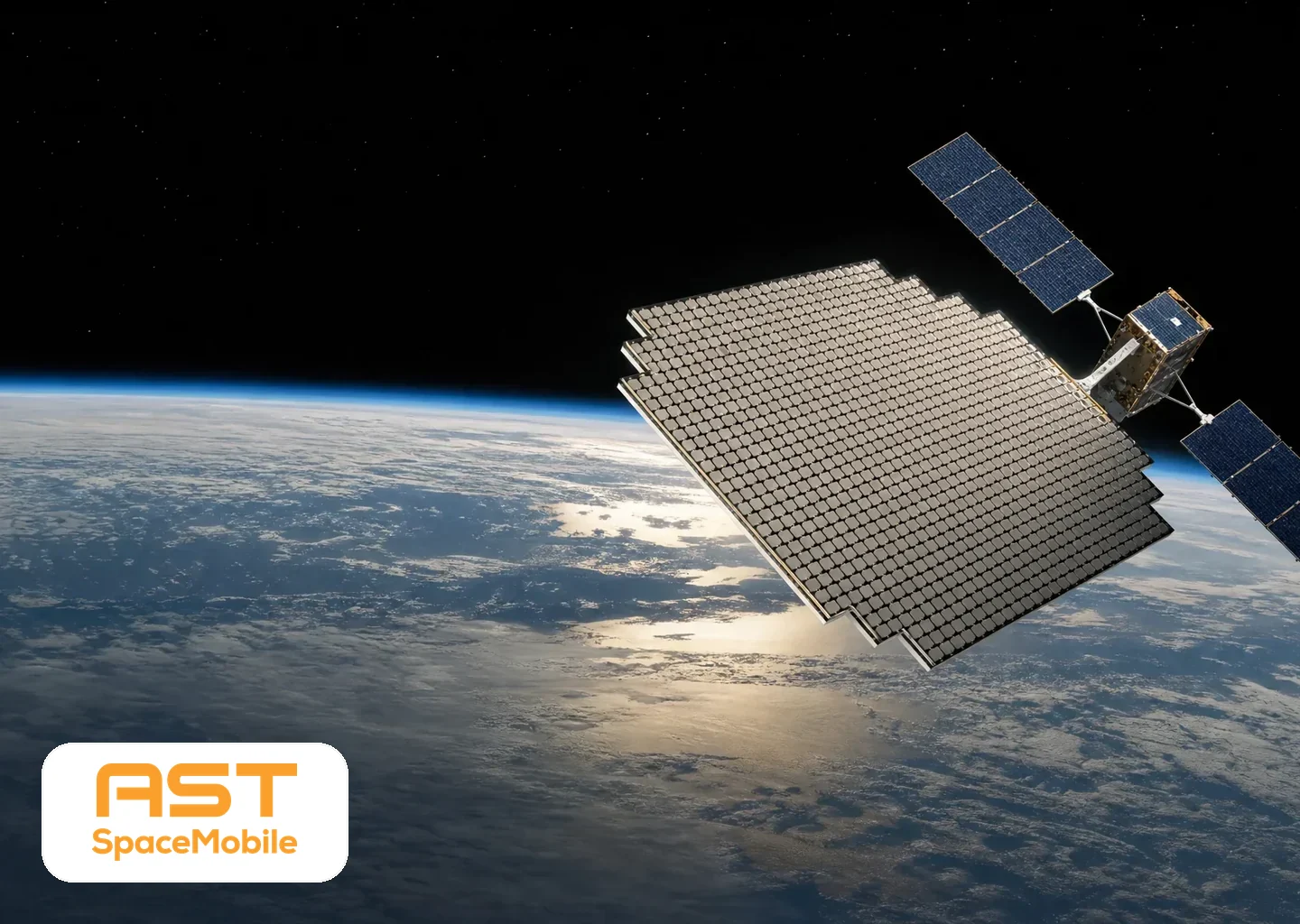
AST SpaceMobile is a satellite communications company building a low-Earth-orbit cellular broadband network that connects directly to standard mobile phones. Its business model is based on selling direct-to-device connectivity through mobile network operators, government customers, and related network infrastructure arrangements, rather than selling handsets or consumer devices.
The company is still in a deployment and early commercialization phase. Q1 2026 revenue was $14.7 million, up from $0.7 million a year earlier, driven by gateway deliveries and U.S. Government milestones. This remains small relative to the scale of investment required, with Q1 2026 net loss attributable to common stockholders of $191.0 million and operating cash use of $48.1 million. Management guided for full-year 2026 revenue of $150 million to $200 million, mainly from mobile-network partners and the U.S. Government.
- Mobile-network-operator partnerships: AST’s main commercial route is through carriers that bring spectrum access, subscriber relationships, local distribution, and market-by-market integration. As of Q1 2026, the company reported nearly 60 global MNO partners covering more than 3 billion subscribers.
- Government services: Government is an important early customer category. Q1 2026 revenue included U.S. Government milestone activity, and AST reported three new U.S. Government awards since March 2026 through prime contractors tied to successful on-orbit milestones.
- Gateway and infrastructure activity: Near-term revenue has included gateway deliveries and partner-related work. This reflects the network buildout stage, before broad recurring service revenue from end users has been proven at scale.
- Future connectivity services: The longer-term model depends on monetizing satellite broadband coverage for mobile phones in underserved, remote, roaming, emergency, and defense-related use cases.
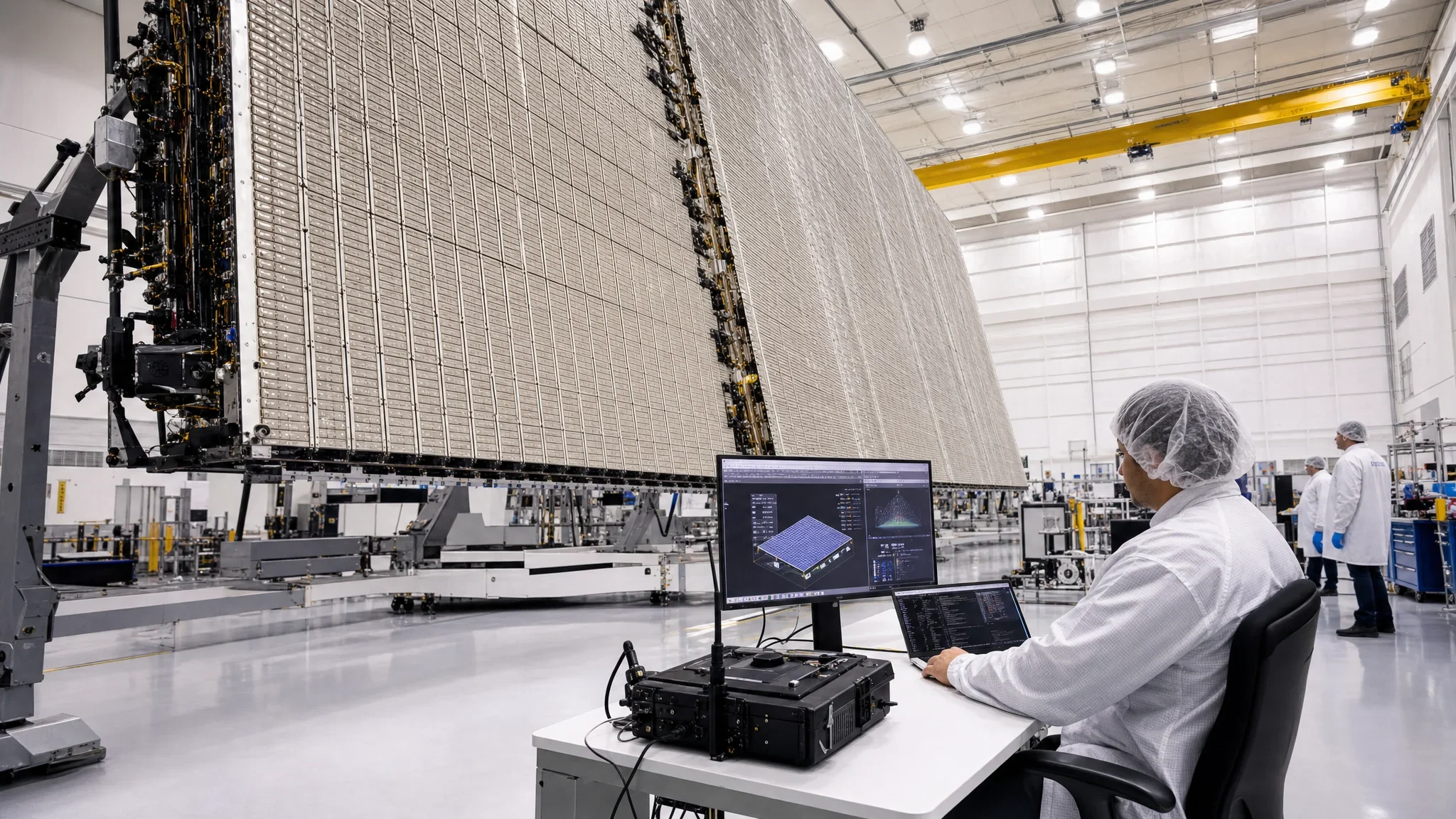
AST’s operating model combines satellite design, manufacturing, launches, regulatory approvals, ground integration, and carrier commercialization. The company emphasizes vertical integration, with more than 500,000 square feet of manufacturing and operations space and a Texas micron production facility described as fully operational, with capacity to support more than 10 satellites’ worth of microns per month.
Its core product category is direct-to-standard-phone satellite broadband using large BlueBird satellites. The company has also highlighted technology and spectrum assets including shared MNO spectrum, controlled mobile satellite service spectrum, and roughly 3,900 patent and patent-pending claims. In June 2026, AST launched BlueBirds 8, 9, and 10, adding to its deployment progress after the Q1 report.
AST’s competitive advantage rests on four main factors: a broadband-focused direct-to-device architecture, a large MNO partner base, regulatory progress in the United States, and in-house manufacturing capacity. The FCC has granted Supplemental Coverage from Space authorization for commercial SpaceMobile service in the U.S. using a network of up to 248 satellites. AST also reported a 98.9 Mbps peak data-speed record from an in-orbit Block 1 BlueBird satellite directly to an unmodified smartphone over international waters, with a Block 2 BlueBird expected to nearly double those peak speeds.
The company positions itself as building the first global cellular broadband network in space designed to work directly with standard, unmodified mobile devices. Ground-integration and commercialization activity spans markets including the United States, Canada, the United Kingdom, India, Brazil, Spain, Germany, France, Romania, Saudi Arabia, Japan, New Zealand, the Philippines, Côte d’Ivoire, Kenya, Nigeria, and Senegal, targeting a combined population of 2.9 billion people. China is not a disclosed meaningful market in the latest company materials.
Direct competitors include SpaceX’s Starlink Direct to Cell, satellite IoT and mobile satellite service operators, and terrestrial telecom networks that already cover most urban and suburban mobile usage. SpaceX is the most important global peer because it has launch scale, capital access, and an expanding direct-to-cell strategy. AST’s differentiation is its focus on broadband-capable service to unmodified smartphones through an MNO-partner model, while Starlink benefits from a larger existing satellite and launch ecosystem.
AST’s market position is best understood as high-potential but still unproven at commercial scale. The company has strong strategic positioning in direct-to-device satellite broadband, a large reported carrier ecosystem, and substantial liquidity of about $3.5 billion at March 31, 2026, before the July 2026 $1.15 billion convertible-note financing. The key test is whether AST converts technical milestones, regulatory approvals, and partner relationships into reliable service and recurring revenue across multiple countries.