EHang is an advanced air mobility company built around autonomous, pilotless electric vertical take-off and landing aircraft. Its business model combines aircraft sales, related operating support, and non-passenger drone solutions. The company is still in early commercialization, so quarterly revenue remains driven by delivery timing rather than a steady service model.
In Q1 2026, EHang reported revenue of RMB25.7 million, compared with RMB177.6 million in Q4 2025. The decline reflected lower aircraft deliveries, with 4 EH216 series units delivered in Q1 2026 versus 61 EH216 series units and 5 VT35 units in Q4 2025. Gross margin was 62.5%, showing that product economics remained strong despite low revenue scale. The company remained loss-making, with a Q1 2026 net loss of RMB126.4 million.
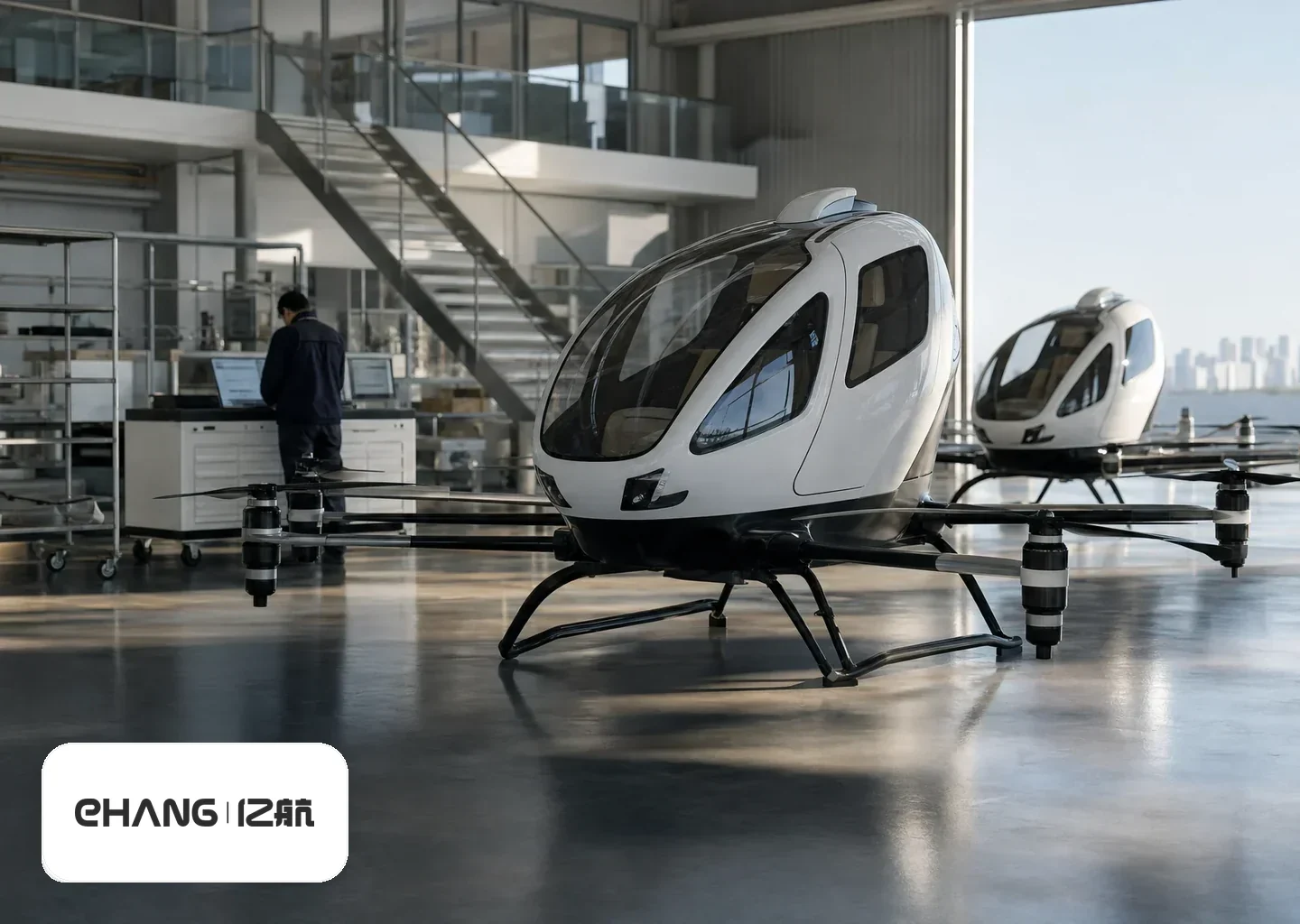
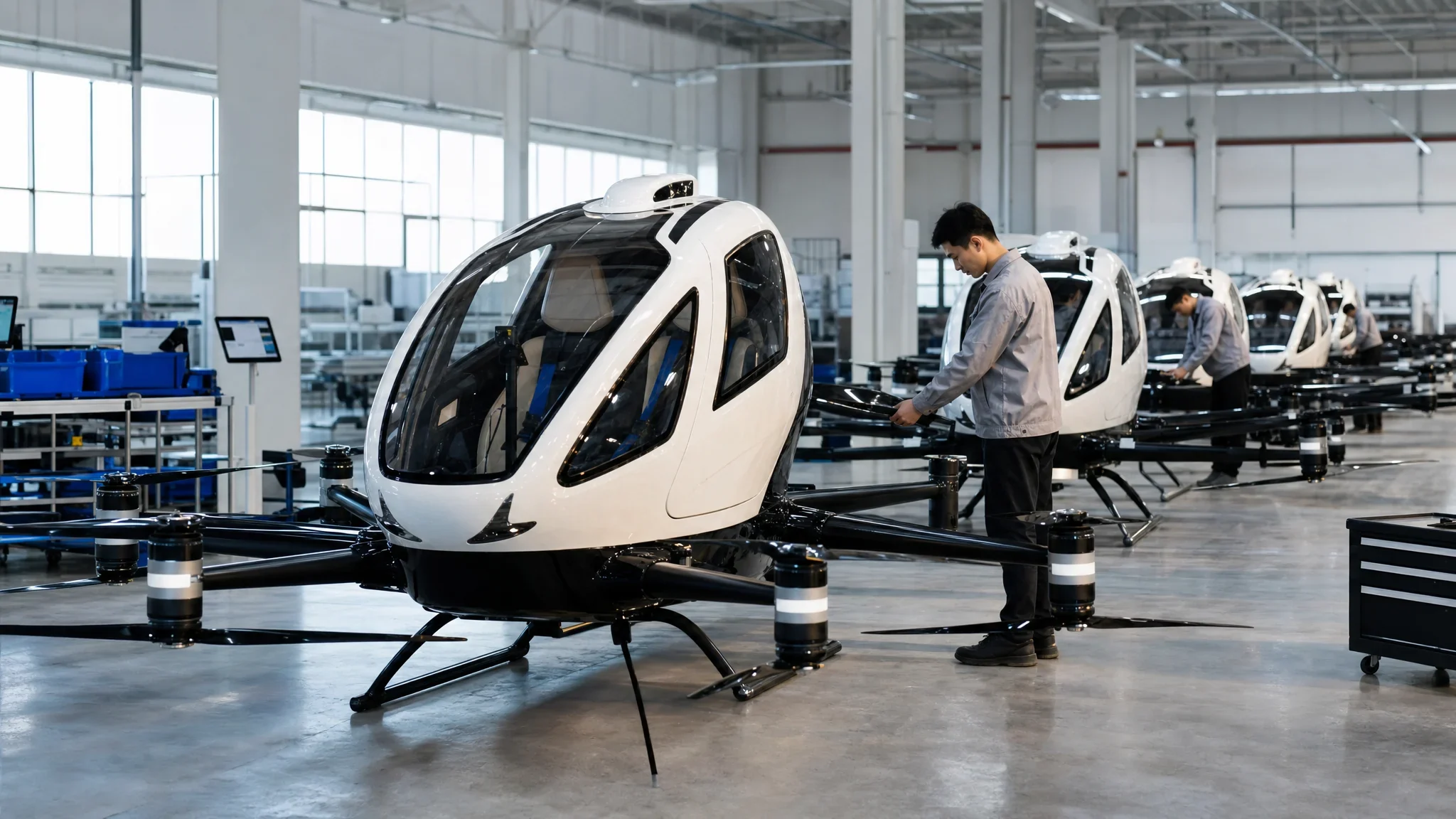
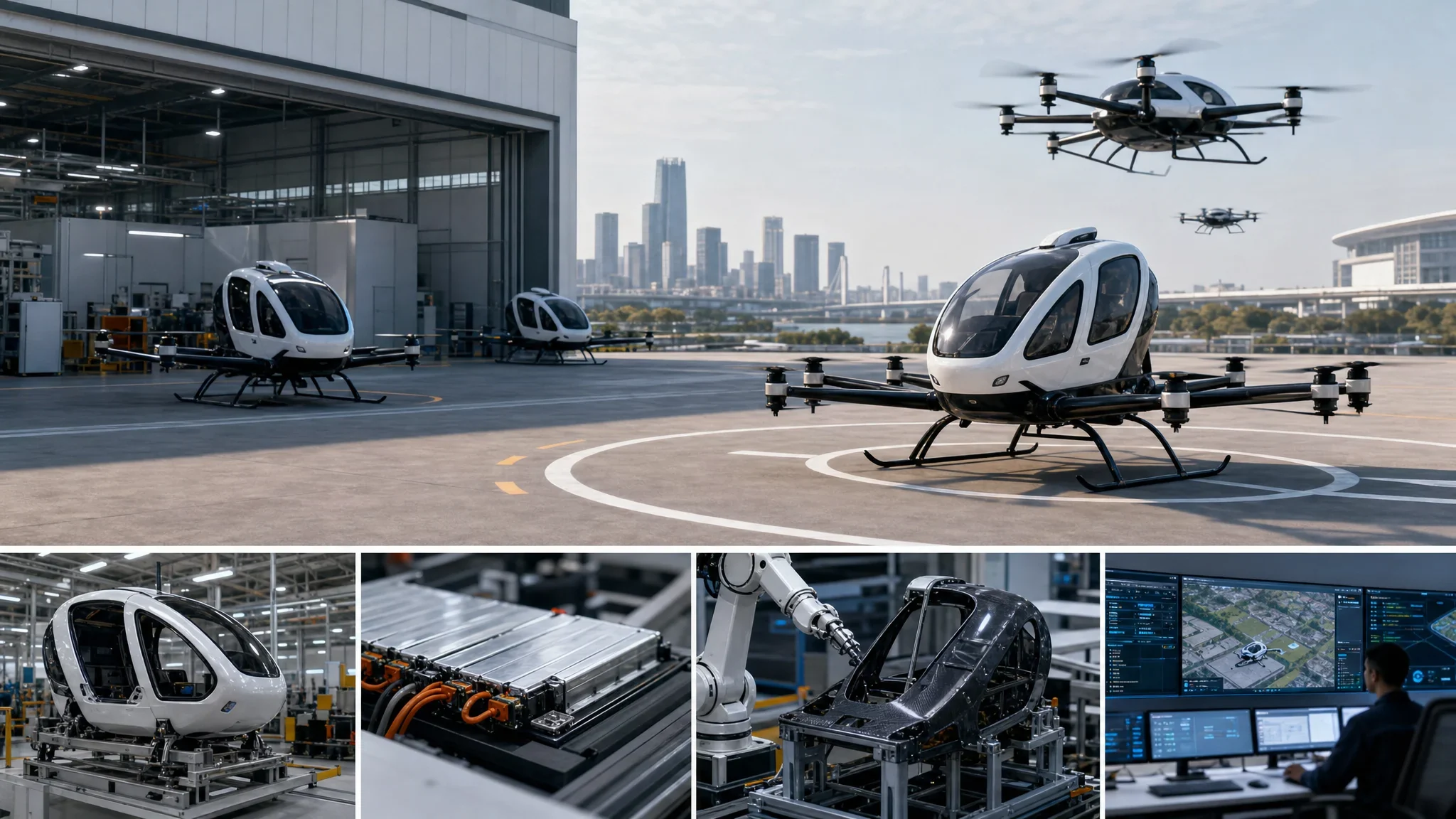
- Passenger eVTOL aircraft: The EH216-S is EHang’s flagship two-seat pilotless aircraft, targeted at aerial tourism, urban air mobility, logistics, and emergency-response scenarios. Aircraft deliveries are the core long-term revenue opportunity.
- Commercial operations enablement: EHang supports operators with aircraft, operating procedures, ground systems, training, and deployment frameworks. This positions the company as more than an aircraft manufacturer, although revenue is still early-stage.
- Aerial media and non-human-carrying drones: In Q1 2026, aerial media solutions contributed about 40% of total revenue, supported by 22 aerial media shows and delivery of 1,000 GD 4.0 formation drones. This provides a nearer-term revenue stream while passenger eVTOL operations scale.
- Longer-range aircraft development: The VT35 lift-and-cruise eVTOL is intended for intercity and regional low-altitude mobility. As of Q1 2026, it was in the Certification Basis definition phase with CAAC.
EHang’s main competitive advantage is its regulatory position in China. The EH216-S has received CAAC type certificate, production certificate, and standard airworthiness certificate, and EHang says it is commercially operated under China’s first Air Operator Certificates for human-carrying eVTOL services. This gives the company a first-mover position in pilotless passenger eVTOLs, especially within China’s low-altitude economy.
China is EHang’s core market and the center of its commercialization strategy. As of May 2026, the EH216-S had completed more than 90,000 safe flights, and EHang said routine commercial trial services were operating in Guangzhou and Hefei. Customers and partners had established more than 40 eVTOL operation sites across China as of Q1 2026, with some conducting routine flights. Since receiving Air Operator Certificates in March 2025, EHang General Aviation and Heyi Aviation completed more than 3,000 safe flight missions with zero accidents and zero violations, according to the company.
The next commercial milestone is the move from certified aircraft and trial operations to repeatable public ticketed services. EHang’s work in China includes ticket pricing, online and offline ticketing channels, customer service, public feedback management, and standardized operating procedures. Its June 2026 selection, with partners, for Hong Kong’s Low-Altitude Economy Regulatory Sandbox X trial projects also extends the company’s Greater Bay Area presence.
Internationally, EHang remains earlier in the commercialization curve. Its overseas activity is concentrated in demonstrations, regulatory engagement, and sandbox programs rather than scaled revenue generation. Thailand is highlighted by management as a strategic benchmark market, with five vertiport locations identified and the first operational route survey completed by Q1 2026. In May 2026, the EH216-S completed its first human-carrying pilotless eVTOL flights in Mexico and Latin America.
Direct competitors include global eVTOL developers such as Joby Aviation, Archer Aviation, Lilium’s remaining market footprint, Vertical Aerospace, and larger aerospace companies exploring advanced air mobility. Compared with Joby Aviation in the United States, EHang is differentiated by its pilotless design and earlier Chinese regulatory approvals for a human-carrying eVTOL. Joby has greater visibility in piloted U.S. air taxi development, while EHang’s current advantage is concentrated in China’s regulatory and low-altitude economy framework.
EHang’s market position is best described as an early commercial leader in China’s pilotless passenger eVTOL segment, with meaningful regulatory first-mover advantages but limited revenue scale. The company’s cash, restricted deposits, short-term investments, and treasury investments totaled RMB1.03 billion at March 31, 2026, and management maintained 2026 revenue guidance of around RMB600 million. For investors, the central question is whether EHang converts its certification lead, operating sites, and trial flights into high-utilization commercial operations with recurring demand.