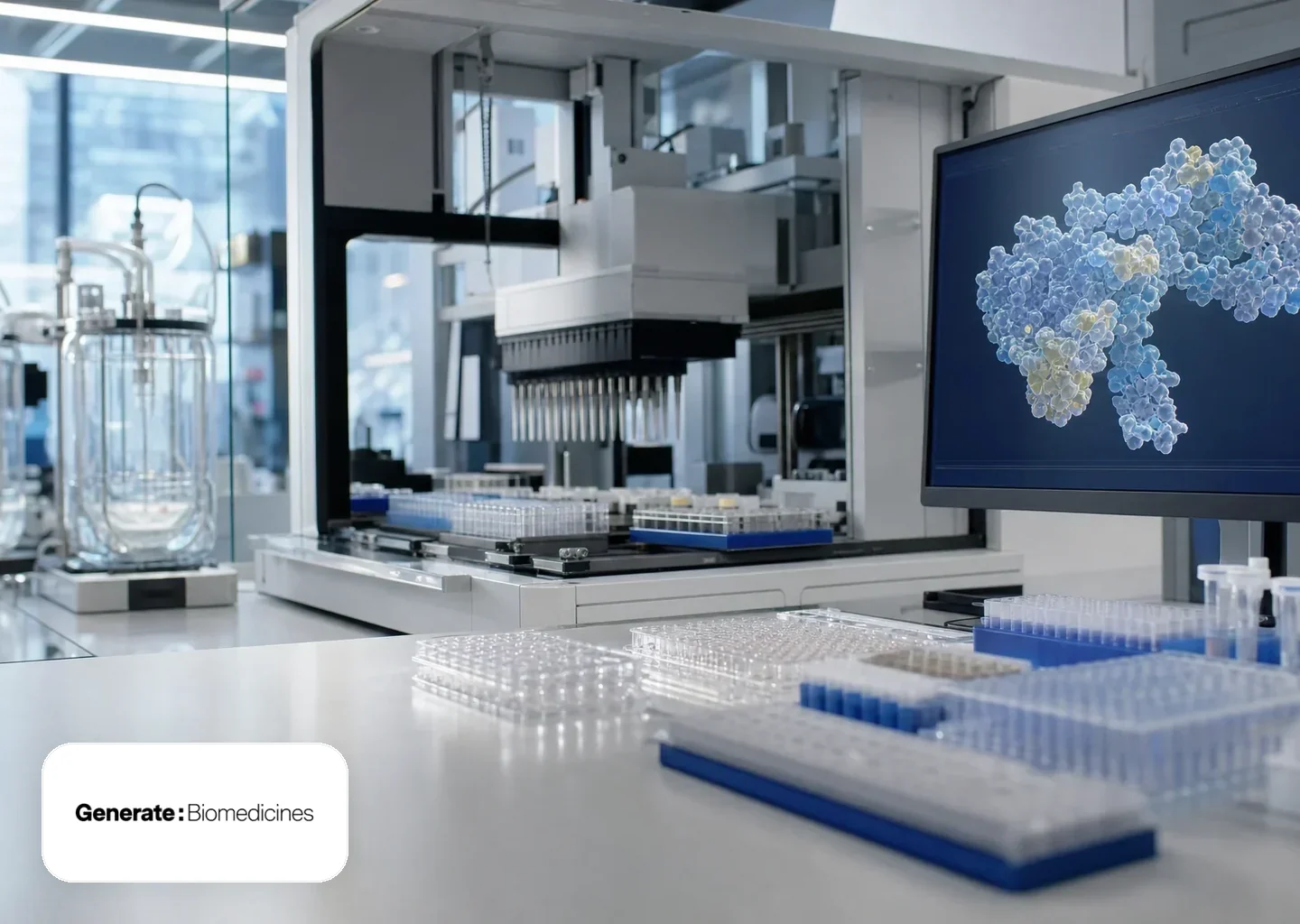
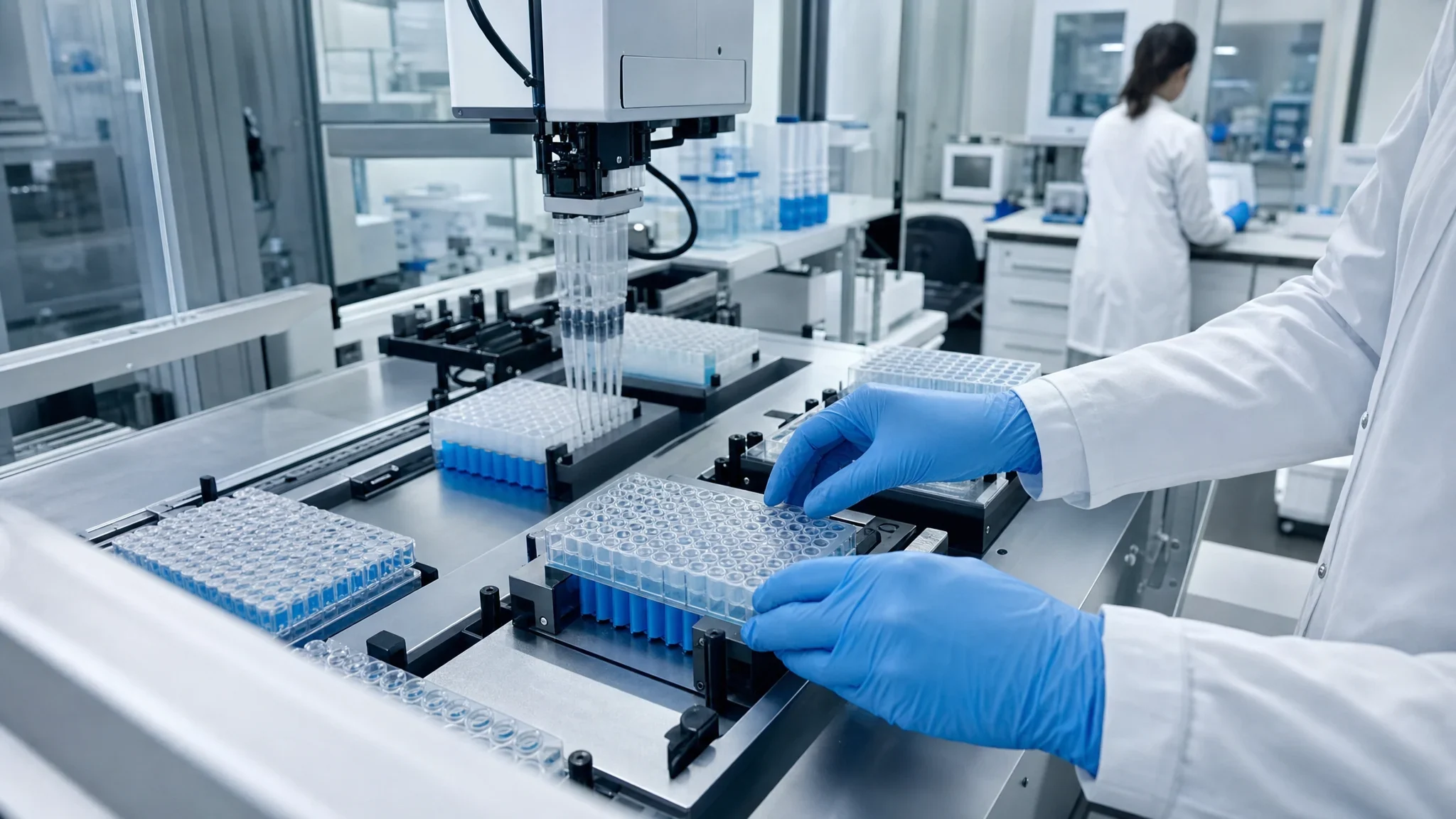
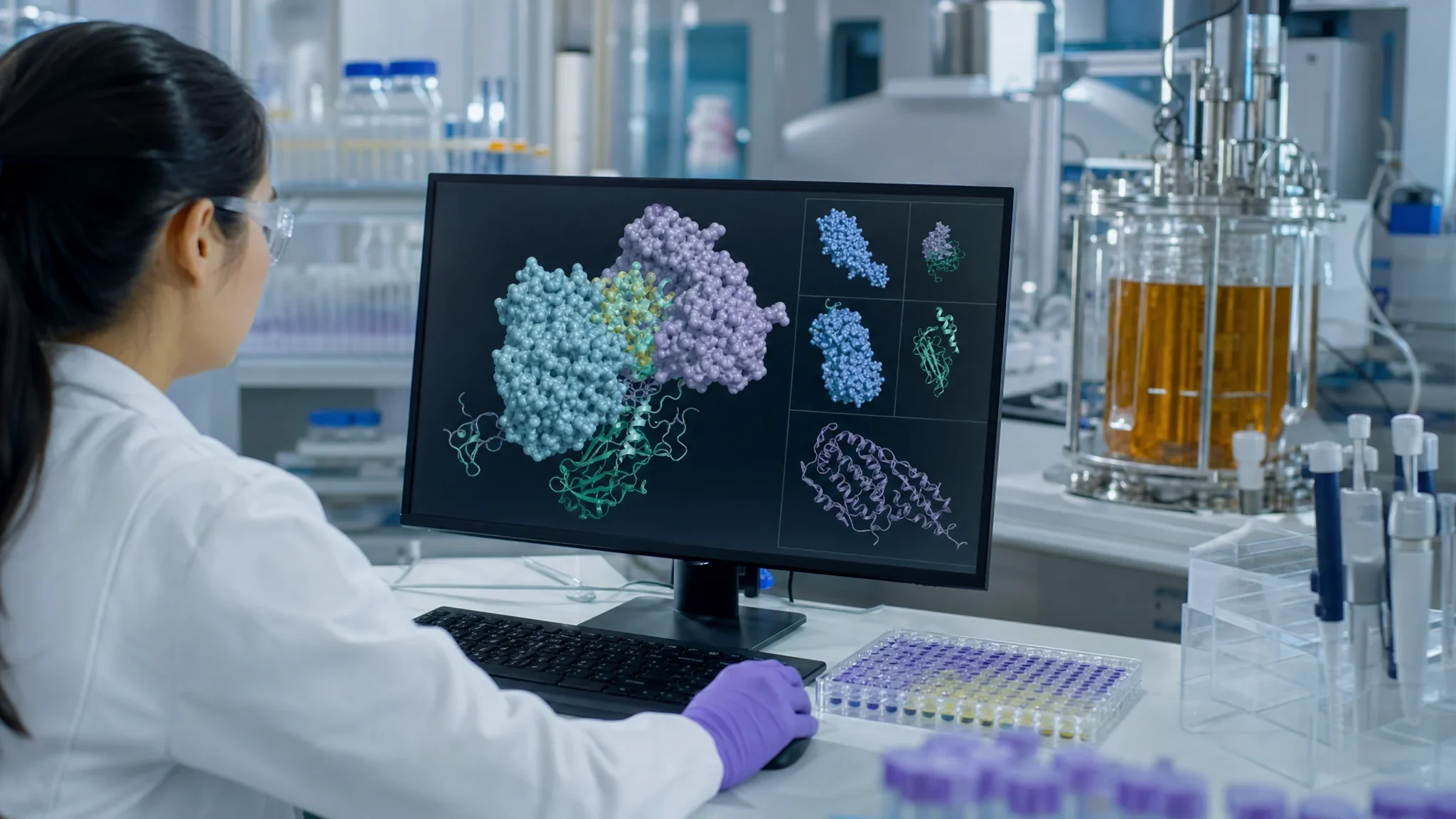
Generate Biomedicines is a clinical-stage biotechnology company built around computational protein design. Its business model is to use the Generate Platform, which combines machine learning, biological engineering, and high-throughput experimentation, to create protein therapeutics for its own pipeline and for partners. The company has no approved products, so it does not generate product sales.
Revenue currently comes from collaboration and license arrangements. In Q1 2026, revenue was $7.2 million, down from $8.8 million a year earlier. The quarter included $6.5 million from Novartis and $0.7 million from Amgen, reflecting ongoing research programs rather than commercial drug sales.
The operating model has two main parts
- Internal pipeline: Generate funds and develops its own drug candidates, led by GB-0895, a long-acting anti-TSLP monoclonal antibody in pivotal Phase 3 trials for severe asthma and Phase 1b development for COPD. Other key programs include GB-4362, an MMAE payload neutralizer monoclonal antibody, and GB-5267, a MUC16 armored CAR-T therapy.
- Partnered discovery and development: Generate applies its platform to programs with larger biopharma partners. The Novartis collaboration, signed in 2024, includes a $50.0 million upfront payment, potential payments of up to $1.0 billion across programs, and tiered royalties. The Amgen collaboration, signed in 2021, included a $50.0 million upfront payment, an additional $5.0 million for a sixth target, potential payments of up to $370.0 million per program, and tiered royalties.
Generate’s product categories span multiple therapeutic modalities rather than a single drug class. Its pipeline includes monoclonal antibodies, payload neutralization antibodies, and cell therapy. This gives the company broader scientific optionality than a single-asset biotech, but it also increases execution complexity across clinical development, manufacturing, and regulatory pathways.
The company’s main competitive advantage is its integrated design-build-test-learn platform. Generate is positioned as an AI-native, generative biology company focused on programmable protein therapeutics. Its model differs from traditional drug discovery because computational design and wet-lab validation are built into a scalable loop. If the platform consistently produces differentiated clinical candidates, it would support both wholly owned products and higher-value collaborations.
GB-0895 is the most important near-term proof point. It is designed for twice-yearly subcutaneous dosing in severe asthma, which would be a dosing-frequency advantage against existing biologic therapies if approved. The asset also concentrates risk, since Phase 3 severe-asthma work was a major driver of Q1 2026 R&D expense, which rose to $57.8 million from $46.8 million a year earlier.
Generate competes with several groups
- Large biopharma companies: Global drugmakers have internal antibody, biologics, and AI-enabled discovery platforms, deeper development budgets, and established commercial infrastructure.
- AI drug-discovery companies: Cross-category peers such as Insilico Medicine compete in computational drug discovery, although Generate is more focused on engineered protein therapeutics.
- Antibody engineering companies: These firms compete for targets, partners, platform validation, and biologics development talent.
- China-based biotechnology developers: Generate identifies China-based AI-enabled biologics and drug discovery companies as emerging competitive threats, with potential advantages in cost, data access, funding, or speed.
China is not a meaningful commercial market for Generate at this stage because the company has no approved products and no product revenue. The company’s Q1 2026 filing did not identify China revenue, China-based customers, or a China commercialization strategy. China is more relevant as a competitive, supply-chain, and policy risk, including U.S.-China trade restrictions, tariffs, data-transfer constraints, raw-material access, and reliance on WuXi as the sole drug product provider for GB-4362.
Generate’s market position improved after its 2026 IPO. The company began trading on Nasdaq under ticker GENB after pricing its IPO at $16.00 per share and received about $369.3 million in net proceeds. Cash, cash equivalents, and marketable securities were $516.6 million at March 31, 2026, and management said this should fund operations into the first half of 2028.
Despite that stronger capital base, Generate remains an early public biotech with substantial losses and cash burn. Q1 2026 net loss was $61.7 million, operating cash use was $80.4 million, and accumulated deficit was $737.7 million at quarter end. Its market position depends on Phase 3 execution for GB-0895, early clinical progress for GB-4362 and GB-5267, and whether the Amgen and Novartis collaborations convert platform validation into milestone and royalty economics.