Last Updated -

July 10, 2026

Laopu Gold

Company Profile and Market Insights

Explore the business model, global strategy, and market performance including insights into its position in China.

Laopu Gold
Key facts
Founded 2009 • HKEX: 6181 • FY2025 results (ended Dec 31, 2025)
RMB27.30b
FY2025 revenue
RMB4.87b
FY2025 profit for year
37.6%
FY2025 gross margin
RMB19.0-20.0b
Prelim. Q1 2026 sales
85.6%
FY2025 mainland China revenue share
2,113
Employees at 2025 year-end

About

Laopu Gold Co., Ltd. is a Beijing-headquartered Chinese luxury gold jewelry company founded in 2009. The company designs, manufactures and sells traditional Chinese handcrafted heritage gold jewelry, a category focused on traditional goldsmithing techniques, cultural motifs and premium retail presentation. It operates as a luxury retail brand through directly operated boutiques and online channels, rather than as a gold miner or commodity producer. Laopu listed its H shares on the Hong Kong Stock Exchange in 2024.

The business has developed from a specialist heritage-gold brand into one of China’s most prominent luxury jewelry retailers. Laopu says it was the first brand to promote the concept of heritage gold in China, and it is accredited by the China Gold Association as the top professional brand in traditional Chinese handcrafted gold jewelry. Its strategy centers on brand premium, product design, in-house craftsmanship, high-end mall distribution, online sales growth and international expansion. Management identifies brand internationalization and market globalization as a strategic direction.

Laopu’s scale expanded sharply in 2025, with revenue rising 221.0% to RMB27.30 billion and profit for the year increasing to RMB4.87 billion. Gold jewelry accounted for nearly all revenue, while maintenance and repair services were immaterial. Mainland China remained the core market at RMB23.36 billion, or about 85.6% of revenue, while overseas revenue reached RMB3.94 billion. Preliminary unaudited Q1 2026 estimates pointed to continued rapid growth, with tax-inclusive sales of RMB19.0 billion to RMB20.0 billion, revenue of RMB16.5 billion to RMB17.5 billion, and net profit of RMB3.6 billion to RMB3.8 billion.

Laopu Gold

Business Model and Market Position

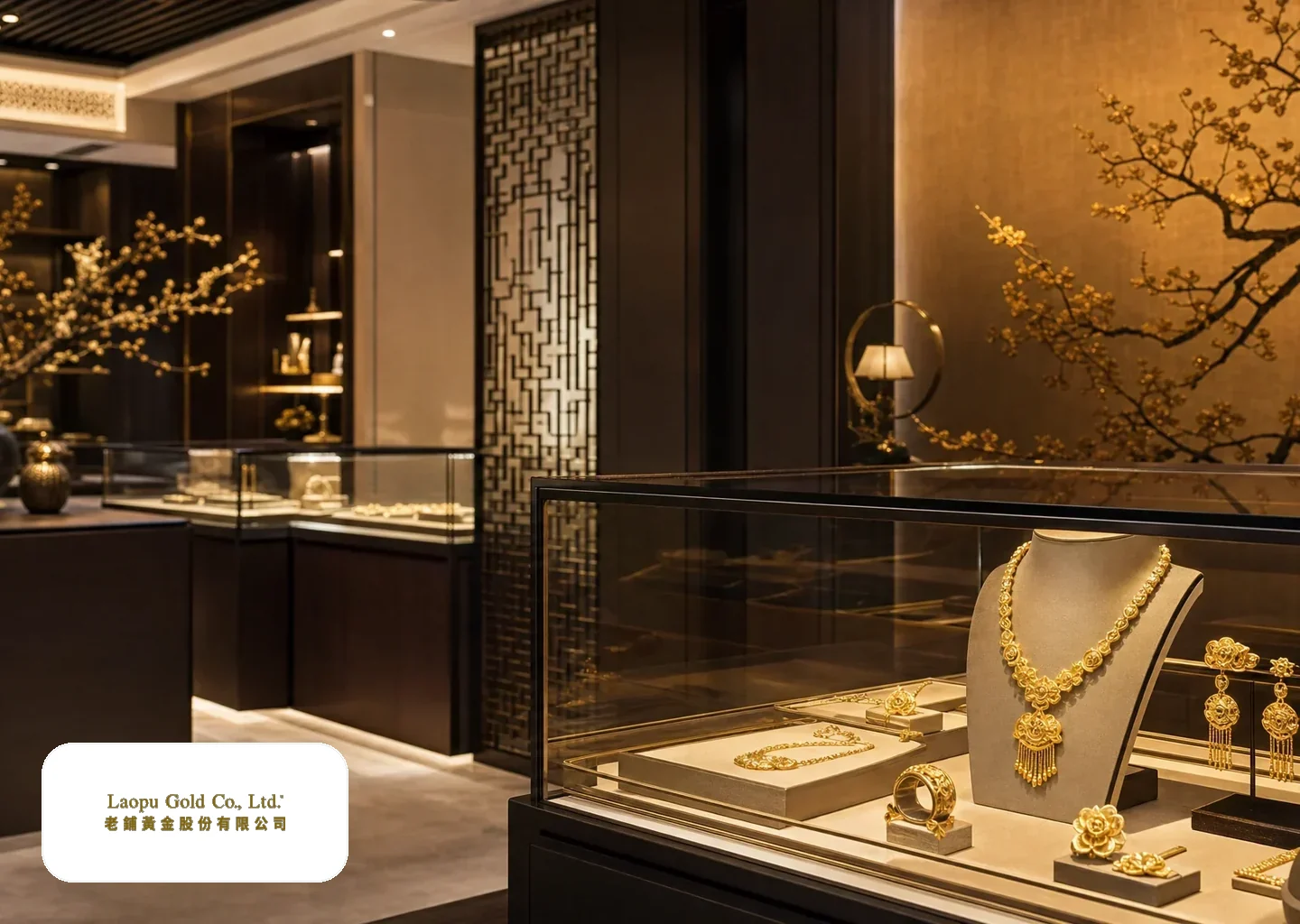
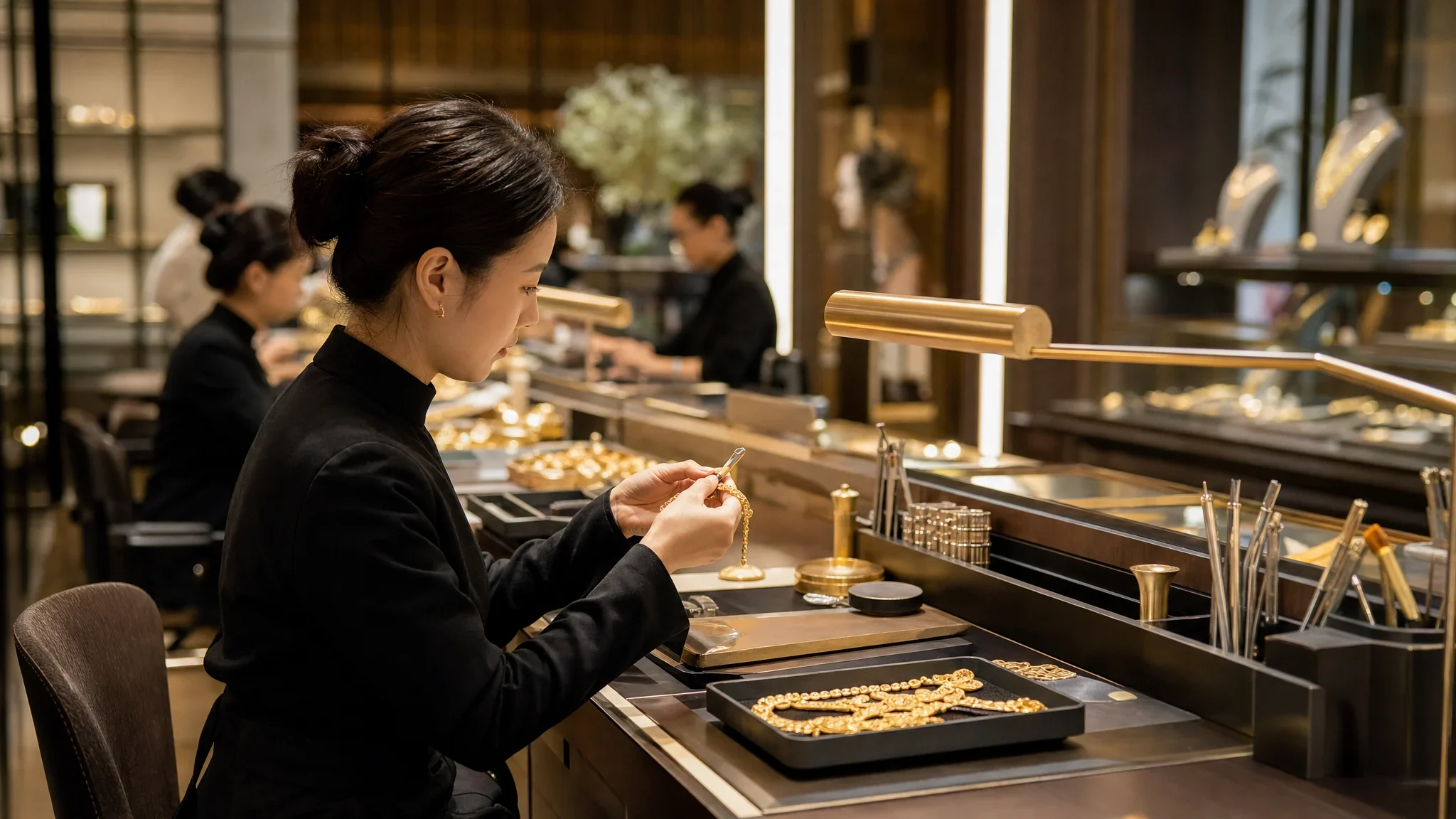
Laopu Gold is a premium Chinese gold jewelry retailer, not a gold miner or commodity producer. Its business model is based on designing, producing, and selling traditional Chinese handcrafted “heritage gold” jewelry through directly operated boutiques and online channels. The company earns its margin from brand premium, product design, craftsmanship, and high-end retail distribution, rather than from extracting gold.

FY2025 revenue was RMB27.30 billion, up 221.0% year over year. Gold jewelry accounted for almost all revenue at RMB27.28 billion, while maintenance and repair services contributed only RMB7.1 million. Preliminary unaudited Q1 2026 estimates point to continued rapid growth, with tax-inclusive sales of RMB19.0 billion to RMB20.0 billion, revenue of RMB16.5 billion to RMB17.5 billion, and net profit of RMB3.6 billion to RMB3.8 billion.

  1. Core product revenue: Laopu sells premium heritage gold jewelry and related gold products, with customer payment mainly through cash and bank-card settlement.
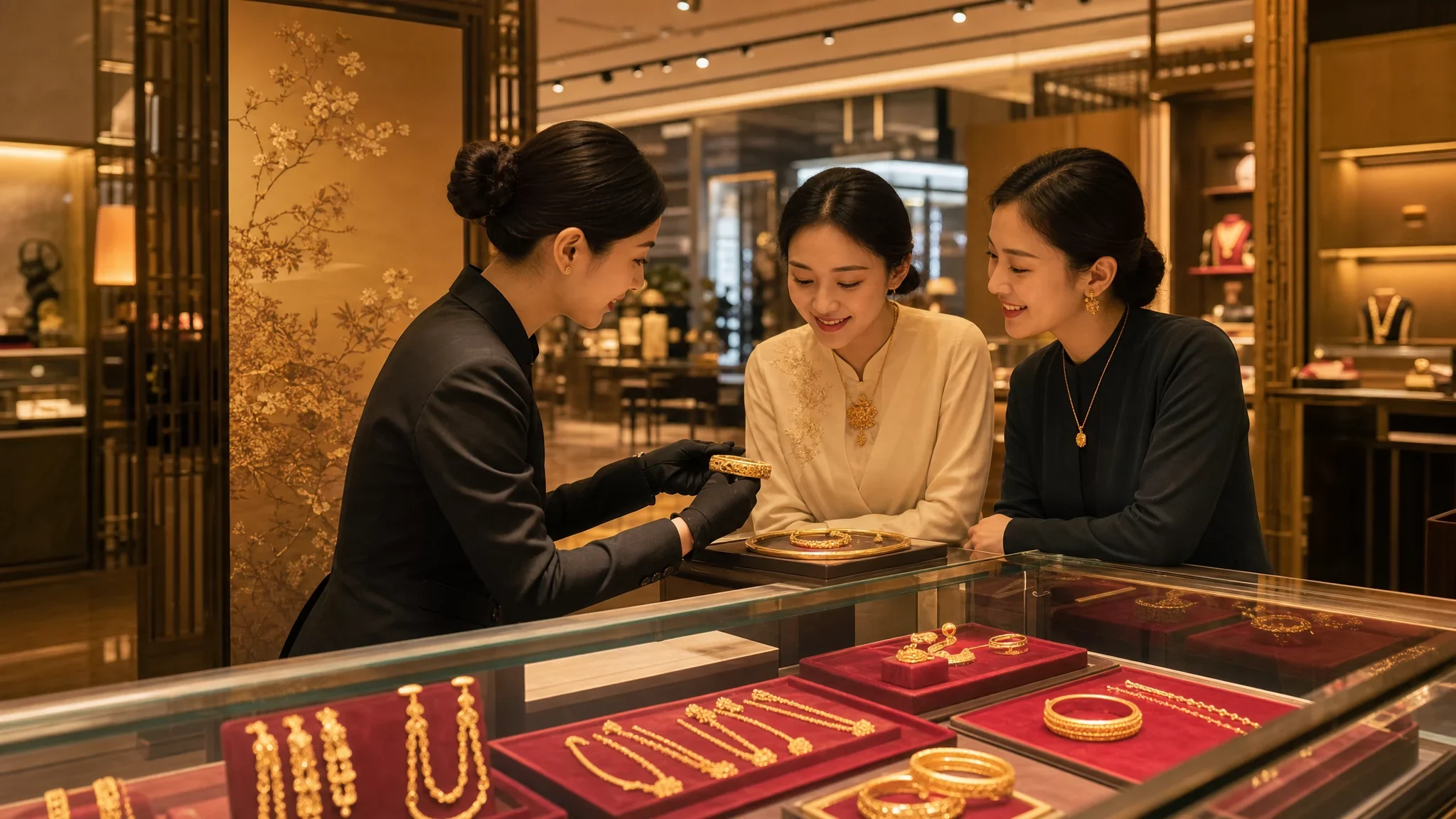
  2. Direct retail model: The company relies on directly operated boutiques, often in high-end shopping malls, which gives it tighter control over pricing, merchandising, service quality, and brand presentation.
  3. Online channels: E-commerce is an important growth channel alongside boutiques, helping the brand reach consumers beyond physical store catchments.
  4. Services: Maintenance and repair services exist, but they are financially immaterial compared with product sales.

The company’s operating model is inventory-intensive. Heritage gold jewelry production takes about 25 to 90 days depending on product type, and Laopu held RMB16.04 billion of inventories at the end of FY2025 after a 292.5% increase. This supported strong sales growth, peak-season demand, and store expansion, but it also made working capital a central operating requirement.

China is Laopu’s core market. FY2025 Chinese mainland revenue was RMB23.36 billion, equal to about 85.6% of total revenue, while overseas revenue was RMB3.94 billion, or about 14.4%. Most employees, transactions, and operations remain in mainland China, giving the company direct exposure to Chinese premium jewelry demand, mall traffic, consumer confidence, and local regulatory and tax conditions.

Laopu’s main competitive advantage is its focused heritage-gold positioning. The company says it was the first brand to promote the heritage gold concept in China and is accredited by the China Gold Association as the top professional brand in traditional Chinese handcrafted gold jewelry. It is also a drafting unit for China Gold Association group standards covering heritage gold artifacts and heritage gold artifacts inlaid with diamonds. These credentials support its premium positioning in a category where authenticity, craftsmanship, and cultural design carry commercial value.

The company’s market position strengthened sharply in 2025. According to Frost & Sullivan data cited by Laopu, it ranked second among global luxury brands by revenue generated in China in 2025 and was the only Chinese brand among the top five global luxury groups by China revenue. Growth was supported by greater brand recognition, stronger online and offline boutique revenue, product optimization, 10 new boutiques, and 9 optimized or expanded boutiques compared with 2024.

Direct listed peers include Chow Tai Fook Jewellery Group and Luk Fook Holdings. The comparison is useful because both are major Hong Kong-listed jewelry retailers with broad exposure to Chinese and regional gold jewelry demand. Laopu is more narrowly positioned around premium heritage gold, while Chow Tai Fook and Luk Fook operate broader jewelry retail portfolios with larger mass-market and wedding-jewelry exposure. This narrower positioning gives Laopu clearer luxury differentiation, but it also concentrates the business in a specific product and consumer segment.

Laopu’s competitive position rests on brand desirability, heritage-gold design capability, controlled boutique distribution, and fast-growing online sales. Its scale and profitability have risen quickly, with FY2025 gross profit of RMB10.27 billion and adjusted net profit of RMB5.03 billion. The key strategic question is whether the company sustains luxury pricing and store productivity while managing gold-price volatility, high inventories, and rapid expansion in China and overseas markets.

Laopu Gold

Performance in China

China is Laopu Gold’s core market. In FY2025, Chinese mainland revenue reached RMB23.36 billion, or about 85.6% of total revenue, while overseas revenue was RMB3.94 billion. The company is headquartered in Beijing, employs 1,970 of its 2,113 staff in the mainland, and generates almost all sales from gold jewelry through directly operated boutiques and online channels. Its local strategy centers on premium heritage gold, high-end mall distribution, product iteration, and tight control of brand presentation. FY2025 growth reflected stronger online and boutique sales, 10 new boutiques, and 9 optimized or expanded boutiques. Laopu cites Frost & Sullivan data showing it ranked second among global luxury brands by China revenue in 2025. Main competitors include Chow Tai Fook and Luk Fook. Preliminary Q1 2026 estimates showed further acceleration, with RMB16.5-17.5 billion revenue and RMB3.6-3.8 billion net profit.

Growth and Future Prospects

Laopu Gold entered 2026 with unusually strong momentum. FY2025 revenue rose 221.0% to RMB27.30 billion, while profit for the year increased to RMB4.87 billion from RMB1.47 billion in FY2024. The company’s unaudited preliminary Q1 2026 estimates point to another step change, with tax-inclusive sales of RMB19.0 billion to RMB20.0 billion, revenue of RMB16.5 billion to RMB17.5 billion, and net profit of RMB3.6 billion to RMB3.8 billion. This suggests that growth carried beyond the 2025 store expansion cycle, supported by higher brand awareness and strong demand for premium heritage gold jewelry.

Key growth drivers

  1. Brand positioning: Laopu’s focus on traditional Chinese handcrafted heritage gold gives it a more defined luxury identity than mass-market gold retailers. Its China Gold Association accreditations and role in group standards support that positioning.
  2. Boutique expansion: FY2025 growth was helped by 10 new boutiques and 9 optimized or expanded boutiques. Further selective expansion in high-end malls remains central to growth, although execution quality matters more than store count.
  3. Online channels: The company’s online sales contribution is increasingly relevant, especially through major Chinese e-commerce platforms. This broadens customer reach while preserving a directly controlled retail model.
  4. Product iteration: Growth depends on maintaining design relevance in heritage gold, where craftsmanship, new collections, and brand premium drive higher ticket values.
  5. Internationalization: Overseas revenue rose 361.0% in FY2025 to RMB3.94 billion, or 14.4% of revenue. Management has identified brand internationalization and market globalization as strategic directions, supported by new overseas companies.

Challenges ahead

  1. China concentration: Mainland China generated about 85.6% of FY2025 revenue. A slowdown in Chinese luxury consumption, mall traffic, or gold-jewelry demand would have a direct impact.
  2. Gold price volatility: Rising gold prices lift ticket size and consumer interest, but rapid moves pressured gross margin in 2025 before price adjustments restored margins above 40%.
  3. Working capital: Inventories rose 292.5% to RMB16.04 billion, and operating cash flow was negative RMB6.85 billion despite strong profit. Inventory turnover days increased to 216 days.
  4. Leverage: Interest-bearing borrowings increased to RMB6.26 billion, and gearing rose to 47.8%, leaving less room for execution errors during expansion.

The outlook is favorable if Laopu keeps converting brand demand into profitable sales while controlling inventory and financing needs. The main question is whether the company’s premium positioning remains scarce as it scales across more stores, online channels, and overseas markets.

This Company Profile was written by Dominik Diemer

Dominik Diemer blends an investor mindset with execution discipline.

He is a SAFe Program Consultant (SPC) and Lean Portfolio Management (LPM) practitioner at DMG MORI Digital, working as a SAFe Release Train Engineer and internal consultant in the Lean-Agile Center of Excellence (LACE).

His focus is prioritization, flow, and dependency management that turns strategy into outcomes. With experience across Bertelsmann and the Founders Foundation, he bridges corporate and startup thinking.

He also invests privately in private equity deals, sharpening his view on business models, value drivers, and go-to-market.

StockCounterParts reflects that lens.