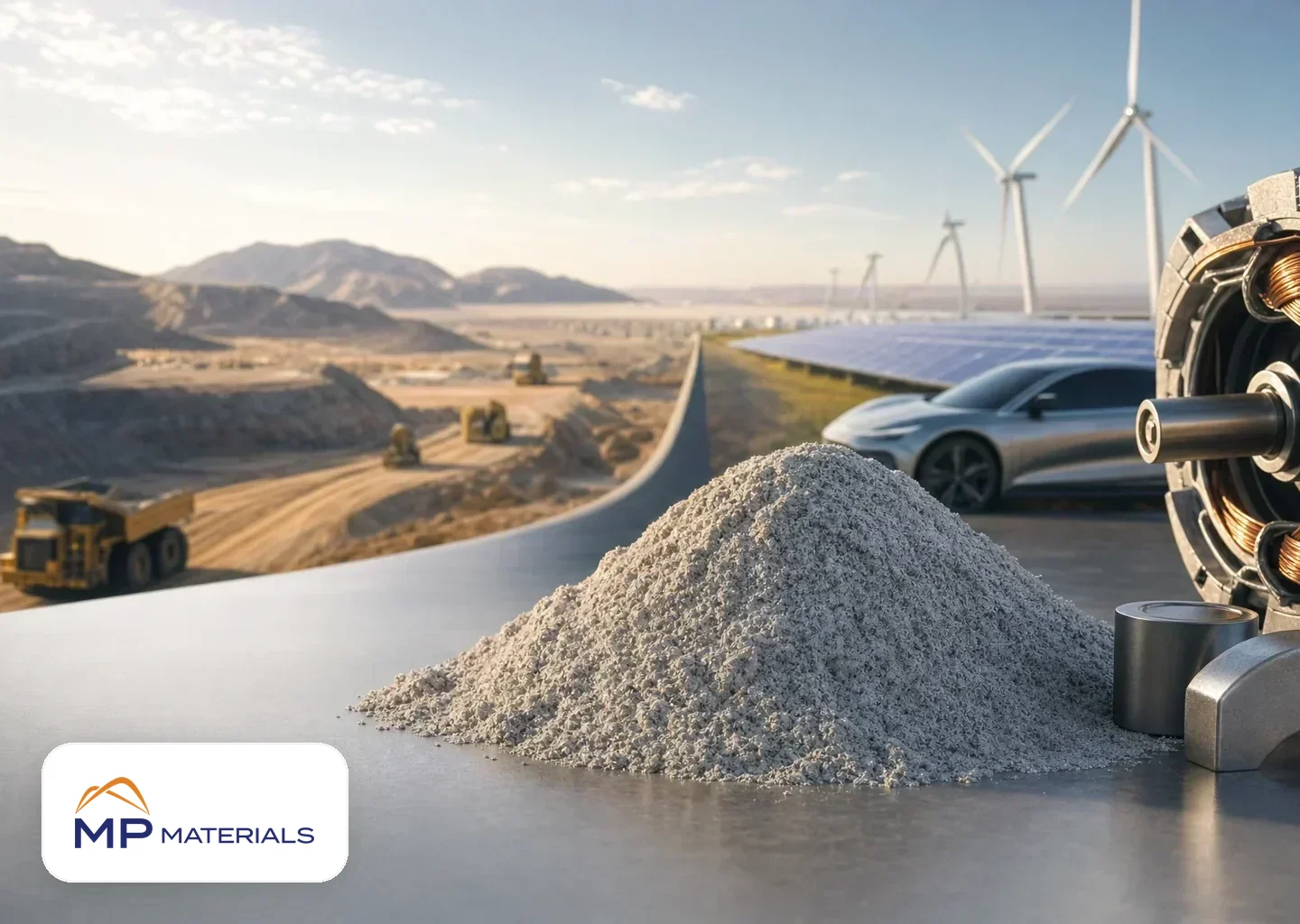
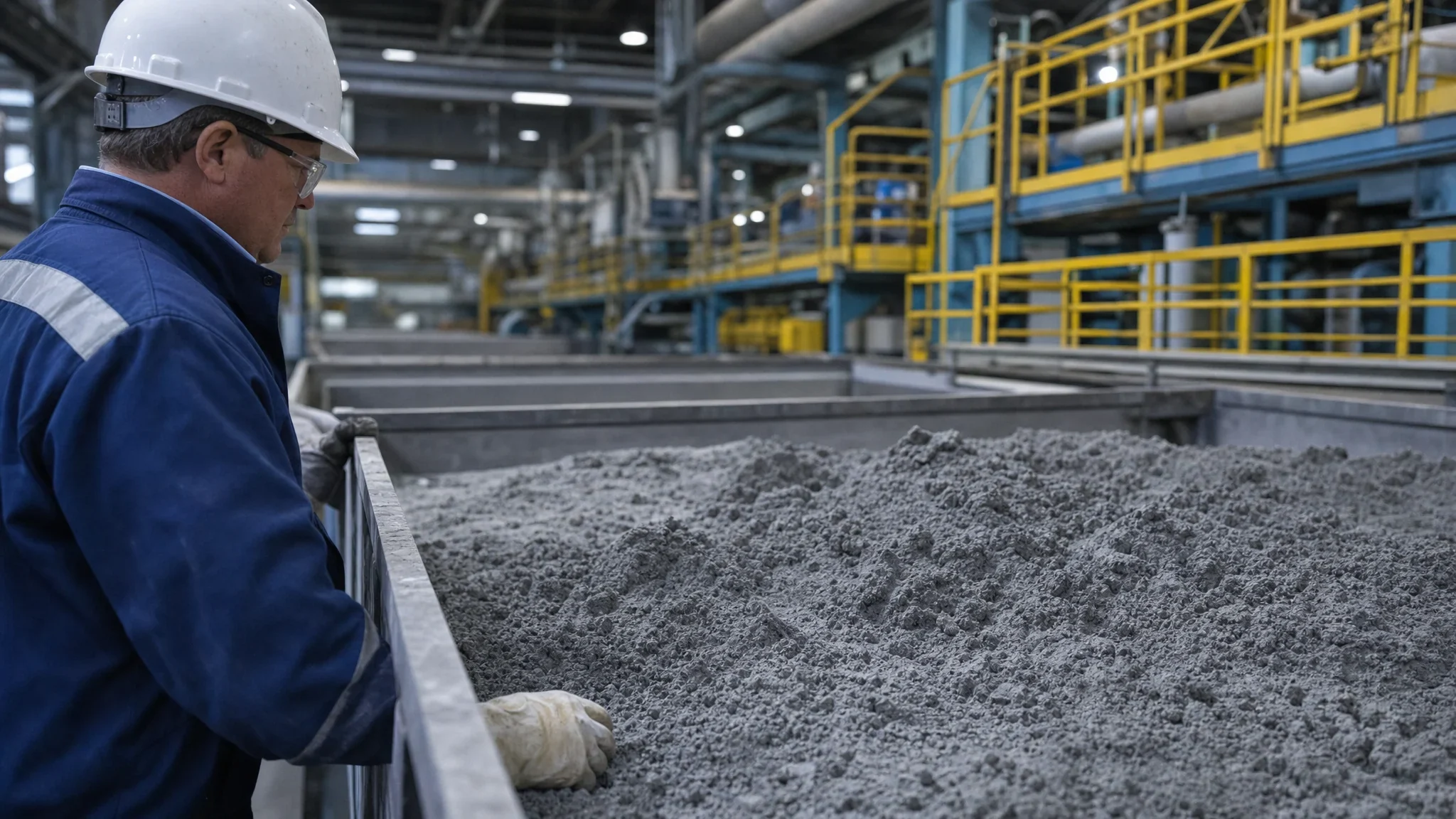
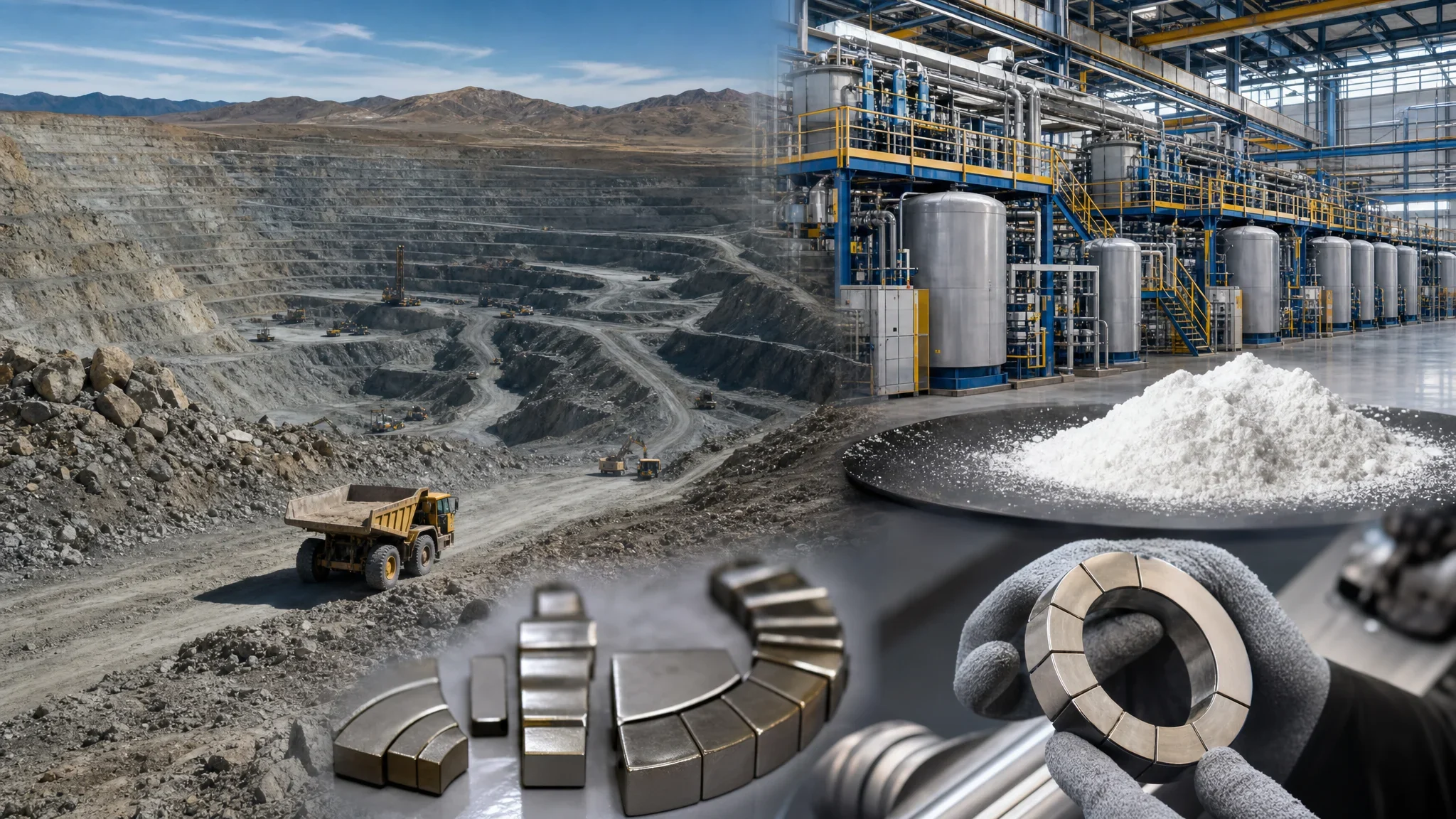
MP Materials makes money from rare earth materials and magnetics tied to its Mountain Pass asset in California and downstream facilities in Texas. The company’s business model is shifting from selling rare earth concentrate into external refining channels toward a vertically integrated U.S. supply chain for separated NdPr oxide, NdPr metal, alloy, magnetic precursor products, and NdFeB permanent magnets.
In Q1 2026, revenue was $90.6 million, up 49% year over year. Revenue plus price protection agreement income was $132.9 million, reflecting $42.3 million of PPA income tied to government-supported domestic rare earth supply arrangements. The company reported a net loss of $8.0 million, adjusted EBITDA of $36.6 million, and adjusted net income of $6.7 million.
- Materials: This segment sells NdPr oxide and metal and other rare earth products produced from Mountain Pass. Q1 2026 Materials revenue was $72.2 million, up 30% year over year, with adjusted EBITDA of $36.7 million. NdPr oxide and metal revenue was $71.1 million, while rare earth concentrate revenue was zero.
- Magnetics: This segment produces magnetic precursor products and is scaling downstream magnet manufacturing at Independence in Fort Worth, Texas. Q1 2026 Magnetics revenue was $21.1 million, up 306% year over year, with adjusted EBITDA of $9.6 million.
- Internal integration: Intercompany eliminations in Q1 2026 reflected NdPr oxide sales from Materials to Magnetics. This shows the model moving toward internal consumption of separated rare earth output rather than reliance on external concentrate offtake.
MP’s core products center on neodymium-praseodymium materials and NdFeB permanent magnets. These materials serve electric vehicles, electronics, defense, aerospace, robotics, energy, and other advanced motion applications where high-performance permanent magnets are critical components.
The company’s main competitive advantage is control of a strategic U.S. rare earth resource combined with downstream processing and magnetics capacity. MP describes itself as America’s only fully integrated rare earth producer, with capabilities across mining, processing, metallization, and magnet manufacturing. Q1 2026 operating data showed this transition in progress: NdPr production rose 63% year over year to 917 metric tons, NdPr sales volume rose 117% to 1,006 metric tons, and rare earth oxide production rose 6% to 12,983 metric tons.
MP’s market position is increasingly tied to whether it scales separated rare earth and magnet output, rather than the scale of Mountain Pass mining alone. The July 2025 decision to cease sales to China and not extend the Shenghe offtake agreement beyond January 2026 changed the company’s revenue profile. As of Q1 2026, China was no longer a meaningful current revenue market, with rare earth concentrate revenue at zero and growth coming from NdPr and magnetic precursor products.
Direct competitors include Lynas Rare Earths, the Australia-based rare earth miner and processor that is the main non-China peer for rare earth production and processing. MP differs from Lynas through its U.S.-centered vertical integration strategy and its push into domestic magnet manufacturing. China remains the dominant global competitor across rare earth processing and magnet supply chains, so MP’s strategic value rests on replacing China-linked supply with U.S. and allied production.
Commercial and government-backed demand now shape MP’s market position. U.S. government partnership and price protection arrangements support domestic rare earth magnet independence and reduce some exposure to commodity pricing. Apple’s $500 million long-term commitment for U.S.-made recycled rare earth magnets adds a major commercial anchor for MP’s Fort Worth magnetics facility and Mountain Pass recycling and feedstock capabilities.
The company has a strong liquidity base for its expansion, with $1.738 billion of cash, cash equivalents, and short-term investments at March 31, 2026. The main investor question is execution: MP must commission and scale complex separation, metallization, and magnet manufacturing assets while maintaining product quality, customer commitments, and cost control.