Last Updated -

June 16, 2026

Netease

Company Profile and Market Insights

Explore the business model, global strategy, and market performance including insights into its position in China.

Netease
Key facts
Founded 1997 • Nasdaq: NTES • Q1 2026 results (Mar 31, 2026 quarter)
RMB30.6b
Q1 2026 net revenue
RMB25.7b
Games revenue
RMB21.2b
Gross profit
RMB10.7b
Net income attributable to shareholders
RMB167.5b
Net cash at Mar 31, 2026
US$0.720
Q1 2026 dividend per ADS

About

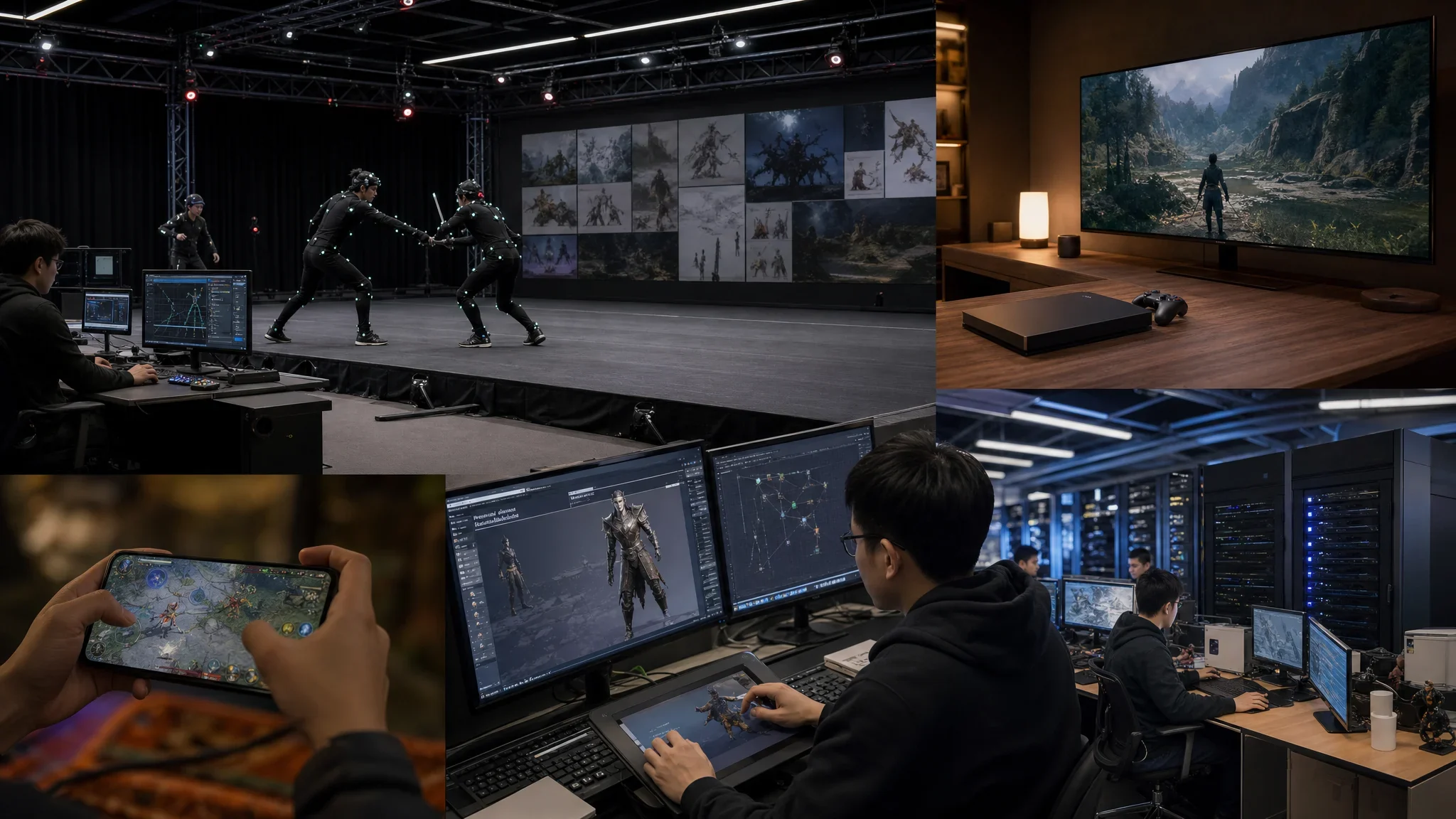
NetEase, Inc. is a China-based internet and game services company founded in 1997 and headquartered in Hangzhou, China. The company is listed on Nasdaq under NTES and in Hong Kong under 9999. Its core business is online games and related value-added services across mobile, PC, and console, supported by in-game spending, game services, and licensed titles.

NetEase has developed from an early Chinese internet company into one of China’s largest public gaming platforms, with a business model centered on in-house content creation and long-running franchises. Its major games include Fantasy Westward Journey, Identity V, Eggy Party, Sword of Justice, and Where Winds Meet, alongside licensed and partner titles tied to companies such as Blizzard and Marvel. Outside games, NetEase owns majority-controlled Youdao, which provides intelligent learning and advertising solutions, and NetEase Cloud Music, an online music platform, while also operating smaller businesses such as Yanxuan.

The company describes its strategic focus as delivering premium content, with proprietary game research and development as its main earnings engine. In Q1 2026, NetEase reported net revenue of RMB30.6 billion, up 6.1% year over year, with games and related value-added services contributing RMB25.7 billion, or roughly 84% of revenue. Net income attributable to shareholders was RMB10.7 billion, and net cash reached RMB167.5 billion at March 31, 2026, giving the company substantial financial capacity for game development, international expansion, dividends, buybacks, and selective investment.

Netease

Business Model and Market Position

NetEase makes most of its money from online games and related value-added services. The company develops and operates mobile, PC and console games, monetized mainly through in-game spending, game services, and related content or service fees. In Q1 2026, games and related value-added services generated RMB25.7 billion, or roughly 84% of consolidated net revenue, with online game operations accounting for about 97.5% of the segment.

The business model is built around proprietary content, long-running franchises, live operations, and selected licensed IP partnerships. Key self-developed franchises include Fantasy Westward Journey, Identity V, Eggy Party, Sword of Justice, and Where Winds Meet. NetEase supports these games with frequent content updates, player events, and ongoing monetization systems that extend title lifecycles. In FY2025, in-house developed games produced RMB78.9 billion of revenue, confirming that proprietary IP remains the company’s main earnings engine.

Main revenue streams are

  1. Games and related value-added services: The core business, with Q1 2026 revenue of RMB25.7 billion, up 6.9% year over year. Revenue comes primarily from self-developed and licensed online games across mobile, PC, and console.
  2. Youdao: An intelligent learning and advertising solutions business. Q1 2026 revenue was RMB1.3 billion, up 3.8% year over year, although it declined sequentially due to lower learning services and smart device revenue.
  3. NetEase Cloud Music: An online music platform built around subscriptions, social features, content communities, and related services. Q1 2026 revenue was RMB2.0 billion, up 6.6% year over year.
  4. Innovative businesses and others: A smaller group that includes e-commerce, advertising, and other initiatives such as Yanxuan. Q1 2026 revenue was RMB1.5 billion, down 4.6% year over year due to lower e-commerce and advertising revenue.

NetEase’s operating segments show a highly game-centered company with several adjacent internet businesses. In Q1 2026, total net revenue was RMB30.6 billion, up 6.1% year over year, while gross profit rose 14.8% to RMB21.2 billion. The company’s profitability is supported by scale in game operations, lower platform revenue-sharing costs in the period, and a large base of recurring revenue from established titles.

The company’s competitive advantages are

  1. In-house development depth: NetEase has one of China’s largest internal game R&D organizations, focused on mobile, PC, and console. This gives the company more control over IP ownership, content cadence, and economics than a publisher that depends mainly on third-party titles.
  2. Long-lived franchises: Fantasy Westward Journey, Identity V, Eggy Party, Sword of Justice, and other titles give NetEase durable user bases and recurring monetization opportunities.
  3. Live-operations capability: The company’s strength in updates, localized content, events, and player retention supports revenue longevity across mature games.
  4. Licensed IP relationships: Partnerships with Blizzard, Marvel, Microsoft, and other global IP owners add recognizable content, support China distribution opportunities, and help NetEase expand outside its domestic base.
  5. Financial capacity: NetEase ended Q1 2026 with net cash of RMB167.5 billion and generated RMB13.7 billion of operating cash flow during the quarter, giving it resources for R&D, marketing, dividends, buybacks, and selective investments.

NetEase is one of China’s leading public gaming companies, alongside Tencent. Tencent is larger and has broader social, advertising, payments, and game distribution ecosystems, while NetEase is more concentrated in games and differentiated by its emphasis on in-house development, long-running proprietary franchises, and selected international IP partnerships. Compared with global peers such as Activision Blizzard before its acquisition by Microsoft, NetEase combines publisher economics with large-scale direct operations in China, while also building a growing international presence through titles such as Where Winds Meet and Marvel Rivals.

Direct competitors include Tencent, miHoYo, Lilith Games, Perfect World, Bilibili’s game operations, Alibaba-related entertainment assets, and global publishers active in mobile, PC, and console games. NetEase also competes with short-video platforms, streaming services, social platforms, and other digital entertainment products for user time and spending.

China remains the company’s core market. NetEase is headquartered in China, reports in RMB, and operates substantial mainland businesses through subsidiaries and VIE structures. Chinese game approvals, youth gaming rules, content regulation, data and cybersecurity policy, platform distribution economics, and RMB exchange rates are central to the investment case rather than peripheral risks.

NetEase’s market position is strong but concentrated. FY2025 net revenue was RMB112.6 billion, up 7.0%, with games revenue of RMB92.1 billion, up 10.2%. The top five online games contributed 35.2% of total net revenue in 2025, which shows the strength of its leading franchises and the importance of sustaining engagement in major titles. The company’s Q1 2026 results show that games remain the main growth and profit driver, while non-game businesses provide diversification but remain smaller and more mixed in performance.

Netease

Performance in China

China is NetEase’s core market, not a secondary exposure. The company is headquartered in China, reports in RMB, and operates through mainland subsidiaries and VIEs, with China central to its game approvals, user base, payments, content rules, and distribution economics. In Q1 2026, NetEase reported net revenue of RMB30.6 billion, with games and related value-added services contributing RMB25.7 billion, or about 84% of revenue. Online game operations made up about 97.5% of that segment. Its China strategy centers on in-house franchises such as Fantasy Westward Journey, Identity V, Eggy Party, Sword of Justice, and Where Winds Meet, supported by frequent localized updates and live operations. Partnerships remain important, especially Blizzard titles, which continued stable China operations in Q1 2026 with localized content rollout. Main competitors include Tencent, other Chinese game publishers, global publishers, and broader digital entertainment platforms.

Growth and Future Prospects

NetEase entered 2026 with steady growth, strong profitability, and a larger cash position. Q1 2026 net revenues rose 6.1% year over year to RMB30.6 billion, with games and related value-added services up 6.9% to RMB25.7 billion. Gross profit increased faster than revenue, rising 14.8% to RMB21.2 billion, helped by lower revenue-sharing costs. Net income attributable to shareholders was RMB10.7 billion, and operating cash flow reached RMB13.7 billion. The quarter reinforced the company’s main turning point: growth remains led by self-developed games, while non-game businesses are still secondary and mixed.

Key growth drivers

  1. Core game franchises: Fantasy Westward Journey, Identity V, Eggy Party, Sword of Justice, and Where Winds Meet continue to support recurring engagement through frequent content updates and live operations.
  2. Global game expansion: Where Winds Meet and Marvel Rivals give NetEase a wider international runway across PC, console, and mobile audiences, although overseas execution requires sustained marketing and product adaptation.
  3. Licensed IP partnerships: Blizzard titles in China and Marvel-related games add recognized brands to the portfolio. Stable Blizzard operations in Q1 2026 provide an incremental growth channel after licensed-game revenue rose strongly in 2025.
  4. In-house R&D: Proprietary content remains the company’s main earnings engine. FY2025 in-house developed game revenue rose 8.6% to RMB78.9 billion, giving NetEase more control over product cycles, updates, and long-term economics.
  5. Financial flexibility: Net cash reached RMB167.5 billion at March 31, 2026. This supports game development, user acquisition, dividends, buybacks, and selective investments without stretching the balance sheet.

Product expansion is centered on extending existing franchises, launching new titles, and broadening platforms beyond mobile into PC and console. NetEase’s use of technology and automation is most relevant in game development, live operations, content production, and recommendation systems across entertainment platforms. AI-related benefits are likely to be practical rather than standalone, improving efficiency, personalization, and production workflows.

Challenges ahead

  1. Game concentration: Games supplied roughly 84% of Q1 2026 revenue, and the top five online games generated 35.2% of total 2025 revenue. A weak launch cycle or lower engagement in major titles would affect results.
  2. China regulation: Game approvals, youth gaming rules, data controls, content standards, and VIE-related issuer risks remain central to the investment case.
  3. Competitive pressure: Tencent, other Chinese publishers, global game companies, and short-video platforms compete for user time and spending.
  4. International execution: Overseas growth brings higher user acquisition costs, cultural fit challenges, IP licensing complexity, and geopolitical risk.
  5. Smaller business volatility: Youdao grew year over year in Q1 2026 but declined sequentially, while innovative businesses and others fell 4.6% year over year.

NetEase’s outlook is constructive but dependent on disciplined execution in games. Its large cash balance, established franchises, global pipeline, and proprietary R&D base support continued investment and shareholder returns. The main constraint is concentration in a regulated, hit-driven industry where product timing, approvals, and retention matter more than broad internet traffic growth.

This Company Profile was written by Dominik Diemer

Dominik Diemer blends an investor mindset with execution discipline.

He is a SAFe Program Consultant (SPC) and Lean Portfolio Management (LPM) practitioner at DMG MORI Digital, working as a SAFe Release Train Engineer and internal consultant in the Lean-Agile Center of Excellence (LACE).

His focus is prioritization, flow, and dependency management that turns strategy into outcomes. With experience across Bertelsmann and the Founders Foundation, he bridges corporate and startup thinking.

He also invests privately in private equity deals, sharpening his view on business models, value drivers, and go-to-market.

StockCounterParts reflects that lens.