Last Updated -

July 1, 2026

Red Cat Holdings

Company Profile and Market Insights

Explore the business model, global strategy, and market performance including insights into its position in China.

Red Cat Holdings
Key facts
Founded 2016 • Nasdaq: RCAT • Q1 2026 results (Mar 31, 2026 quarter)
$15.5m
Q1 2026 revenue
849%
Y/Y revenue growth
$2.0m
Q1 2026 gross profit
12.7%
Q1 2026 gross margin
$131.9m
Cash at Mar 31, 2026
$150m-$180m
Mgmt annual revenue target

About

Red Cat Holdings, Inc. is a U.S. defense and national-security drone and robotics company founded in 1984 and headquartered in South Salt Lake, Utah. The company sells American-made unmanned systems, software, payloads, and related technologies mainly to military, government, and public-safety customers. Its portfolio includes Teal Drones small unmanned aircraft systems, the Black Widow tactical drone, FlightWave Edge 130, FANG, Hellcat, Blue Ops maritime uncrewed surface vessels, and autonomy or wireless-power capabilities added through Apium and Quaze.

Red Cat has developed from a drone technology business into a broader defense robotics platform focused on trusted U.S. and allied systems across air, land, and sea. Its strategy centers on small tactical drones, command-and-control software, autonomous swarming, GPS-denied operation, and low-cost robotic systems that support battlefield reconnaissance and national-security missions. The company’s flagship Black Widow system was purpose-built for the U.S. Army Short Range Reconnaissance program, and recent orders from NATO and Asia-Pacific allies show its push beyond the U.S. market.

For Q1 2026, the quarter ended March 31, Red Cat reported revenue of $15.5 million, up 849% from $1.6 million a year earlier, mainly from scaling U.S. Army SRR drone deliveries. Gross profit improved to $2.0 million from a gross loss of $0.8 million, with gross margin around 13%, while operating expenses rose to $29.3 million as the company invested in engineering, testing, inventory, and production capacity. Cash was $131.9 million at quarter end, and management has stated a short- to medium-term annual revenue target of $150 million to $180 million.

Red Cat Holdings

Business Model and Market Position

Red Cat Holdings sells U.S.-made drone, robotic, software and autonomy systems mainly to defense, national-security, government and public-safety customers. Its revenue model is increasingly tied to defense procurement cycles, funded programs and purchase orders rather than consumer or commercial drone sales. The main near-term driver is delivery of small unmanned aircraft systems to the U.S. Army under the Short Range Reconnaissance program.

In Q1 2026, the quarter ended March 31, 2026, revenue rose to $15.5 million from $1.6 million a year earlier, with management attributing the growth primarily to scaled SRR deliveries. Gross profit was $2.0 million, equal to a margin of about 13%, compared with a gross loss in Q1 2025. The company is still investing ahead of demand, with Q1 operating expenses of $29.3 million across engineering, prototype development, testing, sales and administrative infrastructure.

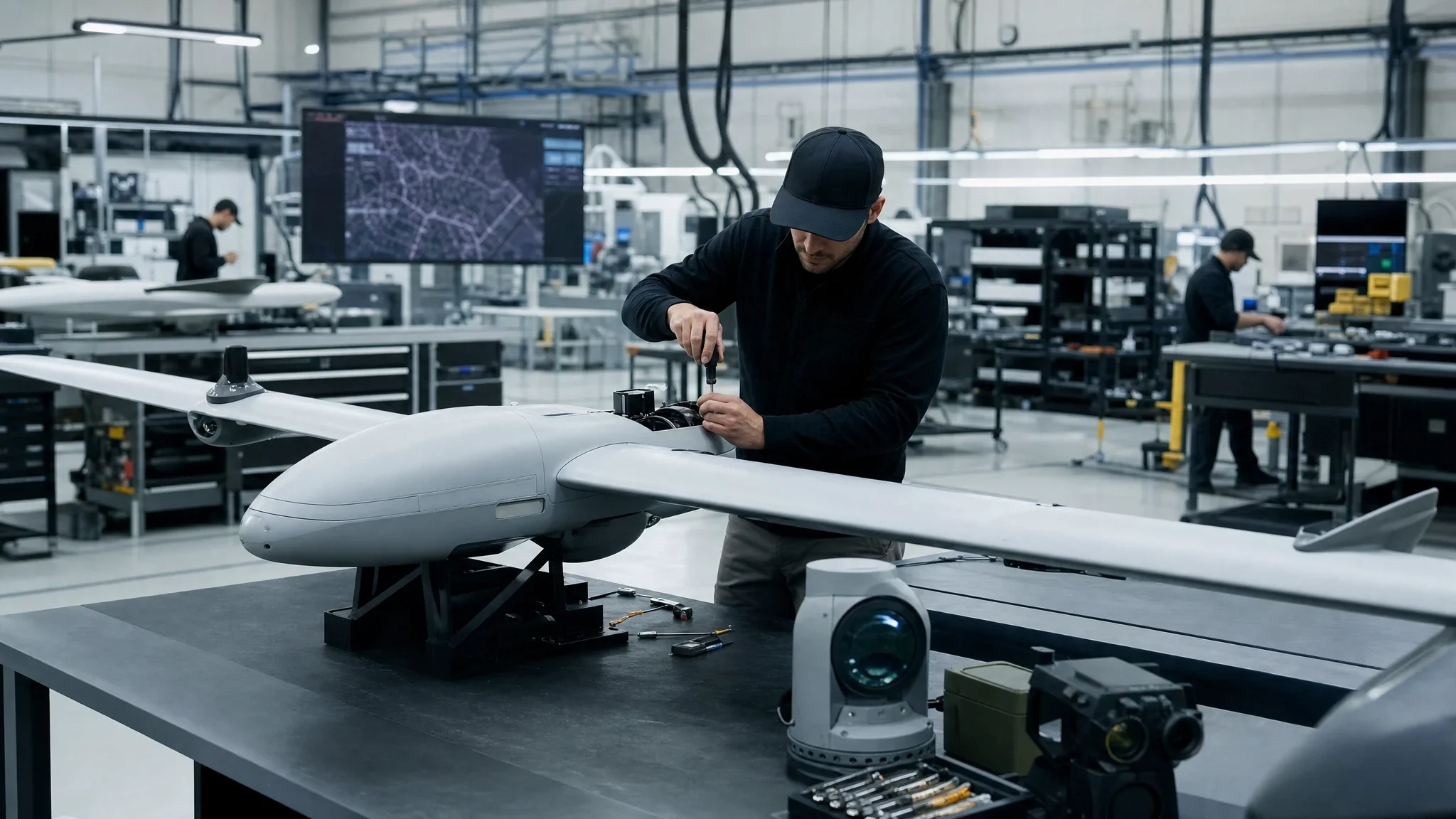
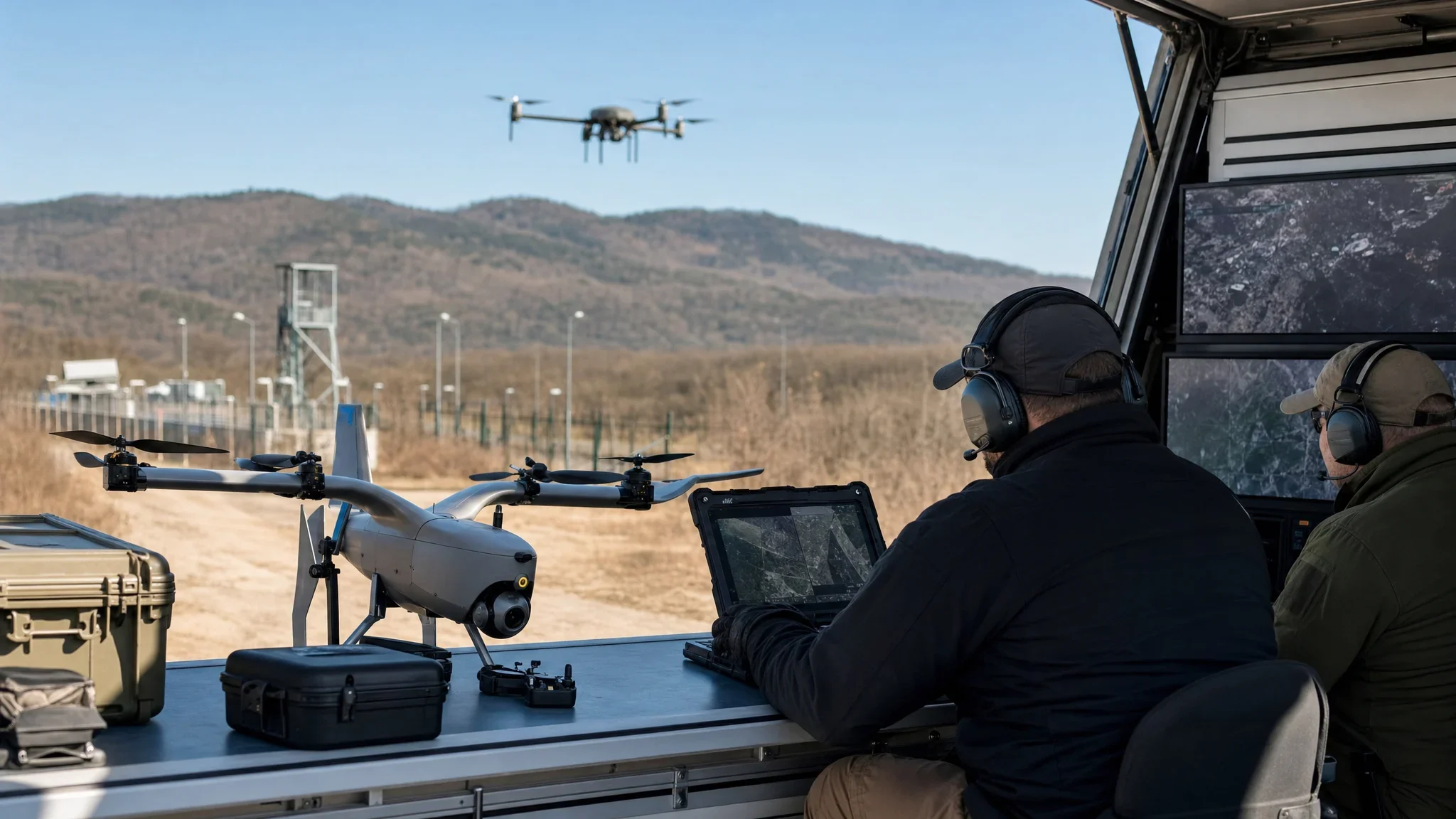
  1. Small UAS: Red Cat’s core air platforms include Black Widow, FlightWave Edge 130, FANG and the newer Hellcat configuration built on the Black Widow architecture. Black Widow is the flagship tactical system and was purpose-built for the U.S. Army SRR program.
  2. Maritime robotics: Blue Ops adds uncrewed surface vessel exposure through the Variant 7 USV, expanding Red Cat beyond airborne drones into maritime autonomy.
  3. Autonomy and control systems: Apium adds swarming and distributed-control capabilities for drones and uncrewed surface vessels, supporting the company’s move toward multi-vehicle operations.
  4. Wireless power and support technologies: Quaze adds wireless power transfer technology, while related payloads, software and command-and-control capabilities round out the portfolio.

Red Cat’s competitive position rests on trusted U.S. and allied hardware, defense-focused product design, and exposure to military demand for low-cost, tactical and attritable autonomous systems. Its market narrative has been strengthened by battlefield lessons from Ukraine, U.S. drone modernization, and rising allied demand for ISR, GPS-denied operation and small robotic systems.

The company’s market position is still emerging. Red Cat has moved from a small revenue base into faster growth as SRR deliveries scaled, but it remains loss-making and must prove its ability to manufacture at volume, manage inventory, meet defense quality requirements and convert international interest into repeat orders. Cash was $131.9 million at March 31, 2026, while inventory and prepaid inventory rose to $62.7 million, showing both preparation for growth and higher working-capital needs.

Internationally, Red Cat is positioned around U.S. and allied defense customers rather than China. Q1 2026 included Black Widow orders from a NATO ally through the NATO Support and Procurement Agency and from an Asia-Pacific ally. China is more relevant as a geopolitical, supply-chain and competitive backdrop for drones than as a disclosed end market for Red Cat.

AeroVironment is the most useful public peer comparison. Both companies serve military and government customers with unmanned systems, but AeroVironment is a larger and more established U.S. defense unmanned-systems supplier. Red Cat is smaller, earlier in its scaling curve and more concentrated around tactical small UAS and emerging multi-domain robotics. That gives Red Cat higher growth optionality, but with greater execution, funding-cycle and customer-concentration risk.

Red Cat Holdings

Performance in China

China is not a meaningful disclosed end market for Red Cat Holdings. The company reports no China revenue, China customer concentration, local stores, manufacturing footprint, or China-specific growth strategy in its latest Q1 2026 materials. Its market exposure is centered on U.S. and allied defense customers, with Q1 2026 revenue of $15.5 million driven mainly by scaling U.S. Army Short Range Reconnaissance drone deliveries. China is more relevant as a geopolitical and supply-chain backdrop than as a sales market, because Red Cat emphasizes trusted U.S. and allied drone and robotics systems for defense and national security. Recent international activity points instead to NATO and Asia-Pacific allied demand, including Black Widow orders from a NATO ally and an Asia-Pacific ally. In China, the relevant competitors are not direct commercial rivals but state-linked and domestic drone ecosystems that shape U.S. procurement preferences for non-Chinese systems.

Growth and Future Prospects

Red Cat Holdings reached a clear revenue inflection in Q1 2026 as U.S. Army Short Range Reconnaissance deliveries scaled. Revenue rose to $15.5 million from $1.6 million a year earlier, while gross profit improved to $2.0 million from a gross loss of $0.8 million. The margin improvement shows progress in production economics, but the company is still in an investment phase. Operating expenses were $29.3 million in the quarter, well above gross profit, as Red Cat funded engineering, testing, sales activity, manufacturing capacity, and corporate infrastructure.

Key growth drivers

  1. U.S. Army SRR execution: The Black Widow platform remains the main near-term proof point. Continued deliveries under the SRR program support revenue growth and validate Red Cat’s manufacturing and defense-program capabilities.
  2. Allied defense demand: Orders from a NATO ally and an Asia-Pacific ally point to a broader market for trusted U.S. small UAS systems. Follow-on orders would reduce dependence on one U.S. program.
  3. Product expansion: Hellcat broadens the Black Widow architecture for global users, with configurable payload and software paths, GPS-denied operation, and coalition interoperability features.
  4. Multi-domain autonomy: Blue Ops Variant 7 USV, Apium swarming autonomy, and Quaze wireless power extend Red Cat beyond small drones toward a wider air, land, and sea robotics portfolio.
  5. Defense modernization: Demand for low-cost tactical drones, ISR, attritable systems, autonomous swarms, and uncrewed maritime platforms supports the company’s addressable market.

Challenges ahead

  1. Losses and cash use: Cash declined from $167.9 million at year-end 2025 to $131.9 million at March 31, 2026, while inventory and prepaid inventory rose to $62.7 million. Working-capital discipline matters as production ramps.
  2. Customer and program concentration: Q1 growth was driven mainly by SRR deliveries. Delays, budget changes, or procurement shifts would have an outsized impact.
  3. Execution risk: Rapid scaling requires consistent quality control, delivery timing, supply-chain reliability, and conversion of opportunities into funded orders.
  4. Governance and reporting risk: Material weaknesses in internal controls remained as of March 31, 2026, and the company faces securities and derivative litigation.

Management’s short- to medium-term annual revenue target of $150 million to $180 million implies a steep ramp from current quarterly levels. The opportunity is meaningful if Red Cat converts defense demand into repeat orders and improves margins, but the investment case depends on execution, program durability, and cash-burn control.

This Company Profile was written by Dominik Diemer

Dominik Diemer blends an investor mindset with execution discipline.

He is a SAFe Program Consultant (SPC) and Lean Portfolio Management (LPM) practitioner at DMG MORI Digital, working as a SAFe Release Train Engineer and internal consultant in the Lean-Agile Center of Excellence (LACE).

His focus is prioritization, flow, and dependency management that turns strategy into outcomes. With experience across Bertelsmann and the Founders Foundation, he bridges corporate and startup thinking.

He also invests privately in private equity deals, sharpening his view on business models, value drivers, and go-to-market.

StockCounterParts reflects that lens.