Rivian makes money by designing, manufacturing, and selling electric vehicles, supported by software, services, fleet relationships, and regulatory-credit revenue. The company sells directly to consumers and commercial customers rather than through franchised dealers, which gives it more control over pricing, customer data, service experience, and brand positioning.
The business is still in scale-up mode. In Q1 2026, Rivian produced 10,236 vehicles and delivered 10,365 vehicles. Revenue was $1.381 billion, up 11% year over year, with $908 million from automotive activities and $473 million from software and services. Q2 2026 production and delivery improved to 12,613 vehicles produced and 12,194 delivered, and Rivian raised its full-year 2026 delivery outlook to 65,000-70,000 vehicles.
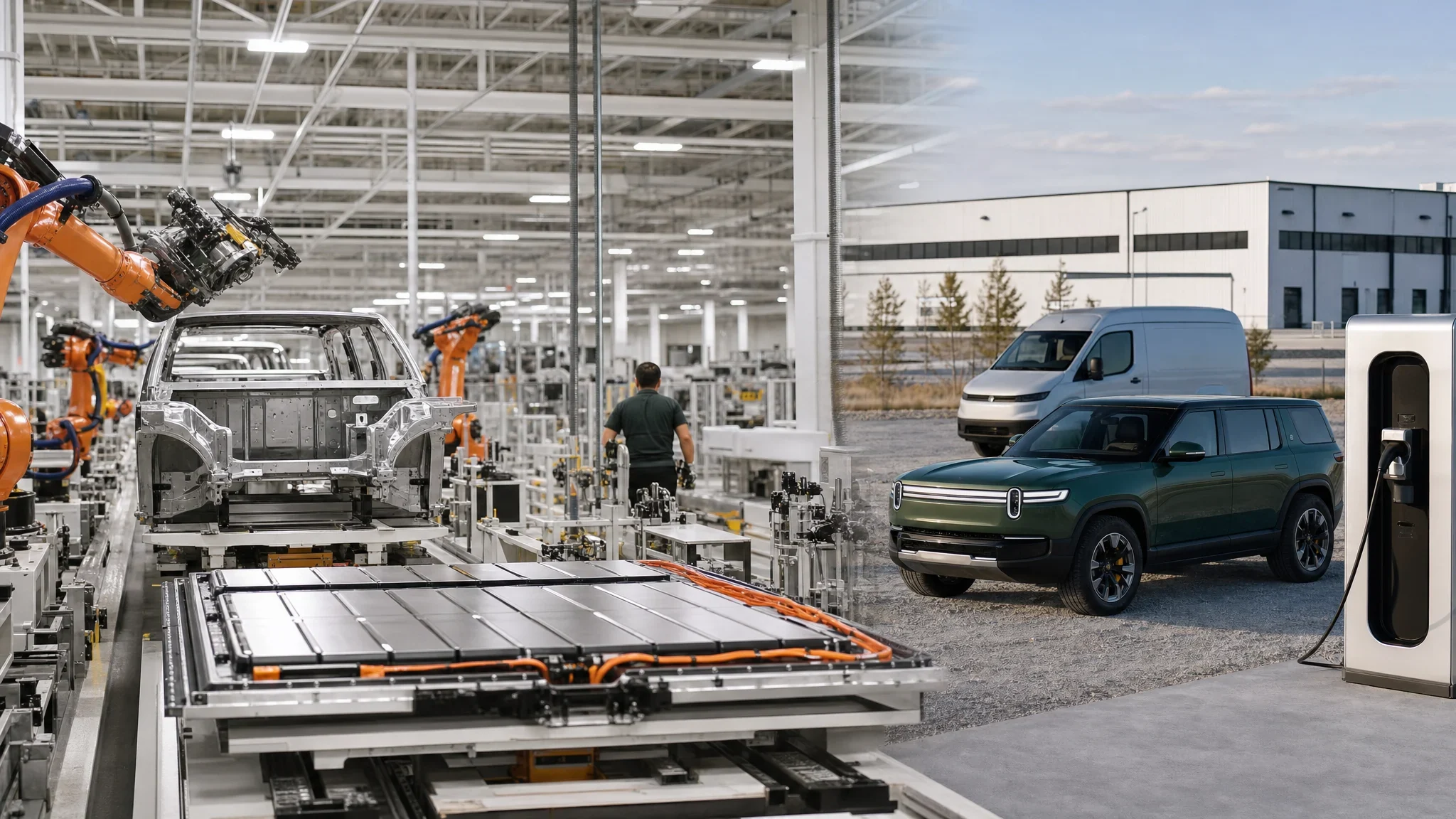
- Automotive sales and leasing: Rivian sells and leases R1 consumer vehicles, Electric Delivery Vans, and the newer R2 platform. R1 targets premium electric truck and SUV buyers, while R2 is intended to move Rivian into a larger mid-size SUV market at a more accessible price point.
- Commercial vehicles: The Electric Delivery Van business serves fleet customers. Amazon has been the most important historical commercial relationship, and Rivian also sells vans to other business fleet customers.
- Software and services: This has become a meaningful revenue stream. In Q1 2026, software and services generated $473 million of revenue and $181 million of gross profit, helped by electrical-architecture and software development services, repair, maintenance, and remarketing.
- Regulatory credits and related items: Rivian earns revenue from regulatory credits, although this revenue is volatile. In Q1 2026, automotive gross profit was pressured partly because regulatory-credit sales were $100 million lower than a year earlier.
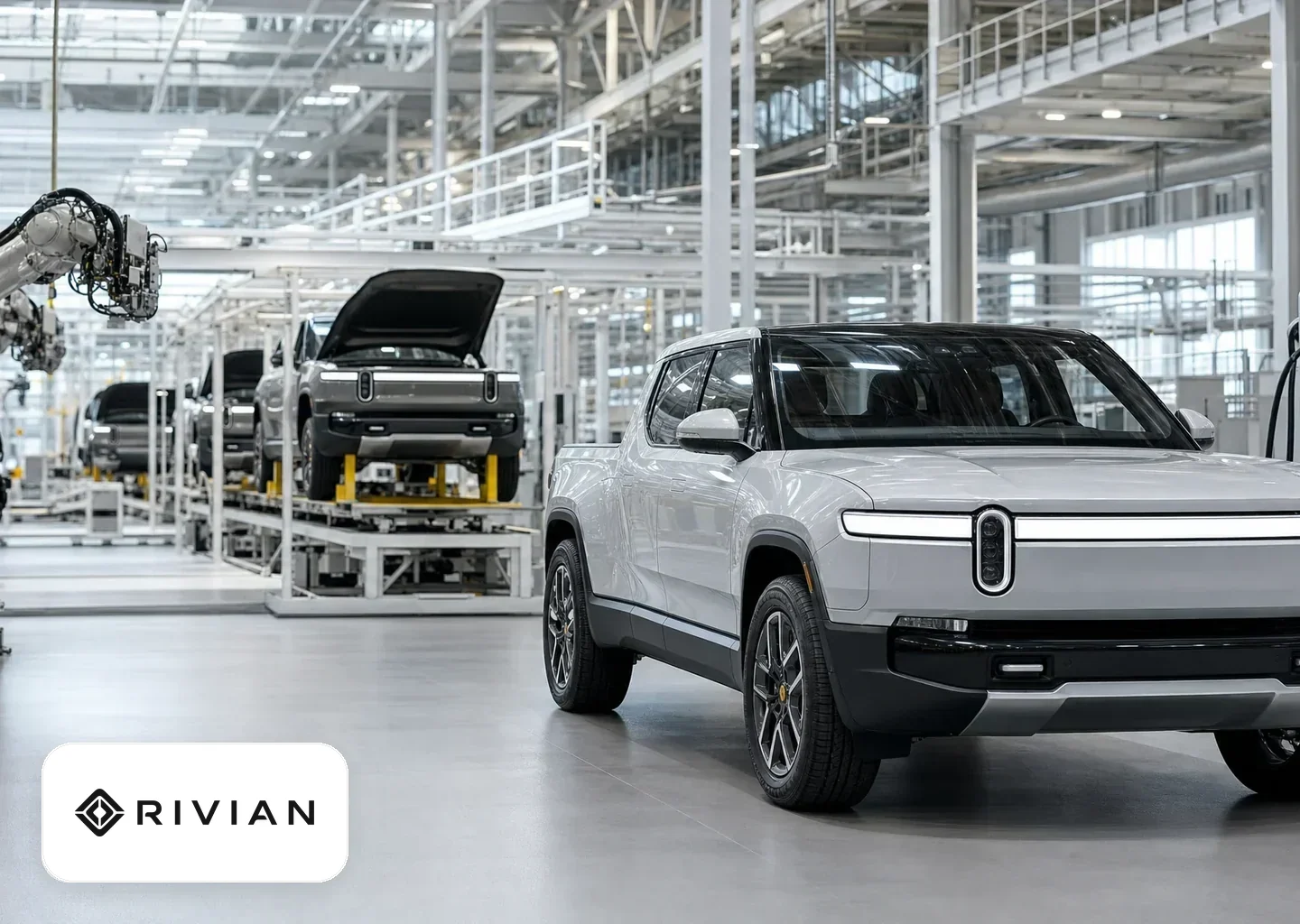
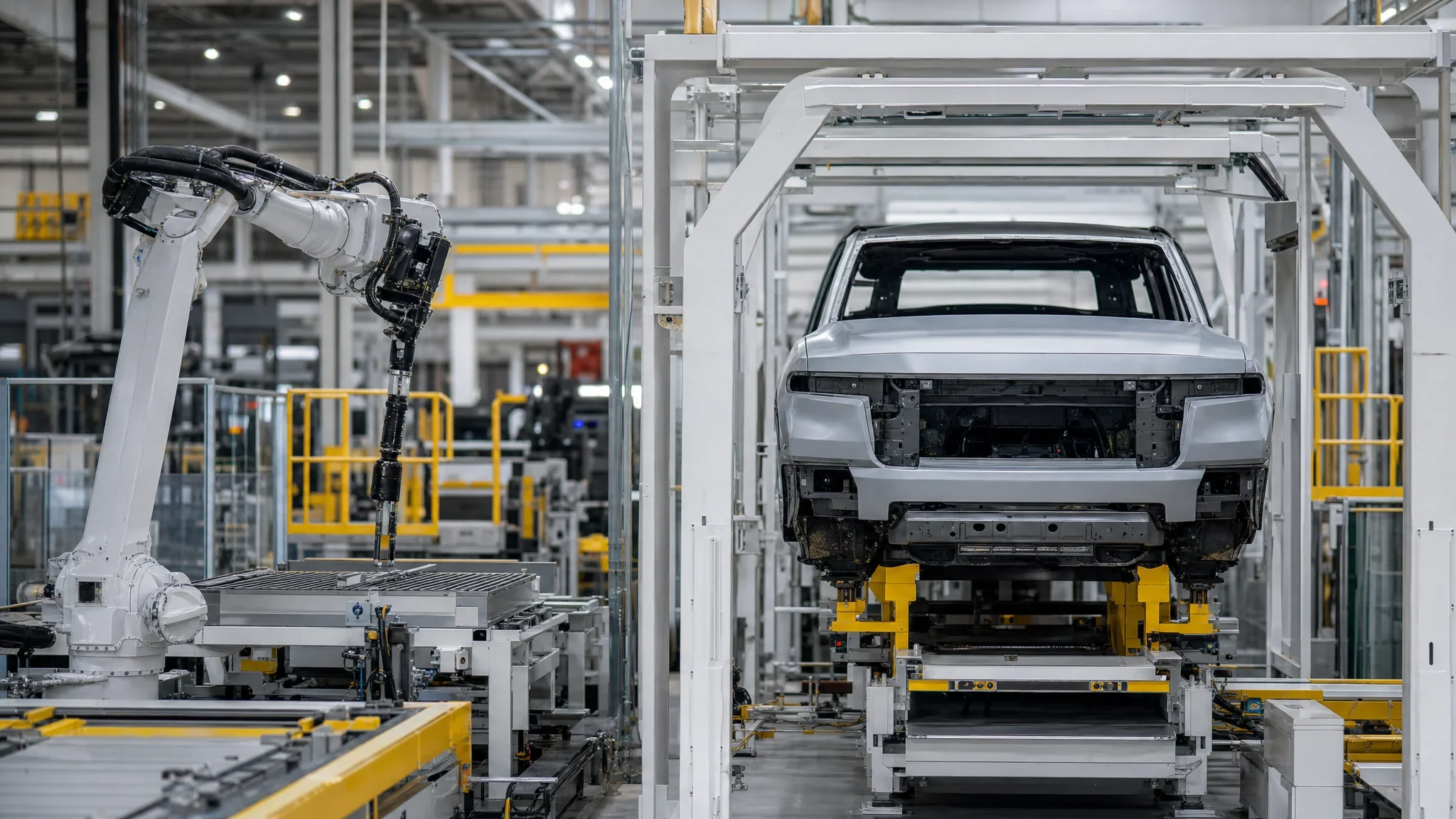
Rivian’s main operating logic is to use its Normal, Illinois factory, direct sales model, in-house software, and zonal electrical architecture to scale from a premium EV niche toward higher-volume platforms. Manufacturing concentration in Illinois creates operating leverage if volumes rise, but it also increases execution risk until the company has broader production capacity. The planned Georgia facility is intended to support the mid-size vehicle platform, with first-phase capacity now planned at 300,000 units annually and production targeted for late 2028.
Rivian’s competitive advantages are clearest in four areas: brand positioning around outdoor and adventure use, purpose-built electric trucks and SUVs, commercial electric vans, and internally developed vehicle software and electrical architecture. The Volkswagen Group joint venture highlights the strategic value of Rivian’s software-defined vehicle platform, while the Uber autonomy partnership links the R2 platform to a possible future robotaxi use case.
The company’s direct competitors include Tesla, Ford, General Motors, Lucid, and electric van or fleet-vehicle suppliers. In the premium electric truck and SUV market, Rivian competes with Tesla’s Cybertruck, Ford’s F-150 Lightning, GMC’s electric Hummer and Sierra products, and other electric SUV offerings. In commercial vans, it competes with legacy automakers and specialist fleet-EV manufacturers.
Tesla is the most useful U.S. comparison. Rivian is much smaller in production scale, charging-network reach, profitability, and global market presence. Its differentiation is narrower but distinct: lifestyle-oriented trucks and SUVs, commercial fleet vans, and software-defined vehicle architecture. Rivian’s challenge is to turn that differentiation into manufacturing scale and sustained margins.
Rivian’s market position is that of a premium-to-mainstream EV manufacturer with strong brand recognition but an unfinished financial model. The company reported positive consolidated gross profit of $119 million in Q1 2026, equal to a 9% gross margin, but still posted an operating loss of $881 million and free cash flow of negative $1.075 billion. Its investment case depends on R2 scale-up, improving factory economics, software and services growth, funding access, and the ability to compete against Tesla, legacy automakers, and lower-cost global EV manufacturers.
China is not a meaningful direct revenue market for Rivian based on current disclosures. Its China exposure is mainly indirect through global EV pricing pressure, battery and materials supply chains, tariffs, and competition from Chinese EV brands expanding outside China.