Last Updated -

April 1, 2026

XPENG

Company Profile and Market Insights

Explore the business model, global strategy, and market performance including insights into its position in China.

XPENG
Key facts
Founded 2014 • NYSE: XPEV • HKEX: 9868 • Q4 2025 results (three months ended Dec 31, 2025)
RMB22.25b
Revenue (Q4 2025)
RMB0.38b
Net profit (Q4 2025)
116,249
Vehicle deliveries (Q4 2025)
21.3%
Gross margin (Q4 2025)
13.0%
Vehicle margin (Q4 2025)
RMB47.66b
Cash position (Dec 31, 2025)

About

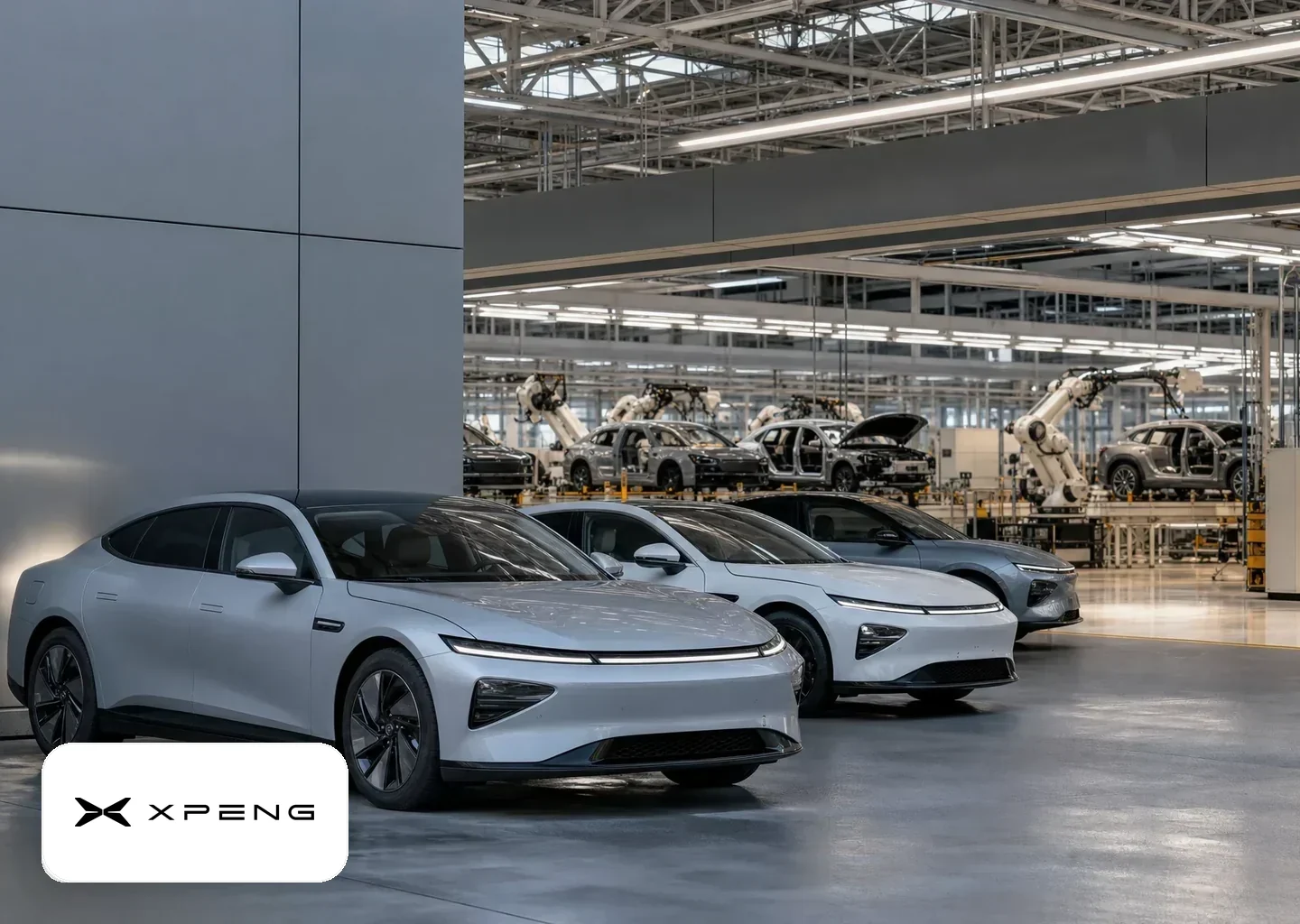
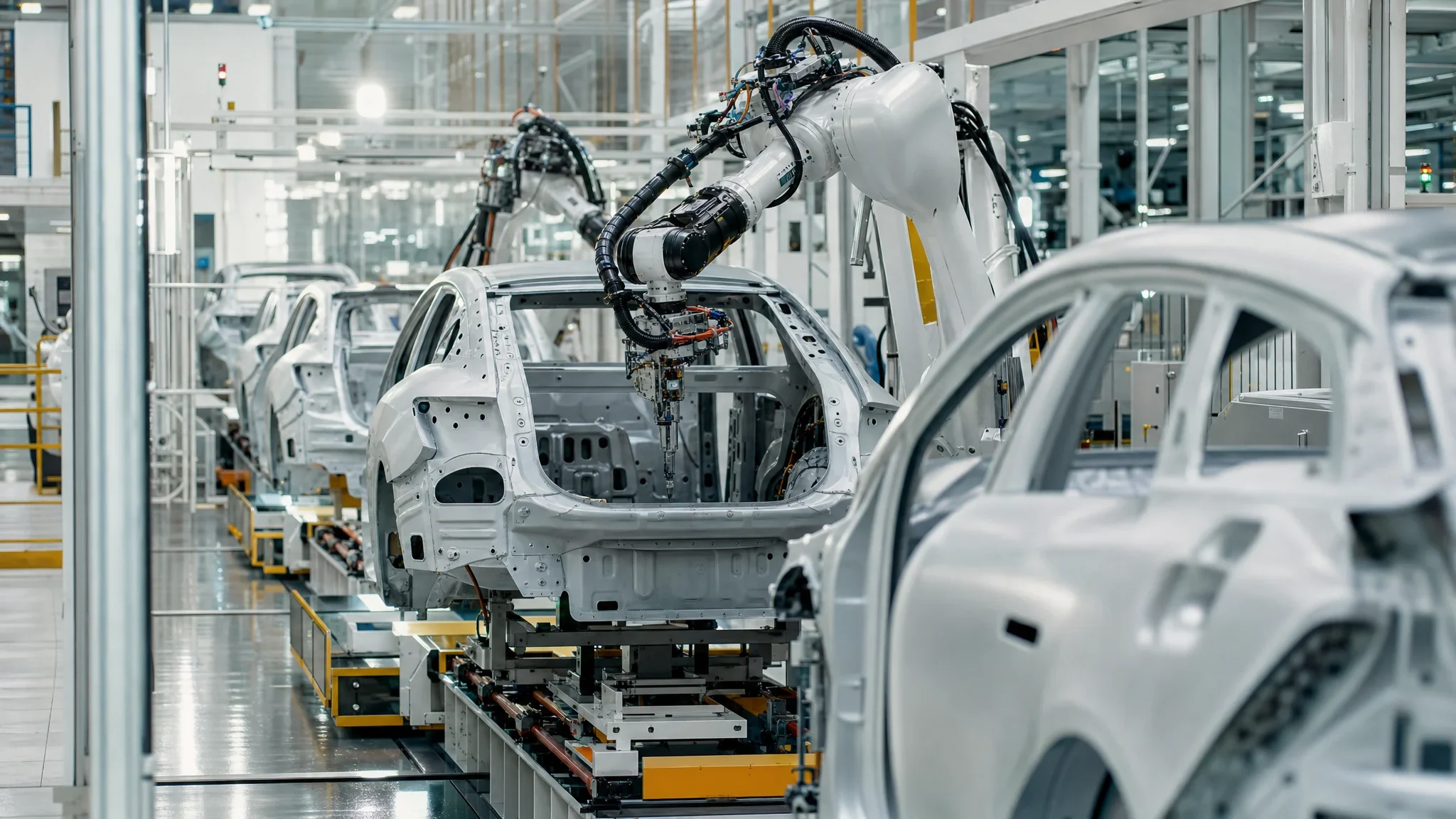
Founded in 2014 and headquartered in Guangzhou, XPENG started as a smart EV maker and today presents itself more broadly as an AI mobility technology company. It designs, develops, manufactures, and markets intelligent electric vehicles, while building core technologies in house, including its advanced driver-assistance stack, in-car operating system, powertrain, and electrical and electronic architecture. XPENG’s main offices span Beijing, Shanghai, Shenzhen, Silicon Valley, and San Diego, and its vehicles are mainly produced at plants in Zhaoqing and Guangzhou. The company’s current mission is to become a smart technology company trusted and loved by users worldwide.

By the end of 2025, XPENG had grown into a large EV platform with 429,445 vehicle deliveries for the year, a presence in 60 countries and regions, and 721 stores across 255 Chinese cities. Its self-operated charging network reached 3,159 stations, including 2,108 ultra-fast charging stations, giving the brand a broad infrastructure base alongside its vehicle lineup. For investors, XPENG now combines vehicle manufacturing with a sizable retail and charging footprint that extends well beyond startup scale. It entered 2026 after reporting a positive net profit in the fourth quarter of 2025, an important step in its shift from pure expansion toward stronger operating leverage.

XPENG

Business Model and Market Position

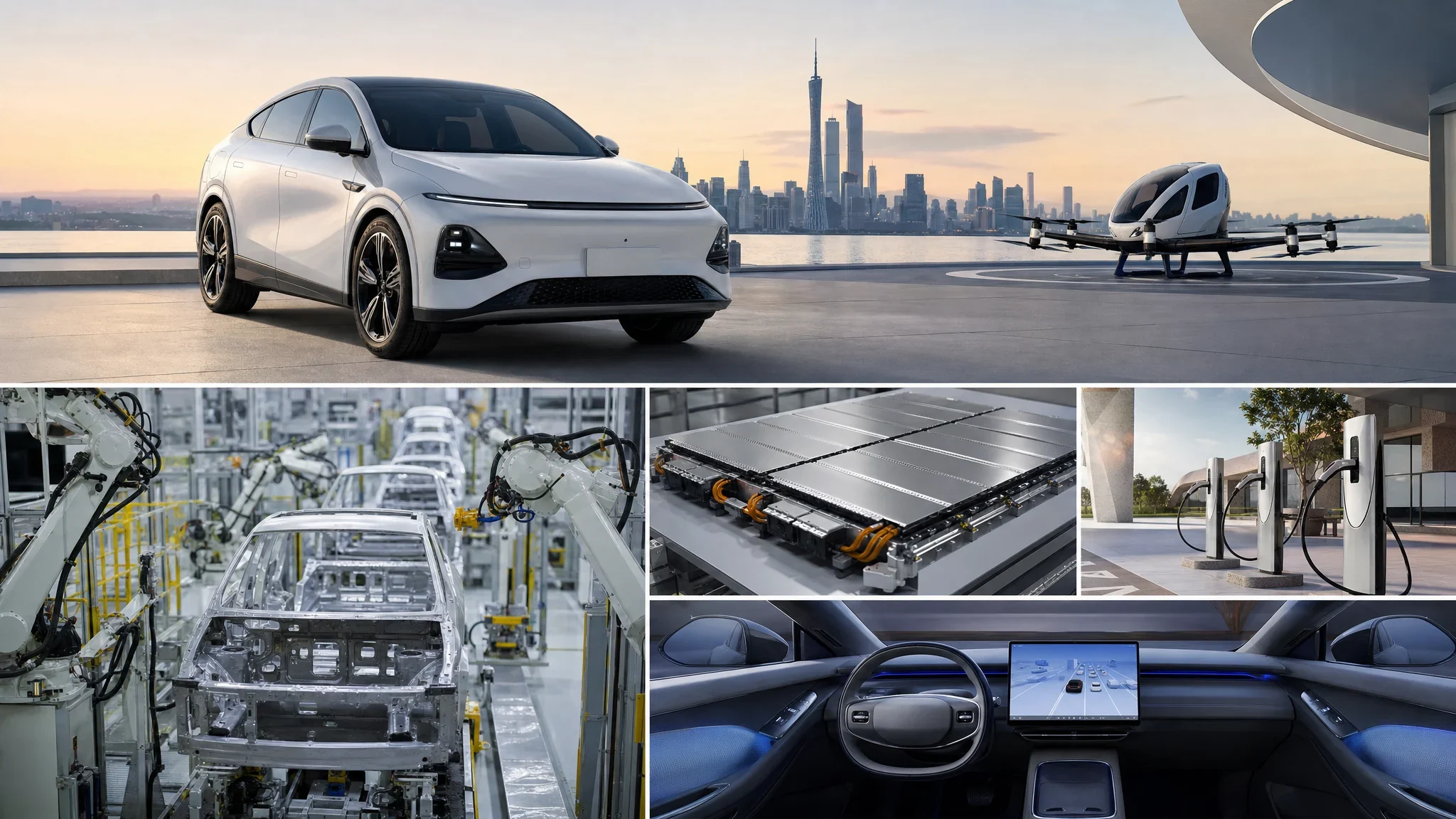
XPENG’s business model now rests on three linked layers: Smart EV sales, in-house software and vehicle technology, and a growing services revenue stream. Vehicle sales remained the core in 2025 at RMB68.38 billion, while services and others added RMB8.34 billion, driven by technical R&D services, parts and accessories sales, and carbon credit trading. This gives XPENG a broader revenue base than a pure vehicle seller.

  1. Smart EVs across several price bands
    XPENG targets China’s mid to high-end passenger vehicle market. In its latest annual report, the company described its addressable price range at RMB120,000 to RMB420,000. The lineup stretches from the MONA M03 at the lower end to the G9 and X9 higher up, with the G6, P7i, and P7+ covering the core sedan and SUV segments. This helps XPENG reach a wider buyer base while keeping its focus on intelligent EVs.
  2. In-house technology as the main differentiator
    XPENG develops its ADAS software, in-car operating system, powertrain, and electrical and electronic architecture in house. The company also identifies continuous software innovation as a key product differentiator, with OTA updates adding features and improvements over time. This places XPENG as a software-led EV brand, not only a hardware manufacturer.
  3. Hybrid retail, charging, and technology partnerships
    XPENG sells through a mix of directly operated and franchised stores, backed by online channels and a self-operated charging network. By the end of 2025, it had 721 stores in 255 Chinese cities and 3,159 charging stations, including 2,108 ultra-fast stations. At the same time, services revenue is increasingly tied to technical R&D work. XPENG said in 2025 filings that this revenue was linked to platform, software, and E/E architecture collaboration with Volkswagen. That means the company now monetizes its technology stack both inside its own cars and through external partnerships.

In market terms, XPENG entered 2026 from a much stronger base than a year earlier. Full-year deliveries reached 429,445 vehicles in 2025, gross margin rose to 18.9%, and XPENG reported its first quarterly net profit in the fourth quarter. Overseas deliveries reached 45,008 vehicles across 60 countries and regions. On April 1, 2026, the latest official update showed 62,682 deliveries for the first quarter, with March deliveries at 27,415 vehicles, up 80% from the prior month. Taken together, XPENG now looks like a scaled smart EV contender with growing international reach and a business model that extends beyond vehicle sales alone.

XPENG

Performance in China

China remained the center of XPENG’s business in 2025. The company delivered 429,445 vehicles for the full year, while overseas deliveries were 45,008, which shows that domestic demand still drives the group’s scale. By December 31, 2025, XPENG operated 721 stores across 255 Chinese cities and 3,159 self-operated charging stations, including 2,108 ultra-fast charging stations.

XPENG’s recent China performance rests on three clear strengths. First, product traction improved sharply. The MONA M03 passed 100,000 cumulative deliveries by April 2025, while the P7+ exceeded 30,000 cumulative deliveries within three months of launch and reached 50,000 units of production within five months. Second, user adoption of smart driving features is strong. XNGP’s monthly active user penetration in urban driving reached 86% in February 2025. Third, China remains the first deployment market for XPENG’s latest software stack, with the company unveiling the deployment plan for VLA 2.0 in Guangzhou on March 2, 2026.

The latest official update showed 27,415 deliveries in March 2026 and 62,682 deliveries in the first quarter of 2026. That keeps XPENG at a materially larger operating base than it had before its 2025 rebound and supports its position as one of China’s scaled smart EV players.

Growth and Future Prospects

XPENG entered 2026 from a much stronger operating base than a year earlier. In 2025, deliveries rose 125.9% to 429,445 vehicles, revenue increased 87.7% to RMB76.72 billion, gross margin reached 18.9%, and the company reported its first quarterly net profit in the fourth quarter at RMB0.38 billion. XPENG also ended 2025 with a cash position of RMB47.66 billion. This combination of scale, improving margins, and liquidity gives the company more room to fund product expansion, software development, and overseas growth than it had during its earlier heavy-loss phase. Still, full-year net loss attributable to ordinary shareholders was RMB1.14 billion, so one profitable quarter has not yet turned into a fully proven earnings profile.

Key growth drivers include:

  1. Scale, cost reduction, and a broader product portfolio
    XPENG linked its 2025 margin improvement to ongoing cost reduction and a better product mix. It also raised research and development spending by 47.0% in 2025 to RMB9.49 billion, mainly due to new vehicle models and technologies as it expanded its product portfolio. That points to a growth model built on higher volume and broader coverage across segments, not on one single breakout model.
  2. Technology monetization beyond XPENG-branded vehicles
    Services and others revenue rose 65.6% to RMB8.34 billion in 2025, supported by technical R&D services, parts and accessories sales, and carbon credit trading. Earlier 2025 filings tied part of that services growth to platform, software, and E/E architecture collaboration with Volkswagen. On March 2, 2026, XPENG said Volkswagen would be the first customer for its VLA 2.0 intelligent driving system in China. This suggests XPENG’s software and vehicle architecture are becoming a second commercial layer alongside car sales.
  3. Overseas expansion with wider distribution
    XPENG delivered 45,008 vehicles in overseas markets in 2025 and expanded its footprint to 60 countries and regions by year-end. As of December 31, 2025, its overseas sales network had grown to 380 physical stores, while its worldwide sales and service network exceeded 1,000 outlets. In early 2026, XPENG launched the P7+ across 36 countries and began global deliveries with an initial shipment to 18 countries. That gives the company a clearer path to growth outside China’s crowded domestic EV market.
  4. A wider AI roadmap
    XPENG said on March 2, 2026 that global delivery of VLA 2.0 is planned for 2027, with Robotaxi trial operations in China scheduled to begin later in 2026 and international road testing set to start soon. The company also said the same AI foundation model is being applied across Robotaxi fleets, humanoid robots, and modular flying vehicle systems. For investors, that broadens the long-term story from smart EV manufacturing toward a wider mobility and software platform, even though commercial proof still rests mainly on passenger vehicles today.

Challenges ahead include:

  1. Persistent price pressure in China’s EV market
    In its latest annual report, XPENG said the smart EV industry has faced rising price competition, with price cuts and discounts placing downward pressure on selling prices and gross margin. That means future growth still needs to balance volume gains with margin discipline.
  2. Regulatory limits around higher autonomy
    XPENG’s annual report states that ADAS and autonomous driving remain exposed to changing safety rules and regulatory restrictions. Its March 2026 VLA 2.0 release also noted that commercialization of higher levels of automation will progress in line with evolving regulatory frameworks. That makes the timing of advanced autonomous features harder to predict than the company’s technology roadmap alone suggests.
  3. Growth volatility from quarter to quarter
    The first quarter of 2026 showed that XPENG’s recovery will not move in a straight line. The company delivered 62,682 vehicles in the first quarter of 2026, below the 94,008 vehicles delivered in the first quarter of 2025, even though March rebounded sharply to 27,415 units from 15,256 in February.
  4. Less predictable policy support
    XPENG’s annual report notes that national NEV purchase subsidies ended in 2022, while later automobile trade-in incentives were extended into 2025. That leaves future demand more exposed to underlying consumer sentiment, pricing pressure, and policy changes than during the earlier subsidy-driven phase of China’s EV market.

Overall, XPENG’s future prospects look stronger than they did one to two years ago because the company now has more scale, better margins, a larger overseas base, and a clearer path to monetizing its technology stack. The next step is to turn those gains into repeatable profitability while keeping AI and product investment at a level that still supports returns.

This Company Profile was written by Dominik Diemer

Dominik Diemer blends an investor mindset with execution discipline.

He is a SAFe Program Consultant (SPC) and Lean Portfolio Management (LPM) practitioner at DMG MORI Digital, working as a SAFe Release Train Engineer and internal consultant in the Lean-Agile Center of Excellence (LACE).

His focus is prioritization, flow, and dependency management that turns strategy into outcomes. With experience across Bertelsmann and the Founders Foundation, he bridges corporate and startup thinking.

He also invests privately in private equity deals, sharpening his view on business models, value drivers, and go-to-market.

StockCounterParts reflects that lens.