Last Updated -

July 10, 2026

Serve Robotics

Company Profile and Market Insights

Explore the business model, global strategy, and market performance including insights into its position in China.

Serve Robotics
Key facts
Founded 2021 • Nasdaq: SERV • Q1 2026 results (Mar 31, 2026 quarter)
$2.984m
Q1 2026 revenue
$49.004m
Q1 2026 net loss
$197.4m
Liquidity as of Mar 31, 2026
812
Average daily active robots
10,295
Average daily supply hours
44 cities / 14 states
Operating footprint

About

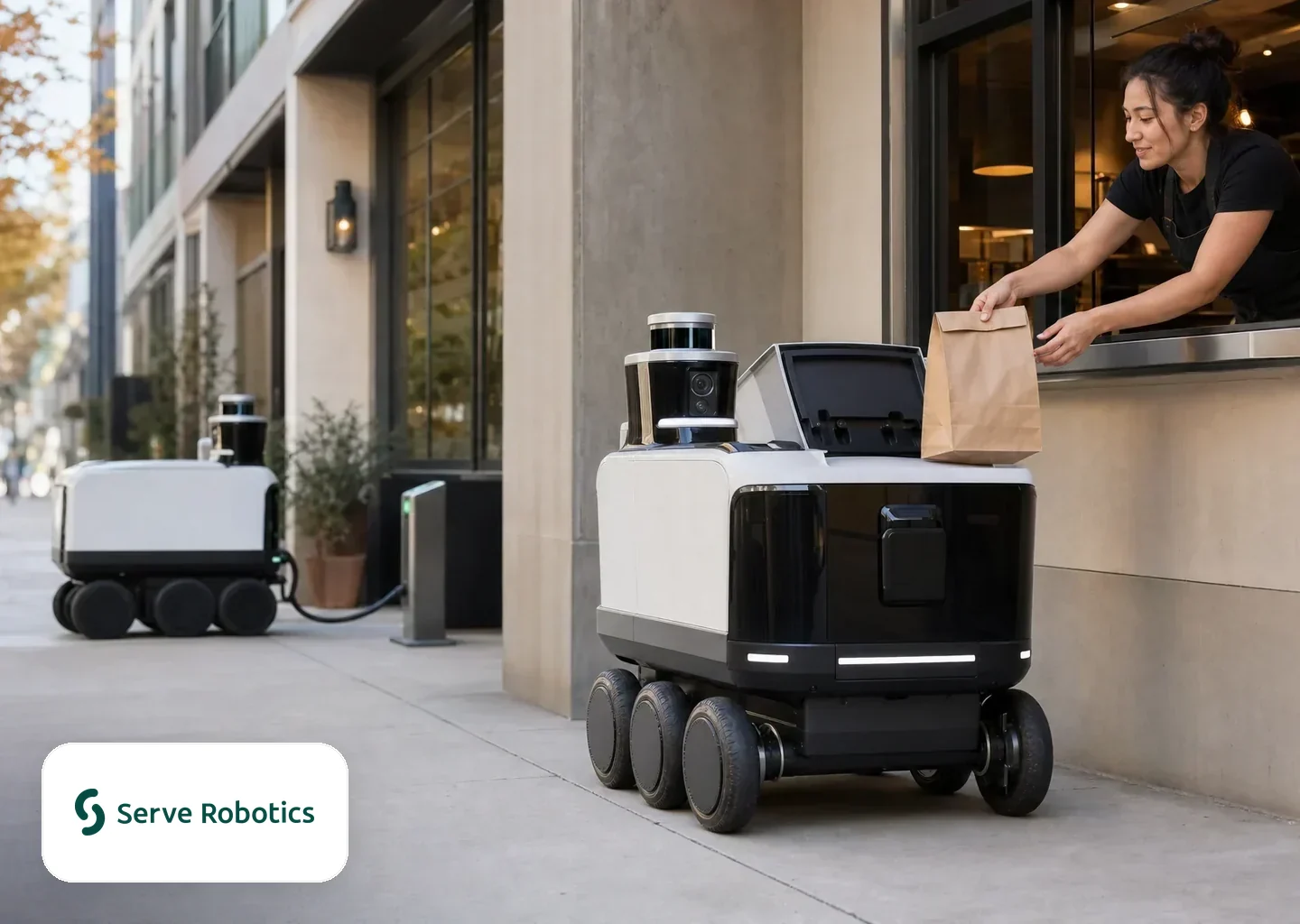
Serve Robotics Inc. is a U.S. autonomy and robotics company headquartered in Redwood City, California. The business began as Postmates X and spun out from Uber in 2021, giving it roots in on-demand delivery and last-mile logistics. Serve designs, develops, and operates autonomous robots for human-centric environments, meaning places where robots must work around pedestrians, staff, customers, and other everyday activity.

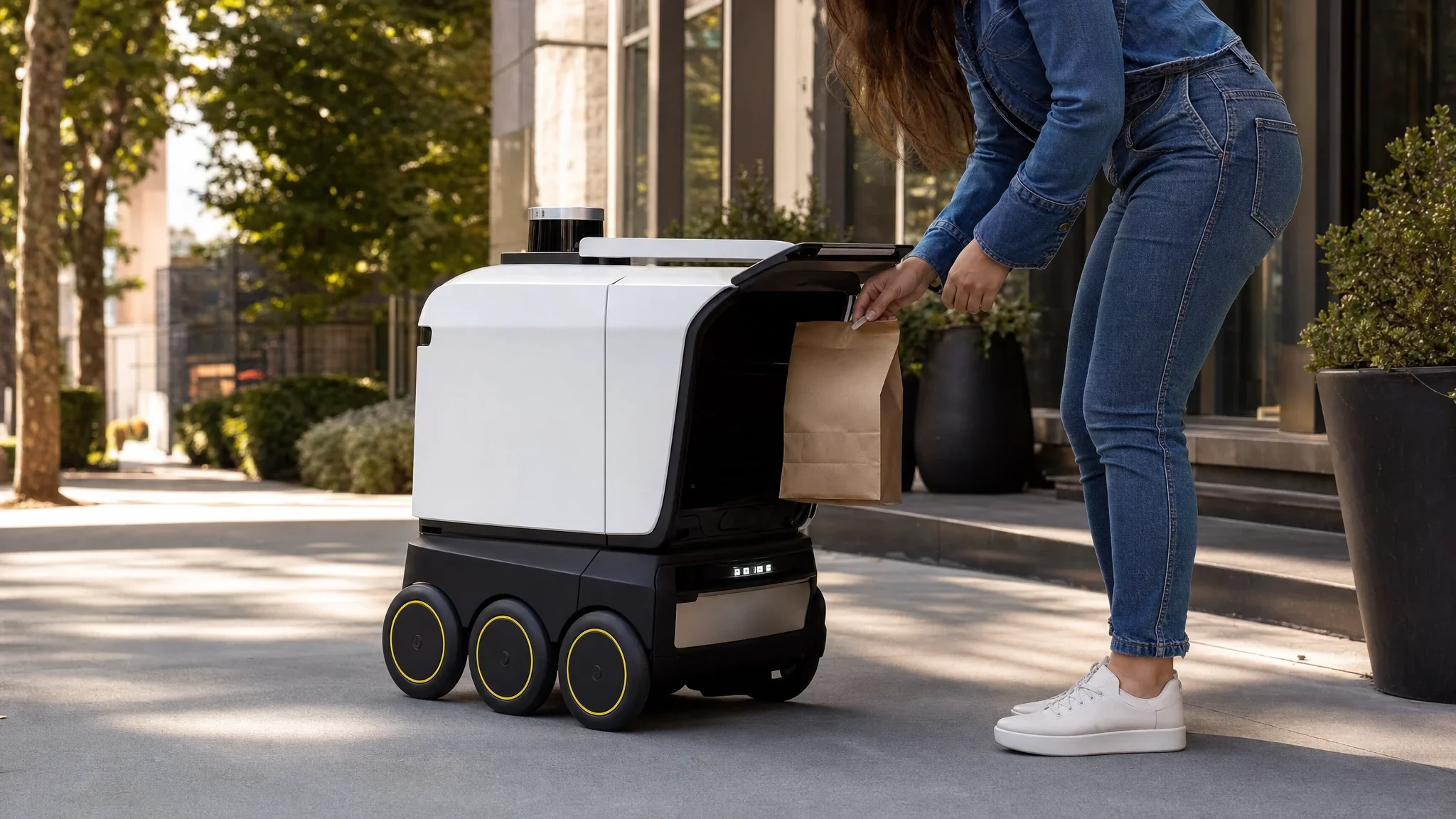
The company’s core business is autonomous delivery and service robotics. Its robots serve outdoor sidewalk delivery use cases for restaurants, merchants, and delivery platforms, while the 2026 acquisition of Diligent Robotics expanded Serve into indoor healthcare logistics, where robots transport items inside medical facilities. Serve generates revenue from fleet services, including delivery, branding, and robot appearances, and from software services such as platform licensing, hosting, and engineering projects. The company’s strategic purpose is to build a broader robotics infrastructure platform by controlling its robot hardware, autonomy software, fleet operations, and cloud-based management systems.

Serve remains an early-stage public company with rapid growth and large losses. In Q1 2026, revenue was $2.984 million, up 578% from Q1 2025, with fleet services contributing $1.958 million and software services contributing $1.026 million. Daily Active Robots averaged 812 in the quarter, compared with 73 a year earlier, and Daily Supply Hours averaged 10,295, compared with 648 a year earlier. The company operated about 2,000 robots across the United States, reached a population of about 3 million, supported more than 4,000 restaurants, and had operations across 44 cities in 14 states after the Diligent Robotics acquisition, but Q1 2026 net loss was $49.004 million and adjusted EBITDA was negative $36.325 million.

Serve Robotics

Business Model and Market Position

Serve Robotics makes money by operating and licensing autonomous robot systems for delivery and logistics tasks in human-centric environments. The company began as Postmates X, spun out from Uber in 2021, and is now focused on outdoor sidewalk delivery, indoor healthcare logistics through the 2026 Diligent Robotics acquisition, and adjacent delivery use cases such as laundry.

The business remains early-stage. In Q1 2026, Serve generated $3.0 million of revenue, up 578% year over year, but reported a gross loss of $9.0 million and a net loss of $49.0 million. The company is still proving whether robot deployment, utilization, and software revenue create attractive unit economics at scale.

  1. Fleet services: Serve earns revenue from robot-based delivery services, branding services, and robot appearances or marketing uses. Outdoor revenue comes from partnerships with delivery platforms and merchants, while indoor revenue comes from healthcare organizations using robots to move items within facilities.
  2. Software services: Serve licenses proprietary platforms and provides hosting, engineering, and development services. In Q1 2026, software services contributed $1.0 million, or roughly one-third of quarterly revenue, giving the company a higher-quality revenue stream alongside robot fleet activity.
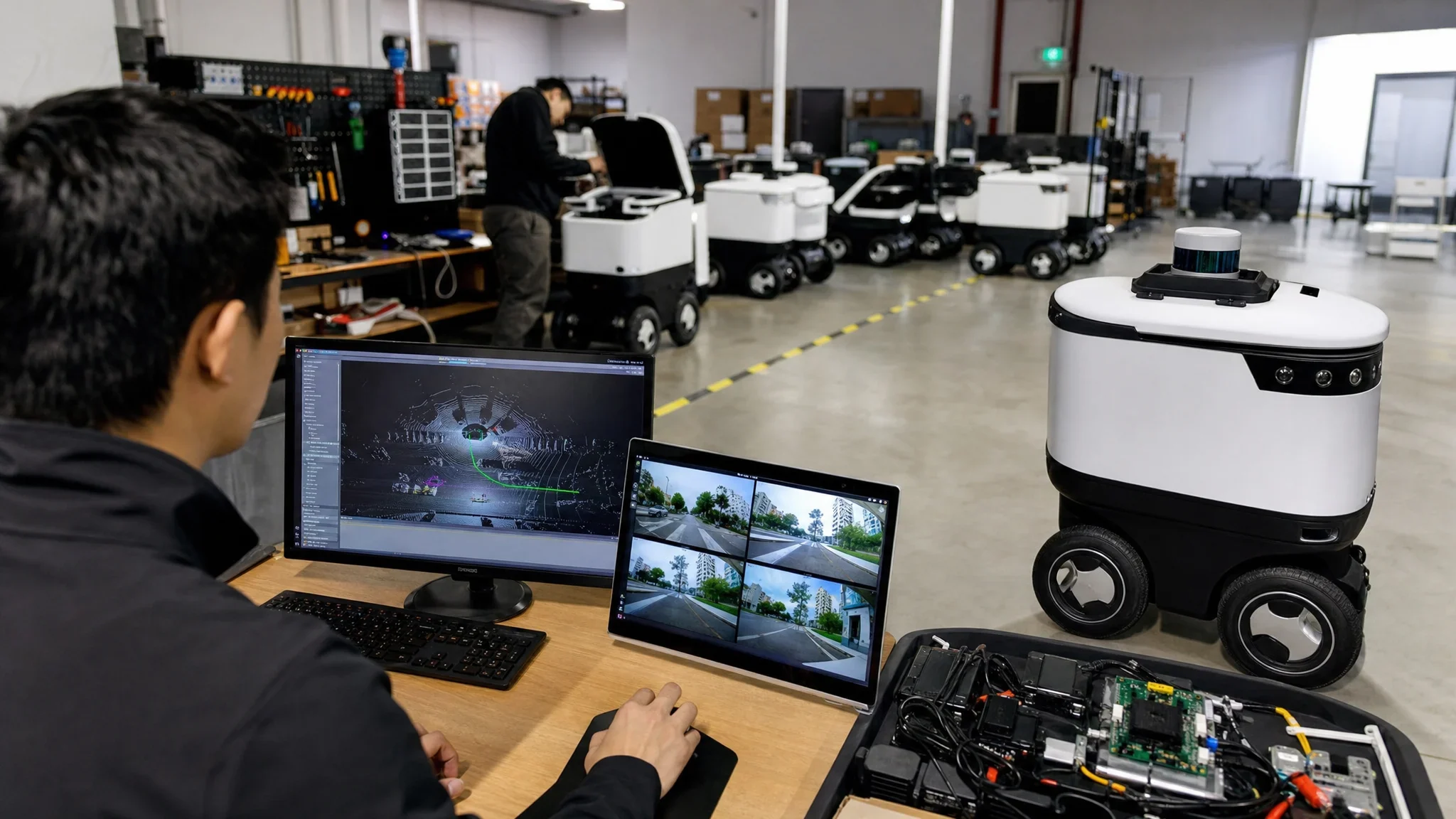
  3. Autonomous robot platform: Serve designs both the hardware and software behind its robots. This gives it control over the autonomy stack, fleet operations, and cloud-based fleet management infrastructure, which are central to service reliability and long-term cost reduction.
  4. Healthcare robotics: The Diligent Robotics acquisition expanded Serve into indoor hospital service robots. This broadens the addressable market beyond food delivery and adds exposure to healthcare logistics, where robots move supplies and other items inside facilities.
  5. New delivery verticals: Serve is testing categories outside prepared food, including a June 2026 NoScrubs laundry delivery pilot in Los Angeles. These use cases matter because they help increase fleet utilization outside peak meal hours.

Serve’s main operating indicators show rapid scaling from a small base. Daily Active Robots averaged 812 in Q1 2026, up from 547 in Q4 2025 and 73 in Q1 2025. Daily Supply Hours averaged 10,295, up from 6,676 in Q4 2025 and 648 in Q1 2025. Management’s near-term focus has shifted from fleet expansion toward productivity and revenue per robot, with roughly 2,000 deployed robots across the United States.

Serve’s market position is strongest in U.S. sidewalk autonomous delivery. The company operates one of the largest U.S. fleets in this category, with robots reaching a population of about 3 million and supporting delivery for more than 4,000 restaurants. After the Diligent Robotics acquisition, Serve had active operations across 44 cities in 14 states.

A key commercial advantage is Serve’s relationship network. The company has historically benefited from ties with Uber and Uber Eats, and its investor materials describe a signed multi-year agreement to deploy up to 2,000 delivery robots on Uber Eats across multiple U.S. markets. Serve has also worked with 7-Eleven, giving it exposure to convenience retail as well as restaurant delivery.

Direct competitors include Starship Technologies and Coco Robotics in sidewalk delivery robots. Serve also competes indirectly with drone delivery companies, autonomous vehicle programs, courier networks, and in-house automation initiatives by large delivery platforms. Compared with Starship Technologies, Serve is a public company with direct Nasdaq investor access, but Starship remains an important private global peer with its own large sidewalk robot footprint.

China is not a disclosed revenue market for Serve. In Q1 2026, all revenue came from U.S. operations, and foreign assets were not material. China matters more indirectly through robotics supply chains, components, tariffs, and potential competition from Chinese robotics companies than through current customer demand.

Serve’s competitive advantages are its deployed fleet, integrated hardware and software stack, commercial relationships, and expanding use-case base across outdoor and indoor robotics. Its main weakness is financial maturity. Q1 2026 cost of revenue was about four times revenue, and adjusted EBITDA was negative $36.3 million. The market position is promising, but investor returns depend on Serve converting fleet scale into higher utilization, recurring software revenue, and materially better margins.

Serve Robotics

Performance in China

China is not a meaningful disclosed market for Serve Robotics. In Q1 2026, the company generated all revenue from U.S. operations, with no China-specific revenue, customer, store, delivery, user, or manufacturing footprint disclosed. Foreign assets were described as not material. Serve’s current strategy is U.S.-focused: scaling autonomous sidewalk delivery, integrating Diligent Robotics’ indoor hospital service robots, and improving utilization across roughly 2,000 deployed robots. Q1 2026 Daily Active Robots averaged 812 and Daily Supply Hours averaged 10,295, while revenue reached $3.0 million. Its key partners and channels are U.S.-based, including delivery platform and merchant relationships, healthcare customers, and pilots such as NoScrubs laundry delivery in Los Angeles. China matters mainly as an indirect factor through robotics components, tariffs, supply chains, and competition from Chinese robotics developers, rather than as a reported operating market.

Growth and Future Prospects

Serve Robotics entered 2026 with a much larger operating footprint, following the Diligent Robotics acquisition and a rapid increase in deployed robot activity. Q1 2026 revenue reached $3.0 million, up 238% from Q4 2025 and 578% from Q1 2025. Daily Active Robots averaged 812, compared with 547 in the prior quarter and 73 a year earlier. Daily Supply Hours rose to 10,295, showing that the company is moving from pilot-scale activity toward broader commercial operations. The main turning point is that Serve now has roughly 2,000 deployed robots and management’s focus has shifted from adding fleet capacity to increasing utilization, revenue per robot, and recurring revenue.

Key growth drivers

  1. Fleet productivity: Higher robot utilization is the most important near-term lever. Serve already has a sizable deployed fleet, but Q1 revenue remains small relative to the asset base and cost structure.
  2. Software and recurring revenue: Q1 2026 software services revenue was $1.0 million, about one-third of total revenue. Management also stated that slightly under half of total revenue was recurring, which is important for improving revenue quality.
  3. Healthcare robotics: The Diligent Robotics acquisition expands Serve beyond sidewalk delivery into indoor hospital logistics. This broadens the addressable market and adds a use case with different demand patterns than restaurant delivery.
  4. New delivery categories: The June 2026 NoScrubs laundry pilot in Los Angeles tests whether Serve’s existing robots generate revenue outside prepared food and improve utilization during non-mealtime periods.
  5. Platform effects: Serve controls its robot hardware, autonomy software, and cloud fleet management systems. If the company improves routing, autonomy, uptime, and remote supervision, the same platform supports more delivery categories and indoor service applications.

Challenges ahead

  1. Unit economics: Q1 2026 cost of revenue was $12.0 million against revenue of $3.0 million, leaving a gross loss of $9.0 million. The company has not yet proven positive gross margins at scale.
  2. Cash burn: Q1 net loss was $49.0 million and adjusted EBITDA was negative $36.3 million. Liquidity of $197.4 million provides runway, but operating discipline is central to the outlook.
  3. Customer concentration: Serve depends on a limited number of major customers and platform relationships. Loss of a major customer would affect growth plans.
  4. Regulation and public acceptance: Sidewalk robot operations depend on local rules and pedestrian acceptance. Caps, restrictions, safety issues, vandalism, or accessibility concerns would slow expansion.
  5. Technology and compliance risk: AI, computer vision, LiDAR systems, cloud software, and healthcare operations create cybersecurity, privacy, AI regulatory, and HIPAA-related obligations.

Serve reaffirmed 2026 guidance of about $26 million in revenue and non-GAAP operating expense of $160 million to $170 million. That guidance implies a major revenue step-up from the Q1 run rate, so execution depends on turning deployed robots into materially higher revenue while controlling losses. The investment case is tied to whether Serve converts its early scale in sidewalk and indoor service robotics into repeatable economics, rather than fleet growth alone.

This Company Profile was written by Dominik Diemer

Dominik Diemer blends an investor mindset with execution discipline.

He is a SAFe Program Consultant (SPC) and Lean Portfolio Management (LPM) practitioner at DMG MORI Digital, working as a SAFe Release Train Engineer and internal consultant in the Lean-Agile Center of Excellence (LACE).

His focus is prioritization, flow, and dependency management that turns strategy into outcomes. With experience across Bertelsmann and the Founders Foundation, he bridges corporate and startup thinking.

He also invests privately in private equity deals, sharpening his view on business models, value drivers, and go-to-market.

StockCounterParts reflects that lens.