Last Updated -

July 10, 2026

Agility Robotics

Company Profile and Market Insights

Explore the business model, global strategy, and market performance including insights into its position in China.

Agility Robotics
Key facts
Founded 2015 • Private (AGLT pending) • June 2026 merger announced • Salem, Oregon
$2.5b
Announced pre-money equity value
$620m+
Expected gross transaction proceeds
$390m+
Equity raised since inception
$300m+
Committed Digit v5 orders
10,000 robots
RoboFab annual capacity
9
Committed customer facility deployments

About

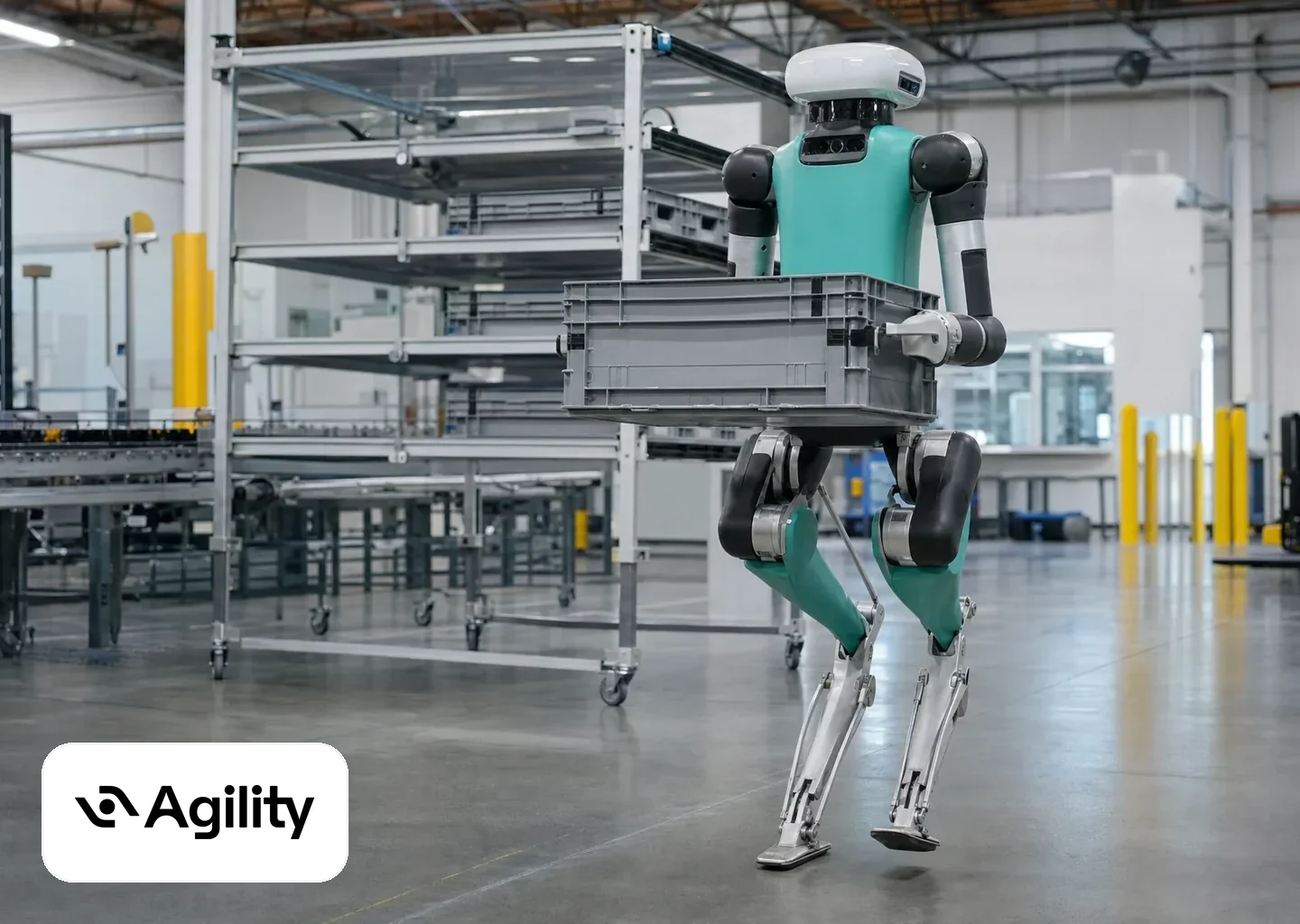
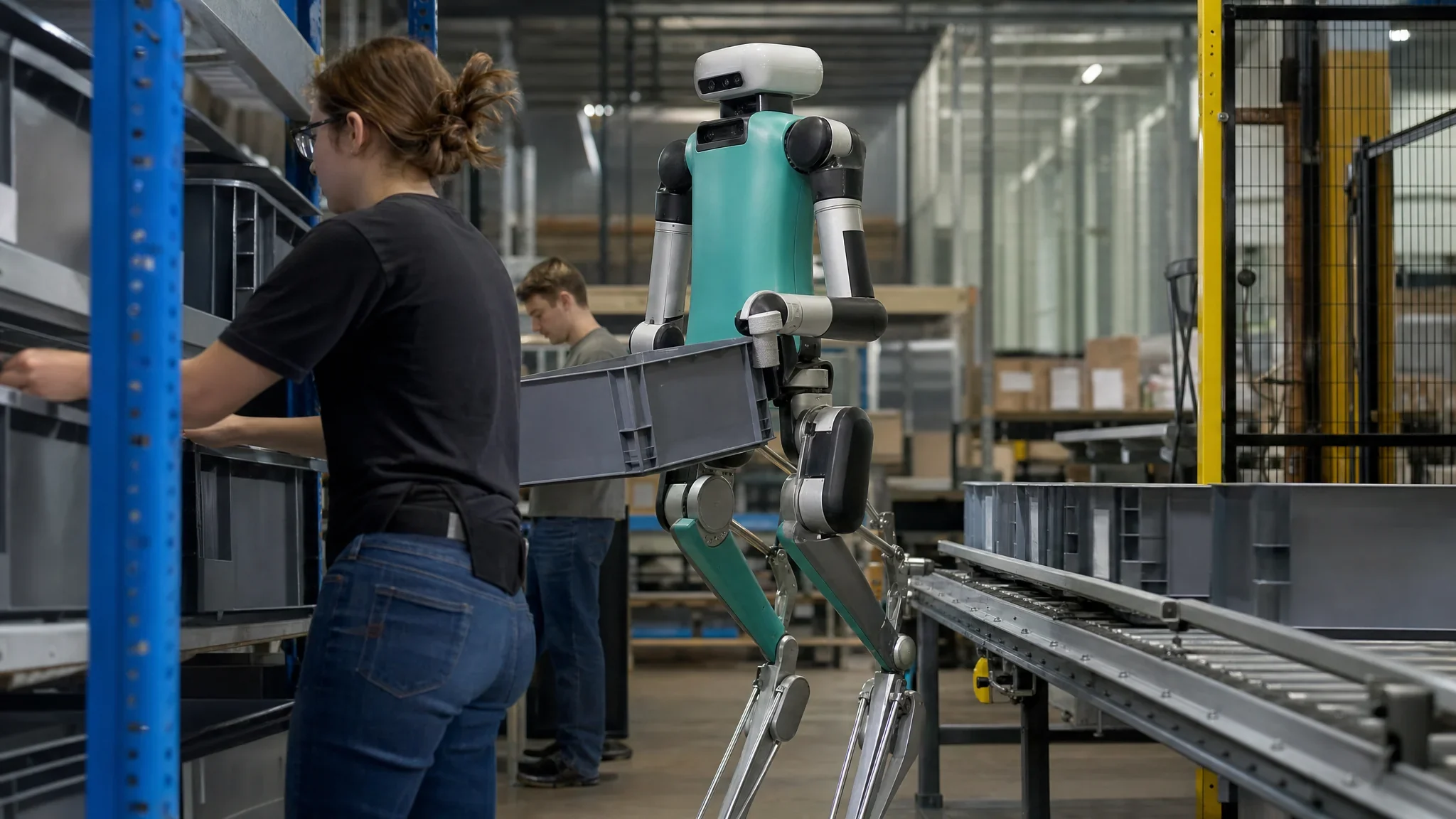
Agility Robotics, Inc. is a humanoid robotics and physical AI company founded in 2015 out of Oregon State University and headquartered in Salem, Oregon. Its core product is Digit, a bipedal humanoid robot designed to perform repetitive material-handling tasks in warehouses, distribution centers, logistics sites, and manufacturing facilities. Digit is supported by Agility Arc, a cloud-based platform that helps customers integrate workflows, manage robot fleets, coordinate tasks, and monitor operations.

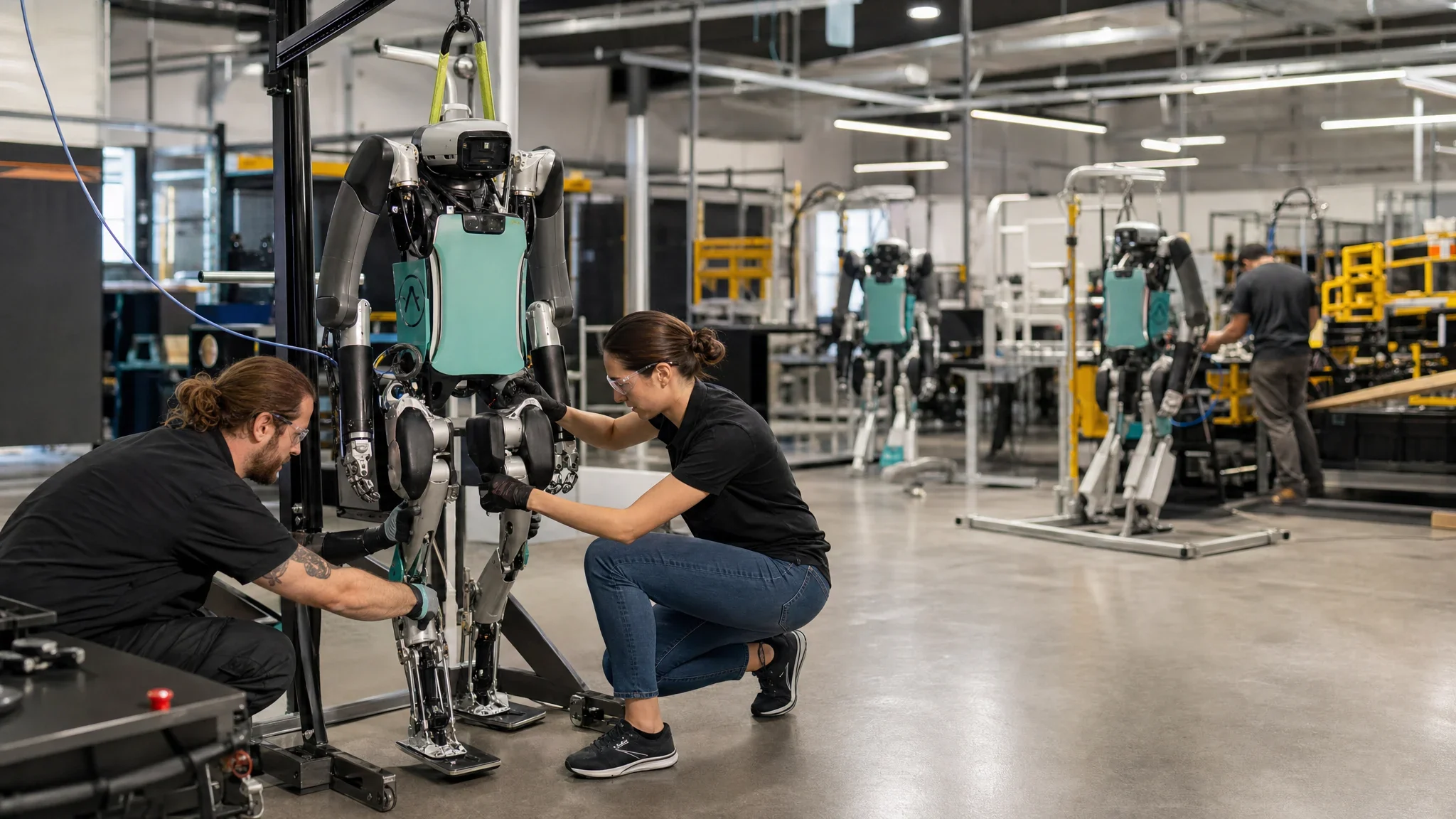
The company has developed from university research into a commercial robotics business focused on industrial deployment rather than consumer humanoids. Its model includes Robots-as-a-Service, where customers pay through service arrangements, and direct ownership with recurring software and maintenance fees. Agility operates RoboFab in Salem, a purpose-built humanoid robot factory that it says has annual production capacity of 10,000 robots, and it has relationships with customers and partners including Schaeffler, GXO, Toyota Motor Manufacturing Canada, Amazon, Mercado Libre, NVIDIA, and SoftBank Vision Fund 2.

Agility remains private as of July 1, 2026, and has not published audited revenue, net income, or Q1 2026 financial statements. In June 2026, it announced a definitive agreement to merge with Churchill Capital Corp XI and pursue a public listing under the expected ticker AGLT, in a transaction valuing Agility at a $2.5 billion pre-money equity value. As of May 2026, Agility disclosed more than $390 million of equity raised since inception, more than $300 million of committed multi-year Digit v5 orders tied to 1,000 robots, 9 committed customer facility deployments, 65,000 operating hours, and more than 60 issued patents.

Agility Robotics

Business Model and Market Position

Agility Robotics is a private humanoid robotics company focused on industrial automation. Its main product is Digit, a bipedal robot designed for repetitive material-handling work in warehouses, distribution centers, logistics sites and manufacturing plants. The company’s business model combines robot deployment, recurring software, fleet management and maintenance services.

Agility has not published audited revenue, net income or Q1 2026 financial statements. The latest investor-facing data is from its June 2026 SPAC materials. Those materials disclosed more than $300 million of committed multi-year Digit v5 orders tied to 1,000 robots under a three-year Robots-as-a-Service contract, although this is not current-period revenue and depends on contractual milestones. Agility also disclosed 9 committed customer facility deployments, 65,000 hours of operations and RoboFab annual production capacity of 10,000 robots as of May 2026.

  1. Robots-as-a-Service: Agility offers Digit through a recurring service model that lowers upfront customer cost and gives Agility subscription-style revenue from robot access, deployment, software and maintenance elements.
  2. Robot ownership: Customers that prefer capital procurement buy robots upfront, while Agility earns recurring revenue from Agility Arc software and maintenance services.
  3. Software and fleet management: Agility Arc is the company’s cloud-based automation platform for workflow integration, fleet orchestration, operations monitoring and optimization.
  4. Services and support: Deployment, maintenance, safety validation and customer facility integration are important parts of the model because humanoid robots operate inside complex industrial environments.

The company’s key operating focus is commercializing Digit for industrial work. Near-term use cases include tote and bin movement, component movement and line-feeding tasks. Its longer-term roadmap includes component handling, machine tending, fastening, carton forming, handling and quality inspection. This gives Agility a focused warehouse and manufacturing position rather than a consumer humanoid strategy.

Agility’s main competitive advantages are its deployment record, purpose-built manufacturing base and vertical hardware-software stack. RoboFab in Salem, Oregon is described as a humanoid robot factory with 10,000 units of annual production capacity. The company says about 75% of Digit parts are sourced in the United States, and it owns key proprietary systems including actuators, control systems, safety systems and embodied AI components. It also reports more than 60 issued patents and 34 pending non-provisional patent applications.

The company’s customer and partner base supports its market position. Named customer and deployment relationships include Schaeffler, GXO, Toyota Motor Manufacturing Canada, Amazon and Mercado Libre. Strategic investors and partners include NVIDIA, Amazon, SoftBank Vision Fund 2, Foxconn, Schaeffler, Abico, DCVC and Playground Global.

Agility positions itself as a leading pure-play commercial humanoid robotics company with active customer deployments. The proposed merger with Churchill Capital Corp XI, announced in June 2026, values Agility at a $2.5 billion pre-money equity value and is expected to provide more than $620 million of gross proceeds if there are no redemptions and the PIPE financing closes. If completed, the transaction is expected to make Agility the only U.S. publicly listed pure-play humanoid robotics company with proven active commercial deployments.

Direct competitors include Figure AI, Tesla Optimus, Apptronik, Boston Dynamics, Unitree and broader warehouse automation vendors. Figure AI is the closest private U.S. humanoid robotics comparison, while Tesla brings internal manufacturing scale and AI resources through Optimus. Unitree is a relevant Chinese robotics competitor, reflecting China’s growing investment in humanoid and physical AI systems. Agility’s differentiation is narrower and more industrial: it is targeting paid deployments in logistics and manufacturing rather than broad-purpose consumer or demonstration-led humanoid use cases.

China does not appear to be a meaningful disclosed revenue market for Agility. The company’s disclosed customer activity is centered on North America and global enterprise customers, while China is referenced mainly as a competitive and policy backdrop. Supply-chain exposure appears limited based on Agility’s statement that about 75% of Digit parts are sourced in the United States, although the company has not provided a full country-by-country supplier breakdown.

Agility Robotics

Performance in China

China is not a meaningful disclosed operating market for Agility Robotics. The company has not reported China revenue, China-based deployments, local manufacturing, stores, users, or market share, and it does not publish regular quarterly results because it remains private pending its planned SPAC merger. Its current commercial footprint is centered on North American and global enterprise customers, including Schaeffler, GXO, Toyota Motor Manufacturing Canada, Amazon, and Mercado Libre. Agility’s manufacturing base is RoboFab in Salem, Oregon, with stated annual capacity of 10,000 robots, and the company says about 75% of Digit parts are sourced in the United States. China matters mainly as a competitive backdrop, with state-backed robotics investment and rivals such as Unitree. The latest June 2026 update highlighted $300 million-plus of committed Digit v5 orders and nine committed customer facility deployments, with no China contribution disclosed.

Growth and Future Prospects

Agility Robotics is moving from pilot-stage commercial validation toward an attempted public-company scale-up. Because the company remains private, it has not published Q1 2026 financial statements, audited revenue, or net income. The most current operating data comes from its June 2026 SPAC materials, which disclosed more than $390 million of equity raised since inception, $300 million-plus of committed multi-year Digit v5 orders, 9 committed customer facility deployments, 65,000 operating hours, and a stated RoboFab capacity of 10,000 robots annually. The proposed merger with Churchill Capital Corp XI would value Agility at a $2.5 billion pre-money equity value and provide more than $620 million of expected gross proceeds before redemptions, including committed PIPE financing.

Key growth drivers

  1. Commercial backlog indicator: The $300 million-plus Digit v5 order commitment tied to 1,000 robots gives Agility a concrete demand signal, although it is not current revenue and depends on deployment milestones.
  2. Product expansion: Digit v5 is intended to broaden industrial use cases beyond tote and bin movement into component handling, line feeding, machine tending, fastening, carton forming, handling, and quality inspection.
  3. RaaS economics: Robots-as-a-Service lowers upfront customer cost and creates a recurring revenue model through subscriptions, deployment, software, and maintenance. Ownership sales offer a second route for customers that prefer capital procurement.
  4. Platform and AI layer: Agility Arc supports workflow integration, fleet management, orchestration, and operations optimization. Real-world deployment data and physical-AI improvements are central to improving robot reliability and customer economics.
  5. Manufacturing capacity: RoboFab gives Agility a dedicated production base, although the company still needs to prove high-volume manufacturing execution and unit-cost reduction.

Geographic expansion is likely to follow enterprise customer footprints rather than consumer adoption. Current disclosed relationships are centered on North America and global industrial, logistics, automotive, and e-commerce customers, including Schaeffler, GXO, Toyota Motor Manufacturing Canada, Amazon, and Mercado Libre. China is more relevant as a competitive backdrop than as a disclosed revenue market.

Challenges ahead

  1. Cash burn and losses: Preliminary FY2025 operating expenses rose to $111 million from $71 million in FY2024, with cash uses of $102 million. Agility expects continued losses as it funds R&D, production, deployments, and public-company costs.
  2. Execution risk: Digit v5 remains in development, and commercial rollout depends on safety validation, hardware reliability, software performance, supply-chain stability, and customer integration.
  3. Order conversion: The committed order figure must convert into revenue at acceptable timing and margins.
  4. Competitive pressure: Agility faces well-funded humanoid robotics and automation competitors, including Figure AI, Tesla, Unitree, Apptronik, Boston Dynamics, and established warehouse automation vendors.

Agility’s future outlook depends less on broad humanoid robotics interest and more on measurable deployment economics. If the SPAC closes and customers expand from limited deployments to fleet-scale use, the company gains capital and public-market visibility to support production. The investment case remains high risk until Agility shows audited revenue growth, dependable robot uptime, repeat customer orders, and a path toward sustainable gross margins.

This Company Profile was written by Dominik Diemer

Dominik Diemer blends an investor mindset with execution discipline.

He is a SAFe Program Consultant (SPC) and Lean Portfolio Management (LPM) practitioner at DMG MORI Digital, working as a SAFe Release Train Engineer and internal consultant in the Lean-Agile Center of Excellence (LACE).

His focus is prioritization, flow, and dependency management that turns strategy into outcomes. With experience across Bertelsmann and the Founders Foundation, he bridges corporate and startup thinking.

He also invests privately in private equity deals, sharpening his view on business models, value drivers, and go-to-market.

StockCounterParts reflects that lens.