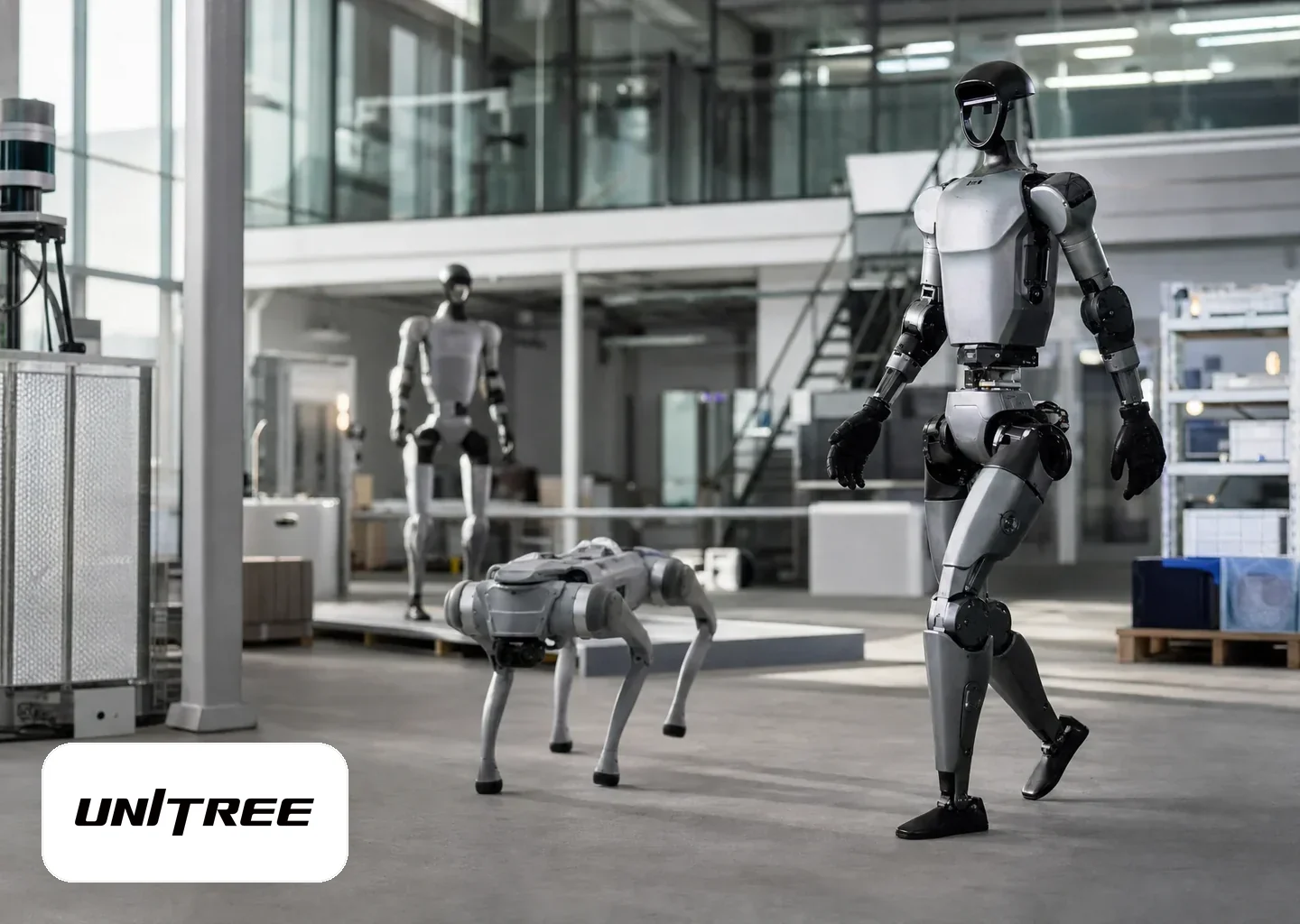
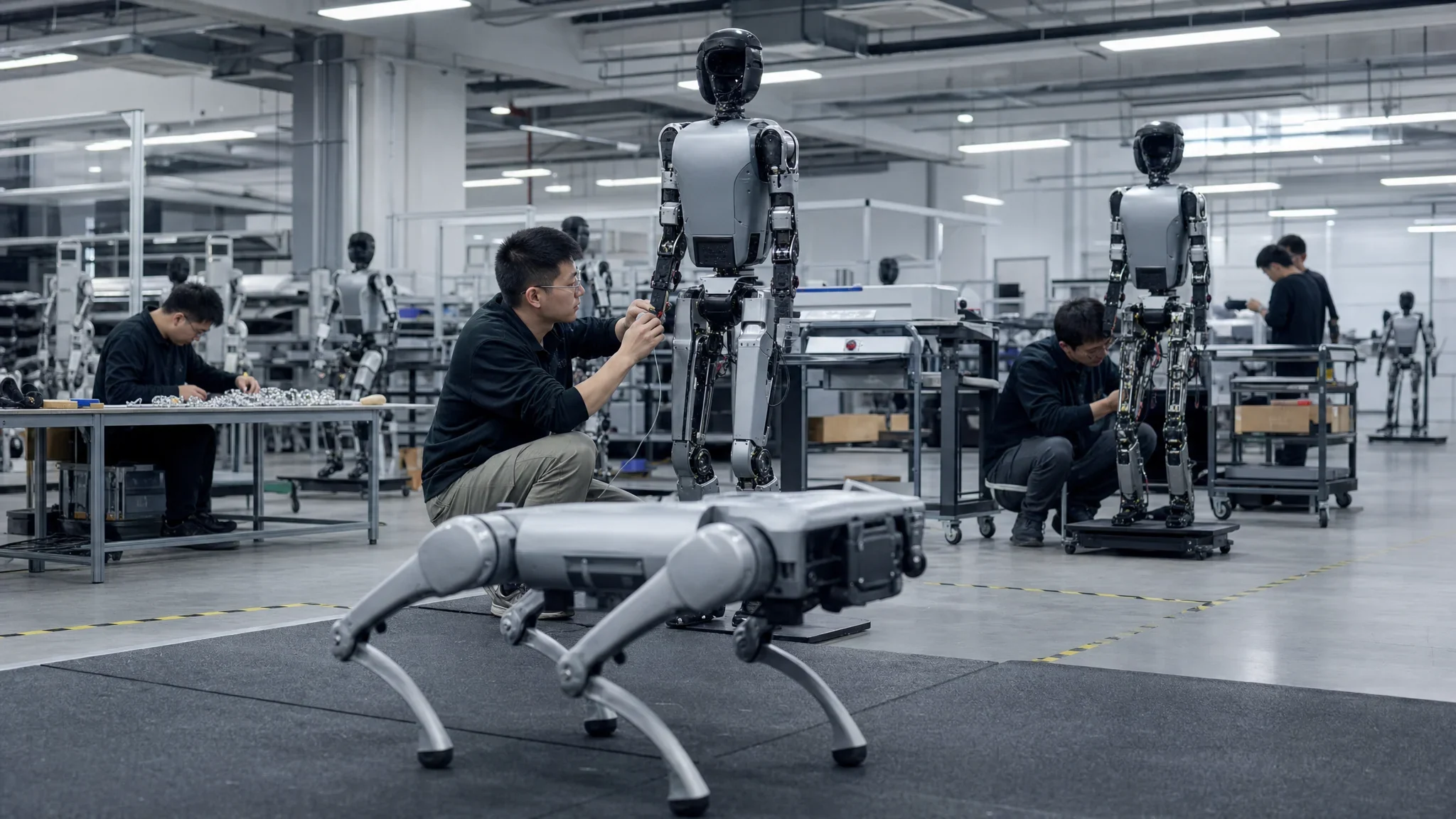
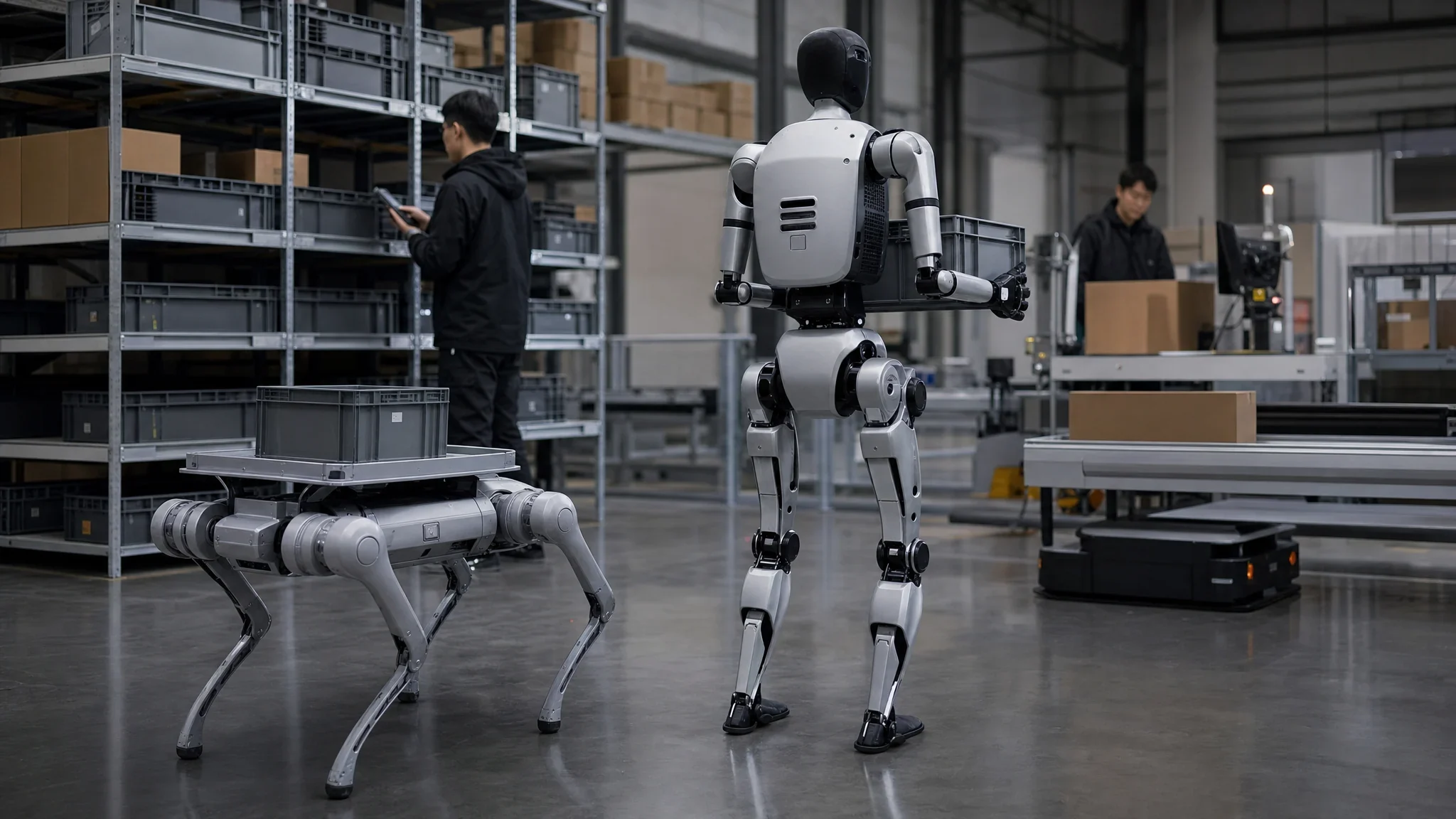
Unitree Robotics makes money mainly by designing, manufacturing and selling legged robots, humanoid robots, dexterous manipulators and related robotics components. Its model is product-led rather than subscription-led, with revenue tied to robot hardware sales, components and associated robotics platforms for developers, research institutions, industrial users, public-safety customers, entertainment projects and prosumers.
The latest available published financials are FY2025 prospectus figures, with no Q1 2026 results found. Revenue reached RMB 1.699 billion in 2025, up from RMB 393 million in 2024 and RMB 159 million in 2023. Net profit was RMB 278 million in 2025, while adjusted profit excluding non-recurring items was about RMB 590 million to RMB 591 million. The company reported a core-business gross margin of 60.13%. Its prospectus forecast H1 2026 revenue of RMB 1.052 billion to RMB 1.128 billion.
- Quadruped robots: Unitree sells consumer, prosumer and research-focused Go-series robots, along with higher-end industrial-class models such as the B-series and A-series. These products serve education, research, inspection, public rescue, demonstrations and developer use cases.
- Humanoid robots: The company’s humanoid portfolio includes G1, H1, H2 and the lower-cost R1. Humanoids have become a larger part of Unitree’s profile, helped by aggressive pricing and demand from robotics developers, AI labs and research customers.
- Dexterous arms and components: Unitree also sells manipulators and robot components linked to its broader hardware ecosystem. In-house development of motors, reducers, controllers, lidar and motion-control algorithms supports its hardware economics.
- Robotics software and control systems: Software is important to product performance, especially motion control, perception and embodied-AI integration, but the company’s disclosed revenue model is still centered on hardware and related products rather than recurring software subscriptions.
Unitree’s main competitive advantage is its combination of low-cost hardware, fast product iteration and vertical integration. By controlling key components and algorithms internally, the company has reduced manufacturing costs and brought robots to market at prices below many global peers. The G1 humanoid was introduced from RMB 99,000 in 2024, while the R1 lightweight humanoid released in 2025 further lowered the entry point for humanoid hardware.
The company also benefits from strong brand visibility. Its robots have appeared in high-profile public events including the CCTV Spring Festival Gala, the Winter Olympics opening ceremony, the Super Bowl pre-game performance and the Hangzhou Asian Games and Asian Para Games. This visibility has helped position Unitree as one of China’s best-known embodied-AI robotics companies.
Unitree competes with Chinese robotics companies including UBTech Robotics, AgiBot, DEEP Robotics, Leju Robotics and Fourier Intelligence. Global peers include Figure AI, Boston Dynamics and Agility Robotics. Compared with UBTech, which is already publicly listed in Hong Kong and has a broader service-robotics profile, Unitree is more closely associated with high-performance quadrupeds and lower-cost humanoid platforms. Compared with Boston Dynamics, Unitree emphasizes wider public availability and lower price points, while Boston Dynamics is more established in advanced mobility systems and enterprise deployments.
Unitree positions itself as a global leader in publicly retailed high-performance quadruped robots and says it has led global quadruped robot sales over multiple years. In humanoids, it is one of the highest-profile Chinese companies in the field and is moving toward a Shanghai STAR Market listing after its IPO application was accepted in March 2026, passed listing committee review in June 2026 and received Chinese securities regulator approval in July 2026.
The planned IPO would raise about RMB 4.202 billion through the issue of at least 40,446,434 new A-shares. Proceeds are intended for core technology breakthroughs and long-term strategic development, including large AI models for intelligent robotics. If completed, the listing would make Unitree one of the first pure-play humanoid robotics names on China’s A-share market.
China is central to Unitree’s market position. The company is headquartered in Hangzhou, develops and manufactures in China, and benefits from the country’s robotics supply chain, industrial policy support and investor appetite for humanoid robotics. It also has international visibility and overseas research users, but geopolitical scrutiny and procurement restrictions create risks in sensitive foreign markets.
A notable ecosystem validation came from NVIDIA selecting a Unitree H2 humanoid chassis for the NVIDIA Isaac GR00T Reference Humanoid Robot for academic research, with availability from Unitree expected in late 2026. This does not make Unitree a dominant AI software platform, but it indicates that its hardware is relevant to major AI-robotics developers and academic labs.
Unitree’s market position is strong in visibility, cost competitiveness and product breadth, especially in quadrupeds and developer-oriented humanoids. The main investor question is whether the company converts early research, demonstration and developer demand into durable large-scale industrial and commercial deployments while defending margins in a crowded robotics market.