Last Updated -

June 24, 2026

CGN Power

Company Profile and Market Insights

Explore the business model, global strategy, and market performance including insights into its position in China.

CGN Power
Key facts
Founded 2004 • 1816.HK / 003816.SZ • Q1 2026 results (Mar 31, 2026 quarter)
RMB16.319b
Q1 2026 revenue
RMB2.741b
Q1 2026 net profit
RMB3.478b
Q1 2026 operating cash flow
50.957b kWh
Q1 2026 on-grid generation
RMB530.286b
Total assets at Mar 31, 2026
28 units / 31,838 MW
Operating nuclear fleet at year-end 2025

About

CGN Power Co., Ltd. is a Chinese nuclear power company founded in 2014 and headquartered in Shenzhen, Guangdong. It is the sole nuclear power generation platform of China General Nuclear Power Corporation, which remained its controlling shareholder with 58.89% of shares at March 31, 2026. The company builds, operates and manages nuclear power plants, sells electricity to grid companies and market users, and provides nuclear power technical, engineering and construction-related services.

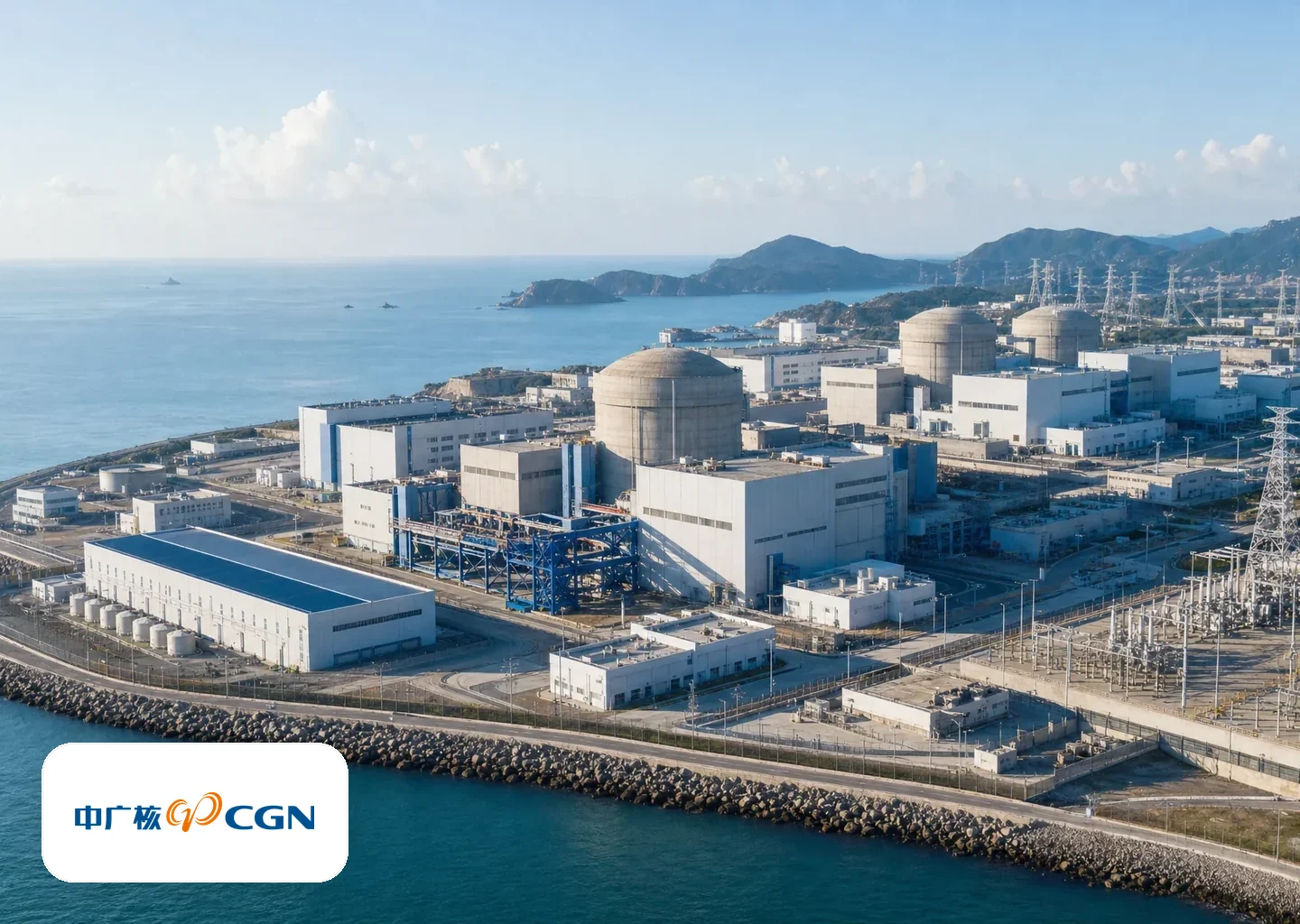
CGN Power has developed into one of China’s key listed nuclear utilities, with shares listed in Hong Kong and Shenzhen. Its operations are concentrated in mainland China, where its main nuclear power stations include Daya Bay, Ling’ao, Lingdong, Yangjiang, Taishan, Fangchenggang, Ningde and associate Hongyanhe. At the end of 2025, the company had 28 generating units in operation with 31,838 MW of installed capacity, plus 20 units under construction or approved and pending first concrete date with 24,222 MW of installed capacity, including entrusted units.

The company’s strategic purpose is tied to China’s low-carbon energy transition and the expansion of nuclear power within the country’s electricity system. Electricity sales are its core business, accounting for RMB61.757 billion, or 81.6% of 2025 operating revenue. In Q1 2026, CGN Power reported operating revenue of RMB16.319 billion, down 13.25% year over year, and net profit attributable to shareholders of RMB2.741 billion, down 9.33%, mainly due to lower on-grid generation at certain subsidiaries and lower market tariffs. Total assets were RMB530.286 billion at March 31, 2026, and nuclear units operated and managed by the group delivered 50.957 billion kWh of on-grid power in the quarter.

CGN Power

Business Model and Market Position

CGN Power is a China-focused nuclear utility. It builds, operates and manages nuclear power plants, then earns most of its revenue by selling electricity to grid companies and market users under power sales contracts. Revenue is recognized when electricity is delivered to the contracted grids.

The company’s business model is asset-heavy, regulated and long-cycle. It depends on nuclear unit availability, grid dispatch, approved tariffs, market-based power prices, outage schedules and the pace of new reactor construction. In Q1 2026, operating revenue fell 13.25% year on year to RMB16.319 billion, while net profit attributable to shareholders fell 9.33% to RMB2.741 billion. Management attributed the decline mainly to lower on-grid generation at certain subsidiaries and lower market tariffs.

Main revenue streams are

  1. Electricity sales: This is the core business. In 2025, electricity sales revenue, including commissioning revenue, was RMB61.757 billion, or 81.6% of operating revenue.
  2. Nuclear power technical services: The company provides technical services linked to nuclear power operations and management.
  3. Engineering, construction and related services: This segment supports nuclear project development and related technical work. In 2025, external segment revenue from engineering, construction and related technical services was RMB12.070 billion.

CGN Power reports its business mainly through two operating areas. Nuclear power operation, electricity sales and related technical services generated RMB63.627 billion of external segment revenue in 2025. Engineering, construction and related technical services formed the second major segment. The main operating assets include Daya Bay, Ling’ao, Lingdong, Yangjiang, Taishan, Fangchenggang, Ningde and the associate Hongyanhe nuclear power station.

The company’s market position is strong within Chinese nuclear power. CGN Power is the sole listed nuclear power generation platform of China General Nuclear Power Corporation, which held 58.89% of the company at March 31, 2026. At year-end 2025, CGN Power had 28 generating units in operation with 31,838 MW of installed capacity, all in mainland China. Its operating nuclear units, including associates, delivered 232,648 GWh of on-grid power generation in 2025, up 2.36% year on year.

Q1 2026 showed the sensitivity of the model to utilization and tariffs. Total on-grid power generation from nuclear units operated and managed by the group was 50.957 billion kWh, down 10.11% year on year. On-grid generation from holding subsidiaries was 40.041 billion kWh, down 11.45%. Even with weaker revenue and profit, operating cash flow rose 44.18% year on year to RMB3.478 billion, mainly due to lower nuclear fuel procurement payments.

Competitive advantages include

  1. Scale in Chinese nuclear generation: CGN Power operates one of China’s largest listed nuclear fleets, with 31,838 MW in operation at year-end 2025.
  2. State-linked platform role: Its position as CGNPC’s sole nuclear power generation platform gives it strategic importance within China’s nuclear industry.
  3. Long-lived baseload assets: Nuclear plants provide large-scale, low-carbon baseload electricity, which aligns with China’s energy security and low-carbon power policy goals.
  4. Construction pipeline: At year-end 2025, the company reported 20 units under construction or approved and pending first concrete date, with 24,222 MW of installed capacity, including entrusted units.
  5. Established regional grid relationships: Major customers include Guangdong Power Grid, State Grid Fujian Electric Power and Guangxi Power Grid, reflecting entrenched positions in its operating regions.

Direct competitors include China National Nuclear Power, the main listed peer in China’s nuclear generation market. Compared with global nuclear-heavy utilities, CGN Power is more concentrated in one country and one technology category. Compared with a US utility such as Constellation Energy, CGN Power has a larger direct link to state nuclear planning and new reactor construction in China, while its earnings are more exposed to PRC provincial market rules, regulated grid arrangements and Chinese nuclear approval cycles.

China is central to the investment case. All operating generating units disclosed in the 2025 annual report are in mainland China, and the company sells mainly to PRC grid companies and market users. In 2025, China’s total electricity consumption reached 10,400 billion kWh, up 5% year on year, supporting long-term demand for reliable generation. The company also faces near-term pressure from market-based electricity trading prices, which declined in certain regions in 2025 and again weighed on Q1 2026 results.

CGN Power’s market position is that of a leading Chinese nuclear utility with a large installed base, a visible construction pipeline and concentrated domestic exposure. Its growth depends on bringing new units into service, maintaining high fleet availability and managing tariff pressure in regional power markets.

CGN Power

Performance in China

China is CGN Power’s home market and the core of its listed-company profile. All operating nuclear generating units disclosed in 2025 were in mainland China, with electricity sold mainly to PRC grid companies and market users. At year-end 2025, the company operated 28 units with 31,838 MW of capacity and had 20 units under construction or approved pending first concrete, totaling 24,222 MW including entrusted units. Q1 2026 revenue fell 13.25% year over year to RMB16.319 billion, while attributable net profit fell 9.33% to RMB2.741 billion. On-grid generation from units operated and managed by the group declined 10.11% to 50.957 billion kWh, due to lower generation at certain subsidiaries and weaker market tariffs. Strategy centers on full-load generation, higher-quality market users, cross-provincial transmission and new unit starts, including Huizhou Units 1 and 2 expected in 2026. Its main domestic competitor is China National Nuclear Power.

Growth and Future Prospects

CGN Power entered 2026 with a large operating base and a significant construction pipeline, but its latest quarter showed the near-term limits of volume and tariff-driven growth. In Q1 2026, operating revenue fell 13.25% year over year to RMB16.319 billion, while net profit attributable to shareholders declined 9.33% to RMB2.741 billion. Total on-grid power generation from nuclear units operated and managed by the group fell 10.11% to 50.957 billion kWh. Management linked the weaker quarter mainly to lower generation at certain subsidiaries and lower market tariffs. Operating cash flow was stronger, rising 44.18% to RMB3.478 billion, helped by lower nuclear fuel procurement payments.

Key growth drivers

  1. New nuclear capacity: At year-end 2025, CGN Power reported 20 units under construction or approved and pending first concrete date, totaling 24,222 MW of installed capacity, including entrusted units. Huizhou Unit 1 is expected to enter operation in the first half of 2026 and Huizhou Unit 2 in the second half.
  2. China’s energy transition: Nuclear power remains aligned with China’s low-carbon power system goals. This supports long-term demand for safe baseload generation, subject to approvals, construction execution and grid absorption.
  3. Market strategy: The company is pursuing higher-quality market users, fuller-load generation and more cross-provincial power transmission to offset pressure from lower regional market-based tariffs.
  4. Consolidation and project control: Ningde Second Nuclear became a consolidated subsidiary from January 2026, adding a strategic development platform within CGN Power’s reporting scope.
  5. Funding access: The 2025 issuance of RMB4.9 billion of A-share convertible bonds supports the Guangdong Lufeng Unit 5 and Unit 6 project, although future expansion remains capital intensive.

Product expansion is centered on nuclear electricity generation, technical services and engineering-related capabilities rather than diversification away from nuclear power. Geographic expansion is also domestic. All disclosed operating units are in mainland China, and the company’s growth depends on Chinese provincial demand, nuclear approvals, market trading rules and grid dispatch arrangements.

Challenges ahead

  1. Tariff pressure: Lower market-based power prices in certain regions reduced average settling tariffs in 2025 and continued to weigh on Q1 2026 results.
  2. Utilization risk: Refuelling outages, reduced-load requirements and grid dispatch affect generation volumes and quarterly earnings.
  3. Construction and regulatory risk: New units require permits, safety compliance and complex project execution. Delays, cost increases or additional safety requirements would affect returns.
  4. Balance-sheet strain: The 2025 asset-liability ratio was 65.2%, reflecting the debt-heavy nature of nuclear expansion.

CGN Power’s outlook is tied to execution rather than broad geographic expansion. If new units enter service on schedule and tariff pressure stabilizes, earnings growth should improve as capacity is added. Near-term results will still be uneven because outages, market prices and construction spending have a direct effect on revenue, profit and cash flow.

This Company Profile was written by Dominik Diemer

Dominik Diemer blends an investor mindset with execution discipline.

He is a SAFe Program Consultant (SPC) and Lean Portfolio Management (LPM) practitioner at DMG MORI Digital, working as a SAFe Release Train Engineer and internal consultant in the Lean-Agile Center of Excellence (LACE).

His focus is prioritization, flow, and dependency management that turns strategy into outcomes. With experience across Bertelsmann and the Founders Foundation, he bridges corporate and startup thinking.

He also invests privately in private equity deals, sharpening his view on business models, value drivers, and go-to-market.

StockCounterParts reflects that lens.