Last Updated -

June 24, 2026

Constellation Energy

Company Profile and Market Insights

Explore the business model, global strategy, and market performance including insights into its position in China.

Constellation Energy
Key facts
Constellation Energy • Nasdaq: CEG • Q1 2026 results (Mar 31, 2026 quarter)
$11.122b
Q1 2026 operating revenue
$972m
Q1 2026 adjusted operating earnings
$2.74
Q1 2026 adjusted EPS
55 GW
Total generating capacity after Calpine
2.5m
Customer accounts served nationwide
92.3%
Q1 2026 nuclear capacity factor ex-Salem & South Texas Project

About

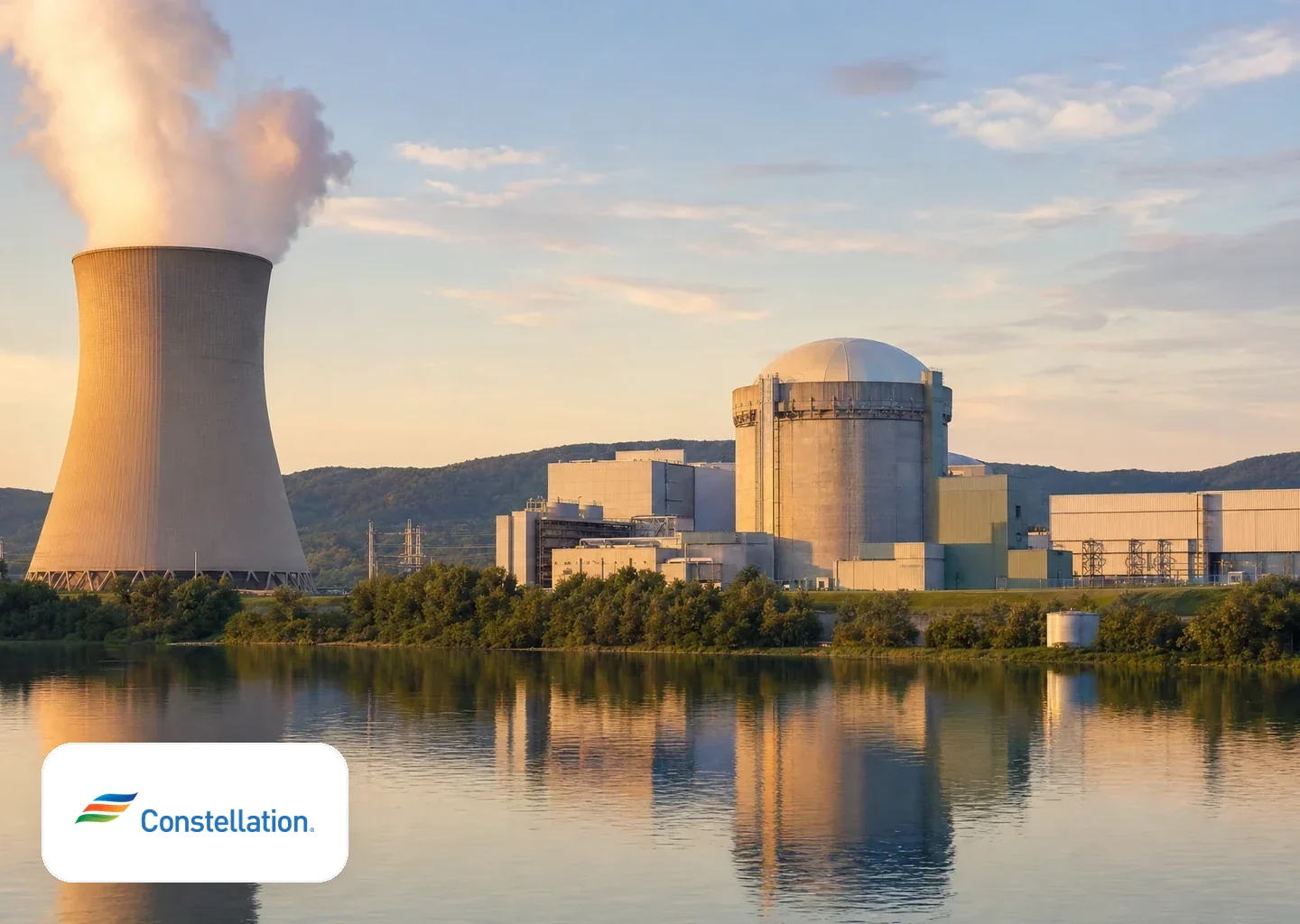
Constellation Energy Corporation is a Baltimore-based power producer and competitive energy supplier founded as an independent public company in 2022 after its separation from Exelon. Its core business is generating and selling electricity in competitive U.S. power markets, led by the nation’s largest nuclear fleet and expanded by natural gas, oil, geothermal, hydro, wind and solar assets after the Calpine acquisition closed in January 2026. The company also sells retail electricity, structured energy products and clean energy services to business, public-sector, residential and wholesale customers.

Constellation has developed from a primarily nuclear-centered generator into a broader 55 GW power company with dispatchable and renewable assets across major U.S. markets. It describes its purpose as accelerating the transition to a carbon-free future while supplying reliable power, which matters as electricity demand rises from data centers, advanced manufacturing and electrification. Its customer base includes about 2.5 million accounts nationwide and 80% of the Fortune 100, giving it a major role in corporate energy procurement.

In Q1 2026, Constellation reported operating revenue of $11.122 billion, up from $6.788 billion a year earlier, reflecting the enlarged fleet and market conditions. GAAP net income attributable to common shareholders was $1.590 billion, or $4.49 per diluted share, while adjusted operating earnings were $972 million, or $2.74 per share. Nuclear generation was 44,666 GWh for the quarter, with a 92.3% owned and operated nuclear capacity factor excluding Salem and South Texas Project, underscoring the operating scale behind its position as the largest U.S. nuclear generator.

Constellation Energy

Business Model and Market Position

Constellation Energy is a large U.S. competitive power producer and energy supplier. It makes money by generating electricity, selling power and capacity into wholesale markets, supplying electricity to retail and commercial customers, and providing structured energy and clean-energy products. After closing the Calpine acquisition on January 7, 2026, the company describes itself as the largest private-sector power producer in the world and the largest U.S. nuclear energy company.

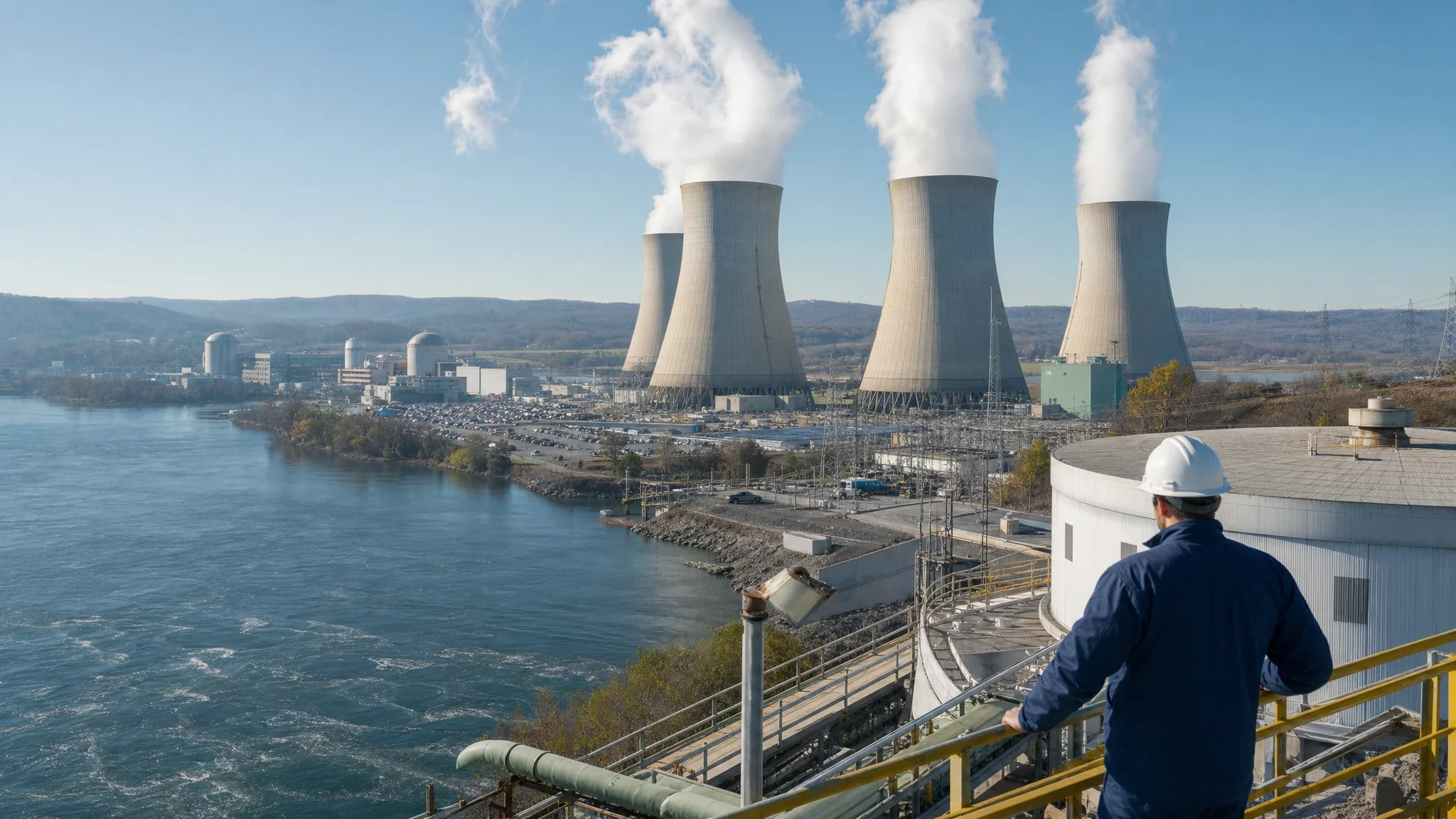
The business is centered on scale, dispatchable generation and customer access. Constellation’s fleet totals about 55 GW across nuclear, natural gas, oil, geothermal, hydro, wind and solar assets, with capacity equivalent to powering about 27 million homes. Nuclear remains the strategic core, while Calpine added a large natural gas and geothermal portfolio that increased exposure to Texas, California and other high-demand power markets.

Main revenue streams include

  1. Wholesale power generation: Constellation sells electricity produced by its nuclear, gas, renewable and other assets into competitive power markets.
  2. Capacity and ancillary services: The company earns revenue for making generation available to support grid reliability and for providing services needed to balance electricity systems.
  3. Retail energy supply: Constellation sells electricity and energy services to business, public-sector, residential and wholesale customers across U.S. markets.
  4. Structured energy products: The company offers tailored contracts, hedging and supply arrangements for large customers seeking price visibility or clean-energy attributes.
  5. Customer-facing clean energy: Constellation serves corporate and public-sector customers seeking carbon-free or lower-emission power, including large buyers with around-the-clock electricity needs.

Q1 2026 results show the enlarged scale of the company after Calpine. Operating revenue was $11.122 billion, up from $6.788 billion in Q1 2025. GAAP net income attributable to common shareholders was $1.590 billion, or $4.49 per diluted share, compared with $118 million, or $0.38 per diluted share, a year earlier. Adjusted operating earnings were $972 million, or $2.74 per share, compared with $673 million, or $2.14 per share, in Q1 2025. Management affirmed full-year 2026 adjusted operating earnings guidance of $11.00 to $12.00 per share.

The company’s key operating base is its generation portfolio and its commercial supply platform. In Q1 2026, nuclear generation was 44,666 GWh, with an owned and operated nuclear capacity factor of 92.3% excluding Salem and South Texas Project. The natural gas, oil and pumped-storage hydro fleet had a 4.5% equivalent forced outage factor, while renewable energy capture for wind, solar and run-of-river hydro was 96.7%.

Constellation’s competitive advantages are scale, nuclear expertise, fleet diversity and access to large energy customers. The company serves about 2.5 million customer accounts nationwide, including 80% of the Fortune 100. Its nuclear fleet gives it a large supply of carbon-free baseload power, while the Calpine assets add flexible natural gas generation that is valuable in markets with rising demand, renewable intermittency and grid reliability needs.

Its market position differs from a traditional regulated utility. Constellation competes mainly in merchant generation and retail supply, where earnings depend on power prices, capacity markets, hedging, fuel costs, plant performance and customer margins. That creates more commodity exposure than a regulated wires utility, but also gives the company greater leverage to rising power demand and higher market prices.

Direct competitors include Vistra Corp., NRG Energy and other independent power producers with large generation and retail platforms. Vistra is the closest public comparison because it also combines competitive generation, retail supply and a large U.S. power market footprint. Constellation’s main distinction versus Vistra is its leading nuclear position and carbon-free power scale. Vistra has a large competitive generation fleet and retail platform, while Constellation has the largest U.S. nuclear fleet and, after Calpine, broader dispatchable generation scale.

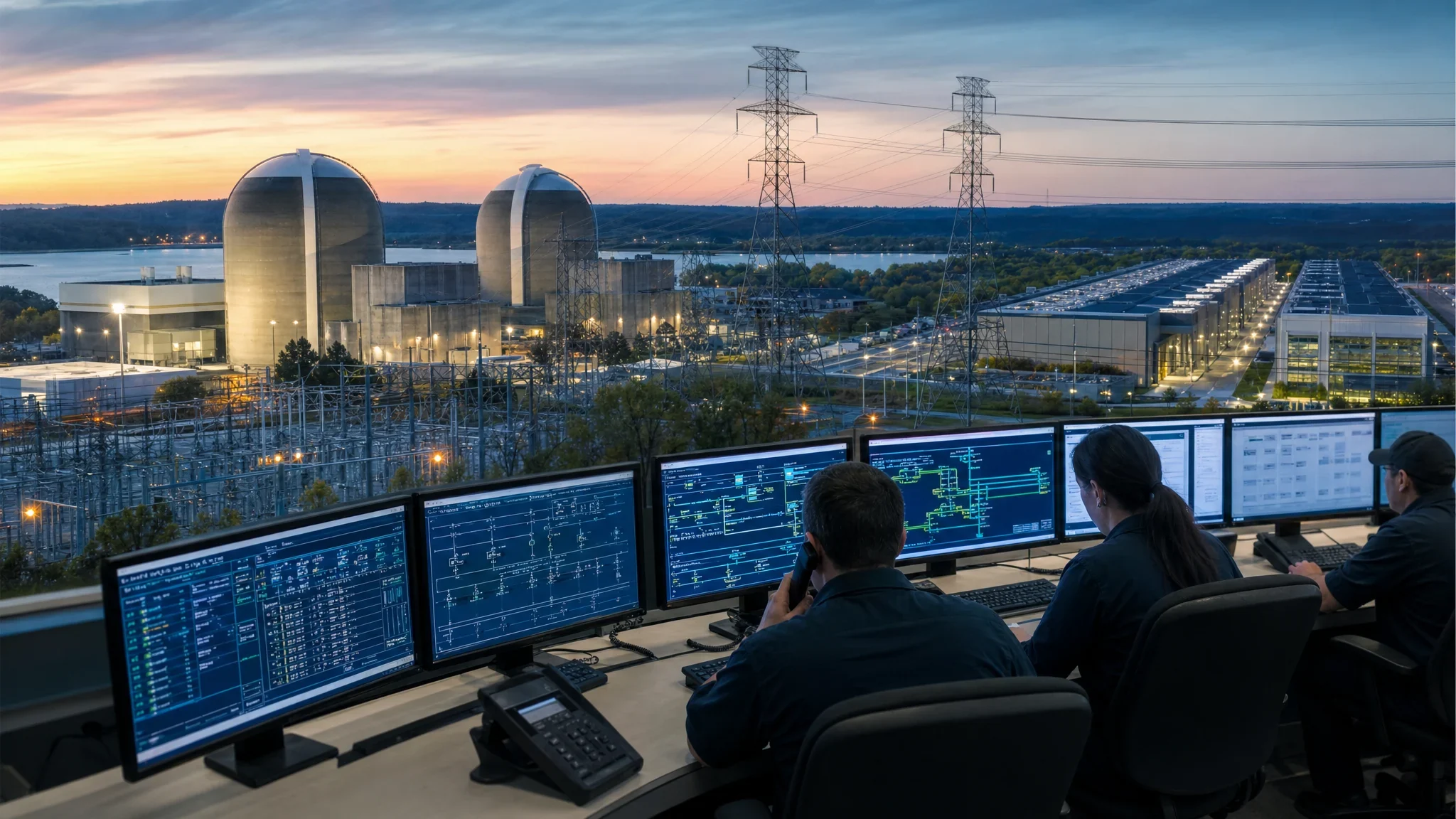
The company’s market position is increasingly tied to U.S. electricity demand growth from AI data centers, advanced manufacturing, electrification and grid reliability needs. Data-center contracting is already part of the growth profile. In Q1 2026, the Public Utility Commission of Texas approved, subject to conditions, a net-metering application for co-location of a CyrusOne data center at the Freestone site, following a 380 MW agreement and an exclusive opportunity for a second 380 MW phase.

Constellation’s geographic exposure is concentrated in the United States. China is not a meaningful direct market based on the company’s disclosed business mix. The China-related investment angle is indirect, through U.S. demand for AI infrastructure, advanced manufacturing and energy security rather than through China revenue, assets or operating segments.

Constellation Energy

Performance in China

China is not a meaningful direct market for Constellation Energy. The company has no disclosed China revenue, China operating segment, China generation fleet, stores, deliveries, or user base. Its operations are concentrated in the United States, where it is a competitive power producer and retail energy supplier. After closing the Calpine acquisition in January 2026, Constellation reported about 55 GW of generation capacity across nuclear, natural gas, oil, geothermal, hydro, wind, and solar assets. Q1 2026 revenue was $11.122 billion, with adjusted operating earnings of $972 million. The company’s local strategy is U.S.-focused: serving business, public-sector, residential, and wholesale customers, including 80% of the Fortune 100. Main competitors are U.S. power producers and retailers such as Vistra and NRG Energy. Strategic drivers include AI data-center demand, advanced manufacturing, electrification, grid reliability, and Calpine integration.

Growth and Future Prospects

Constellation Energy entered 2026 at a major turning point after closing the Calpine acquisition on January 7. The deal expanded the company into a 55 GW power producer with a broader mix of nuclear, natural gas, geothermal, hydro, wind and solar assets. Q1 2026 results reflected that larger platform: operating revenue rose to $11.122 billion from $6.788 billion a year earlier, while GAAP net income attributable to common shareholders increased to $1.590 billion, or $4.49 per diluted share. Adjusted operating earnings were $972 million, or $2.74 per share, up from $673 million, or $2.14 per share, in Q1 2025. Management also affirmed full-year 2026 adjusted operating earnings guidance of $11.00 to $12.00 per share.

Key growth drivers

  1. Rising power demand: AI data centers, advanced manufacturing, electrification and grid reliability needs are increasing demand for large-scale, dependable electricity supply in the United States.
  2. Calpine integration: The transaction adds natural gas and geothermal assets, improves exposure to Texas and California, and gives Constellation a larger dispatchable fleet alongside its nuclear base.
  3. Data-center contracting: The company received conditional approval in Texas for net metering tied to a CyrusOne data center co-located at the Freestone site. The agreement covers 380 MW and includes an exclusive opportunity for a second 380 MW phase.
  4. New generation additions: Q1 2026 included commissioning of the 105 MW Pastoria Solar Project and commercial operation of the 460 MW Pin Oak Creek Energy Center. The planned Crane Clean Energy Center restart in 2027 adds another potential source of future clean baseload supply.
  5. Nuclear value: High nuclear capacity factors, production tax credits, license extensions and corporate demand for around-the-clock carbon-free power support the long-term earnings role of the nuclear fleet.

Challenges ahead

  1. Commodity exposure: Power prices, fuel costs, congestion, capacity market outcomes and hedging results remain important earnings variables.
  2. Nuclear execution risk: Refueling outages, operating performance, safety regulation, waste obligations and license renewals require constant management attention.
  3. Integration complexity: Calpine adds scale, but it also brings merger costs, higher share count, leverage considerations and greater exposure to natural-gas generation economics.
  4. Regulatory constraints: Transaction approvals have already required asset sales, including the announced PJM portfolio sale to LS Power.

Constellation’s outlook depends on converting a larger and more diverse asset base into durable cash flow. The company has strong demand tailwinds, especially from data centers and reliability-focused power buyers, but investors should weigh those opportunities against commodity cyclicality, capital intensity and integration risk.

This Company Profile was written by Dominik Diemer

Dominik Diemer blends an investor mindset with execution discipline.

He is a SAFe Program Consultant (SPC) and Lean Portfolio Management (LPM) practitioner at DMG MORI Digital, working as a SAFe Release Train Engineer and internal consultant in the Lean-Agile Center of Excellence (LACE).

His focus is prioritization, flow, and dependency management that turns strategy into outcomes. With experience across Bertelsmann and the Founders Foundation, he bridges corporate and startup thinking.

He also invests privately in private equity deals, sharpening his view on business models, value drivers, and go-to-market.

StockCounterParts reflects that lens.