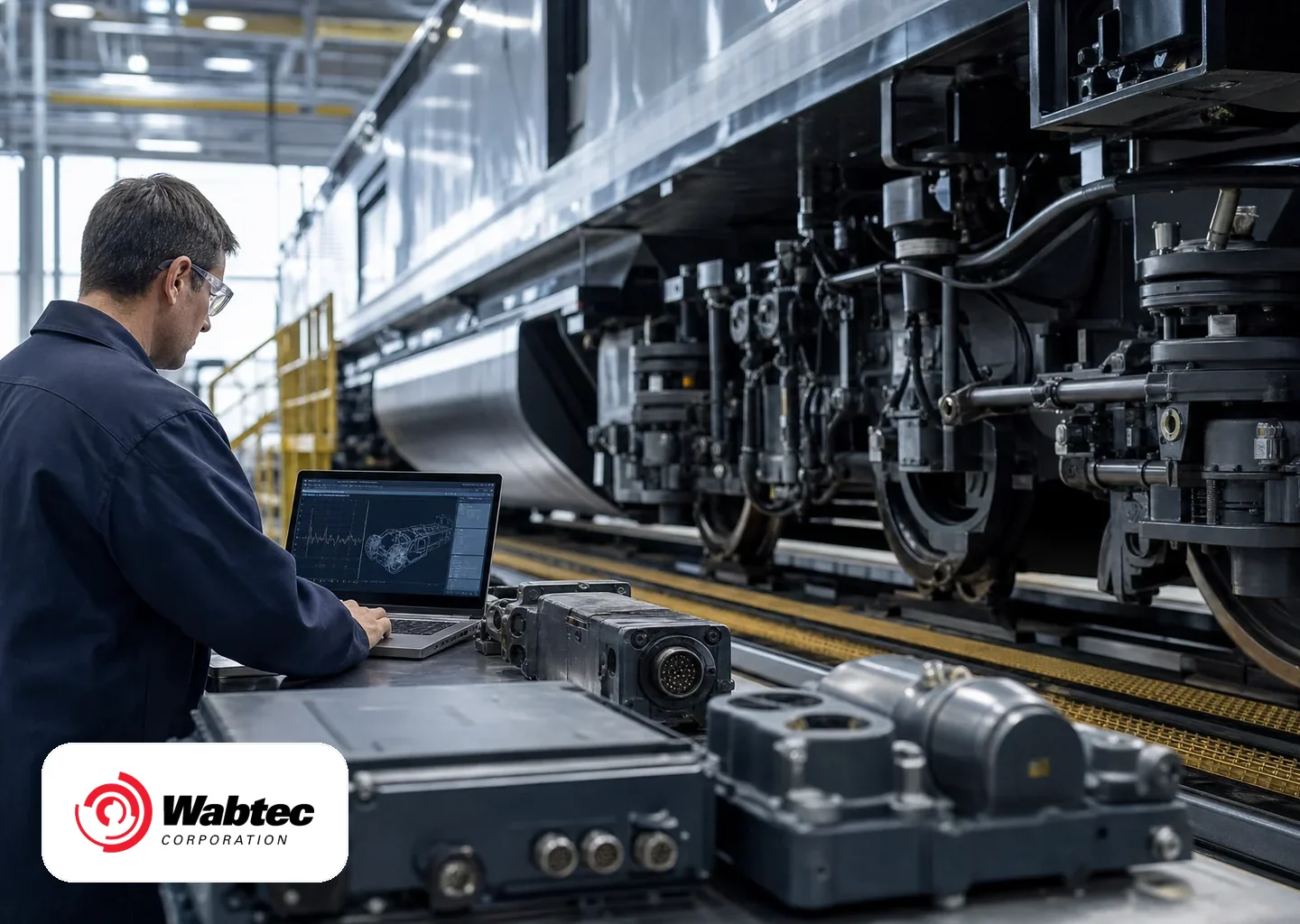
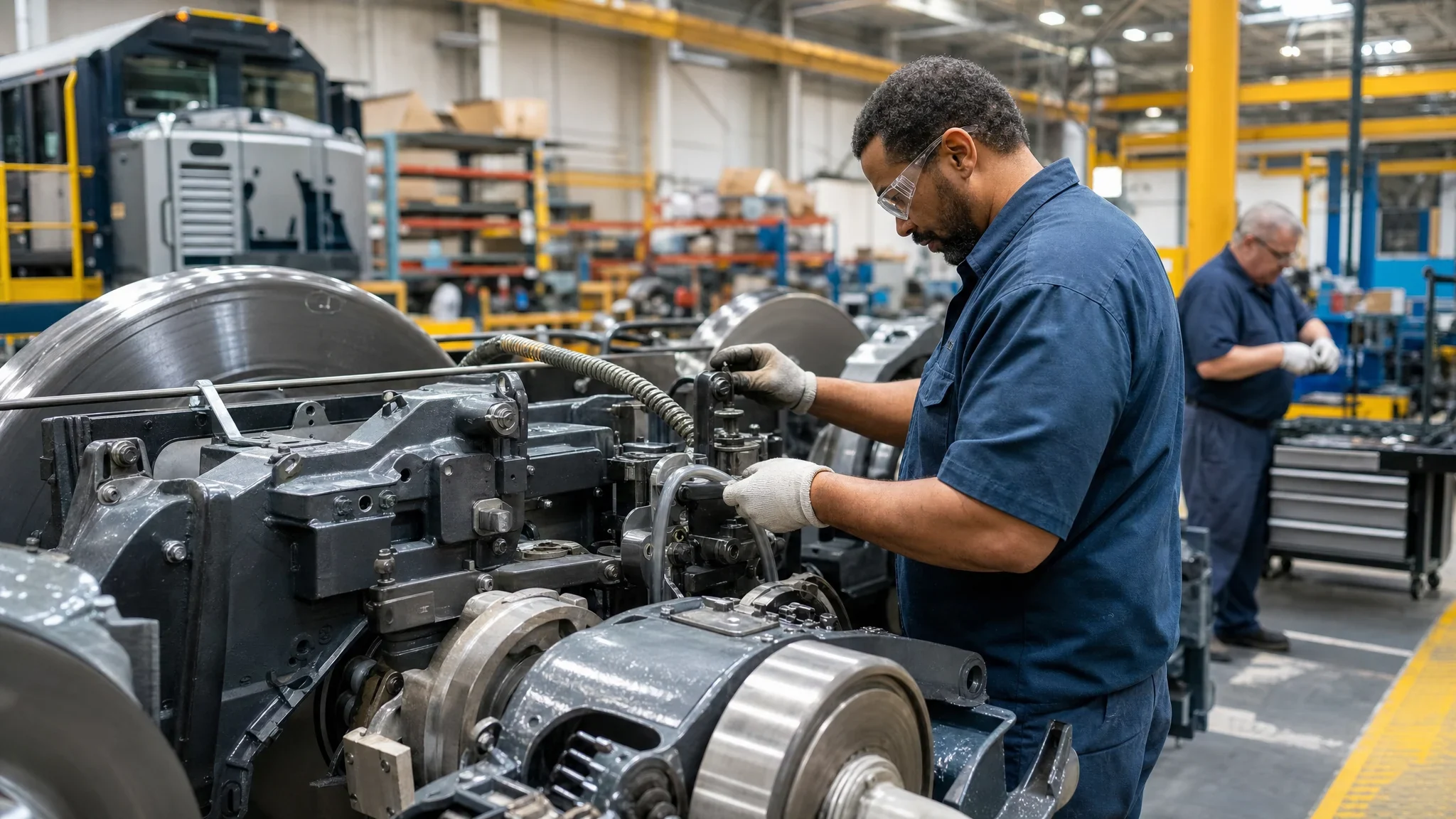
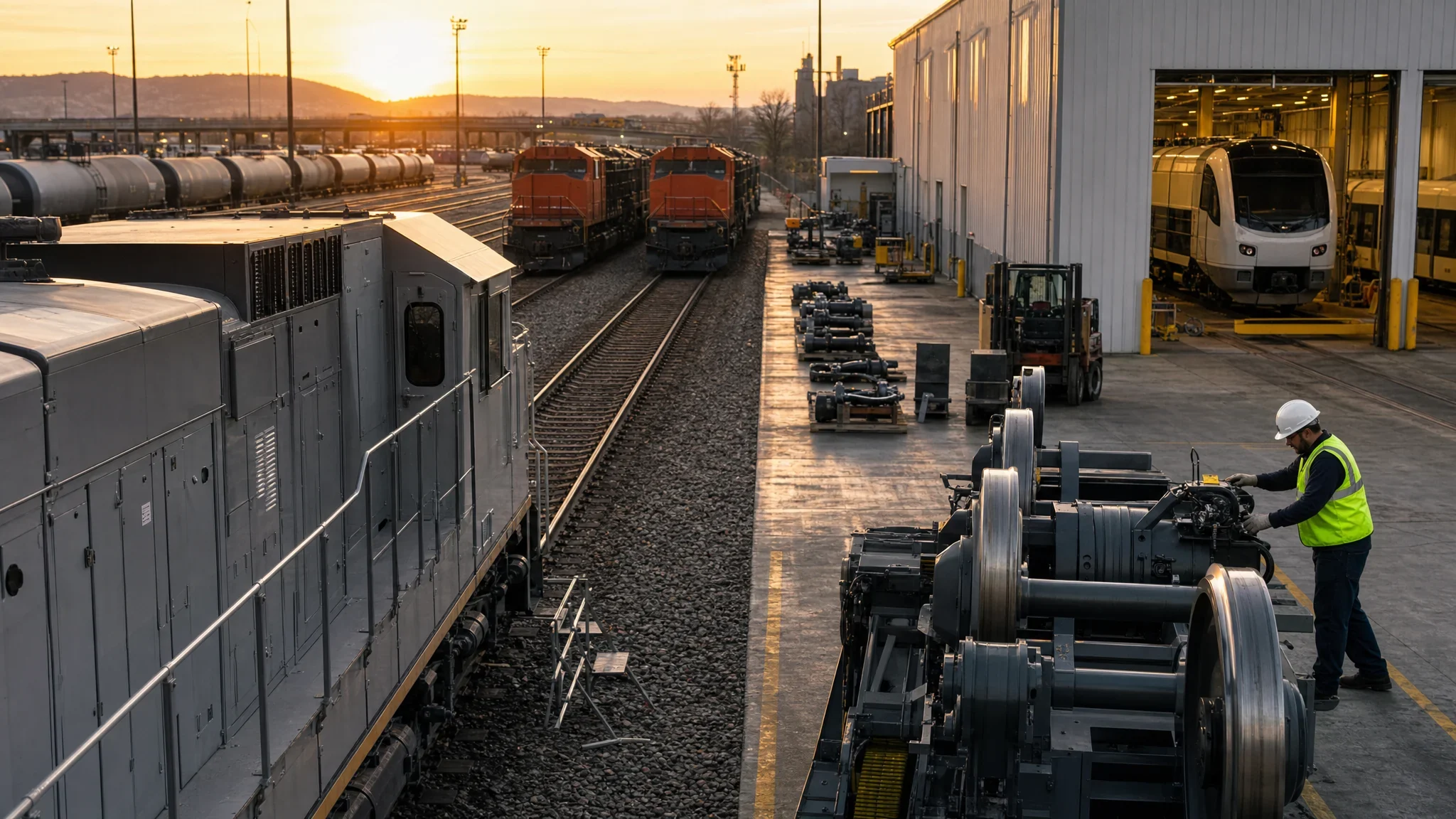
Wabtec makes money by selling rail equipment, components, digital systems, services, maintenance, modernization work and aftermarket parts. Its core customers are freight railroads, passenger transit operators, railcar and locomotive manufacturers, mining companies and other industrial users. The model combines cyclical original-equipment demand with recurring service and aftermarket revenue from a large installed base.
The company reports through two main operating segments
- Freight: This is Wabtec’s largest business, representing about 72% of 2025 net sales. It includes locomotive equipment, components, services and Digital Intelligence products for freight rail and adjacent markets. In 2025, Freight sales were $8.04 billion, led by Services at $3.06 billion and Equipment at $2.37 billion.
- Transit: This segment serves passenger rail and transit systems through original equipment and aftermarket products. Transit represented about 28% of 2025 net sales, with total sales of $3.13 billion. Aftermarket contributed $1.74 billion and OEM contributed $1.39 billion.
Wabtec’s main revenue streams are original equipment, locomotive and transit components, braking systems, digital rail technologies, maintenance services, modernization programs and replacement parts. Services and aftermarket work are strategically important because they are tied to locomotives, transit systems and rail equipment already in service. That installed-base model gives Wabtec more revenue visibility than a pure equipment supplier.
The company’s market position is strong. Wabtec is one of the largest global suppliers of rail equipment, braking systems, locomotive technologies, rail services and digital rail solutions. It has an installed base of nearly 24,600 locomotives in service, many equipped with digital technologies such as Positive Train Control. No single customer accounted for 10% or more of 2025 consolidated net sales, although the top five customers represented about 30%.
Scale is a major competitive advantage. Wabtec operates across freight and transit, original equipment and aftermarket, hardware and software, and North America and international markets. That breadth gives it multiple ways to participate in rail capital spending, fleet modernization, safety mandates, emissions reduction and network productivity programs.
The latest quarterly figures show a business with strong demand and backlog support. In Q2 2026, sales rose 17.5% year over year to $3.18 billion, with growth in both Freight and Transit. Adjusted diluted EPS increased 21.6% to $2.76, and adjusted operating margin reached 21.9%. Multi-year backlog was $30.93 billion at June 30, 2026, and the 12-month backlog was up 11.3% year over year. Wabtec also raised 2026 guidance to revenue of $12.30 billion to $12.60 billion and adjusted EPS of $10.60 to $10.90.
Wabtec’s direct competitors vary by product category. Progress Rail, owned by Caterpillar, is its main locomotive competitor, especially in North America. Knorr-Bremse competes in braking and transit systems. Amsted Rail competes in freight components. CRRC, the Chinese rolling-stock manufacturer, competes in some international rail equipment markets, depending on product line and geography.
Compared with Progress Rail, Wabtec has a broader public-company profile across freight rail technology, services, transit products and digital rail systems. Compared with Knorr-Bremse, Wabtec has greater direct exposure to locomotives and freight rail equipment, while Knorr-Bremse is more centered on braking and rail vehicle systems. Compared with CRRC, Wabtec is far less dependent on China and more exposed to North America and international freight technologies.
Geographically, Wabtec remains North America-led. In 2025, North America generated $6.19 billion of sales, followed by Europe at $1.96 billion, India at $699 million, Australia and New Zealand at $453 million, and Kazakhstan/CIS at $431 million. China is a real but modest market, with 2025 sales by destination of $297 million, equal to about 2.7% of total company sales.
The company’s market position is supported by long rail equipment lifecycles, safety-critical products, regulatory requirements, digital rail adoption and the need for ongoing fleet maintenance. Its main challenge is that demand depends on railroad capital spending, transit-agency funding, government budgets, freight volumes and large-project timing. Even so, Wabtec’s backlog, installed base and service mix give it a durable position in global rail technology and equipment.